Trump's Lebanon ultimatum and the limits of presidential leverage
On 14 June 2026, Donald Trump demanded that Israel halt strikes inside Lebanon while simultaneously insisting Hezbollah cease attacks on Israel — a one-line demand that exposes how thin the current diplomatic architecture has become.
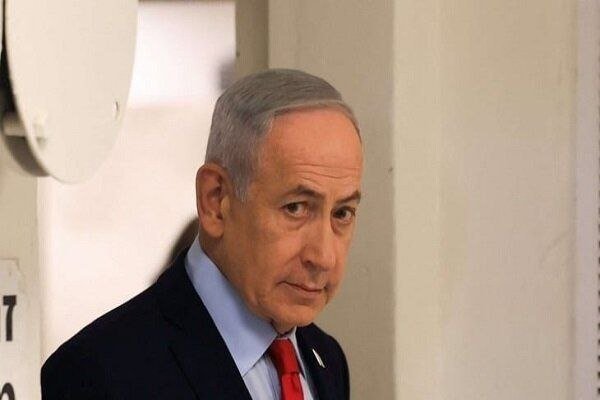
At 15:57 UTC on 14 June 2026, the Jerusalem Post's Telegram feed carried a direct quotation from Donald Trump: "There should be no more attacks by Israel anywhere in Lebanon, but there should also be no more attacks b[y Hezbollah]" — a single sentence that demanded both sides stop firing at the same moment, with no mediator, no timeline, and no visible enforcement mechanism. The statement arrived the same afternoon the IDF Spokesperson confirmed, at 18:00 local time, that "several suspected aerial objects were detected falling in the territory of the State of Israel, near the border with Lebanon," with no reported casualties.
The shape of the ultimatum is the story. A US president is publicly denouncing strikes carried out by a close democratic ally while, in the same breath, conditioning the demand on restraint from an Iranian-backed armed movement. The leverage on the second half of that equation is thinner than the leverage on the first — and the gap is widening.
What Trump actually said, and to whom
The statement, distributed through The Jerusalem Post's verified channel and amplified by independent political accounts on X, was framed as a moral injunction rather than a policy announcement. There was no reference to arms deliveries, to US troop posture in the Eastern Mediterranean, to the status of the November 2024 ceasefire arrangement, or to the UN Interim Force in Lebanon. It was a sentence, and it was addressed to two audiences simultaneously: a domestic American one that has grown uncomfortable with the optical weight of Israeli strikes on Lebanese civilian infrastructure, and an Israeli one whose governing coalition has made the dismantling of Hezbollah's northern rocket array a stated war aim.
The Jerusalem Post's Telegram post was unambiguous: Trump "denounces IDF strikes in Beirut" and "calls for a cease in attacks on Hezbollah." The X-account amplification at 16:07 UTC, attributed to political-markets analyst Unusual Whales, rendered the line in full: "There should be no more strikes by Israel in Lebanon, but no further attacks by any group, including Hezbollah, against Israel." The two transmissions are consistent. They are also the entirety of the public record on the statement — no White House readout, no State Department briefing, no Israeli prime ministerial response appears in the thread.
The counter-narrative Israel is unlikely to accept
The Israeli security establishment's framing of the northern front is straightforward and is reflected in the IDF Spokesperson's evening notice: aerial objects crossed from Lebanon into Israeli territory, and the incident is being treated as an active threat requiring active response. Within that framing, any US demand for restraint on Israeli strikes sits uneasily alongside the obligation to interdict inbound fire. The reading inside Israel — and inside the Lebanese-Israeli border communities whose evacuations have not been reversed — is that a halt to strikes does not equate to a halt to threat.
Hezbollah, for its part, has been operating from a posture of declared ceasefire adherence for several months under the arrangement that ended major hostilities in late 2024, while reserving the right to respond to Israeli strikes on Lebanese territory. An ultimatum that demands the movement cease attacks on Israel without conditioning the demand on a verifiable end to Israeli strikes is, in effect, a status-quo demand dressed as a new policy — and the movement's media channels are not represented in the source material here, which is a gap worth flagging.
The structural frame: presidential pressure without architecture
What this episode actually captures is the absence of a working diplomatic channel rather than its presence. A demand of this kind — symmetric, public, unconditional, and unscripted — works only when the addressees believe that compliance will be reciprocated and that non-compliance will be priced. Neither belief is well-founded at the moment. There is no active US special envoy for the Israel-Lebanon track visible in the thread. There is no named international monitor. There is no agreed mechanism for verifying that "aerial objects" crossing the border have, in fact, stopped.
This is the deeper pattern the statement reveals. When a president speaks and the institutions that should follow up — the envoys, the working groups, the confidence-building measures — are not visible, the presidential statement functions as the policy. That is a degradation of the diplomatic toolkit, not a substitution for it. It also creates a problem for the ally on the receiving end of the demand: Israel is being asked to do something its security doctrine resists, on the strength of a sentence, while being offered nothing in return that its adversaries have agreed to.
Stakes and the near-term horizon
If the statement holds rhetorical weight but produces no follow-up architecture, the likely outcome over the coming weeks is a continuation of the current pattern: intermittent Israeli strikes in Lebanese territory, intermittent aerial-object incidents crossing north-to-south, and an escalating public-exchange rhythm in which Washington issues periodic denunciations and Israeli operational tempo does not measurably change. The constituency that loses most directly is the civilian population of southern Lebanon and northern Israel, both of whom have lived through earlier rounds of this cycle and recognise the early-warning signals.
The narrower question is whether the statement was aimed at a domestic American audience in the run-up to a political moment in which Lebanese civilian casualties have become a recurring cable-news frame. The wider question is whether the United States is signalling a return to a conditional-equivalence diplomacy — equal demands on a democratic ally and on an armed non-state actor — and whether that framework can survive contact with an Israeli government that has so far rejected conditionality as a category.
What remains uncertain
The source material for this article is narrow by necessity: a Jerusalem Post Telegram post, two corroborating IDF Spokesperson alerts at 18:00 local time carried by the abuali channels, and an X-account amplification. It does not include any Lebanese state, Hezbollah-aligned, UNIFIL, or White House primary readouts. The statement's full text is truncated in the Jerusalem Post feed; the second half of the conditional clause is reconstructed from the X transmission. Casualty figures, strike locations, and the operational specifics of the aerial objects detected by the IDF are not in the record available to this publication. A serious read of the next 72 hours will require at least one of the missing primary inputs.
— Monexus framed this as a story about the gap between a presidential demand and the diplomatic architecture that would have to enforce it. The wires ran the line; the structural question of what follows is where the reporting earns its keep.
Wire provenance
This editorial synthesis draws on the following public wire/social posts:
- https://t.me/The_Jerusalem_Post
- https://t.me/englishabuali
- https://t.me/abualiexpress
- https://x.com/unusual_whales/status/