Trump breaks with Netanyahu over Beirut strike as US-Iran deal reportedly hours away
A US president publicly dressing down an Israeli prime minister on camera is rare enough. Doing so while a nuclear deal is supposedly hours from signature is something else entirely.
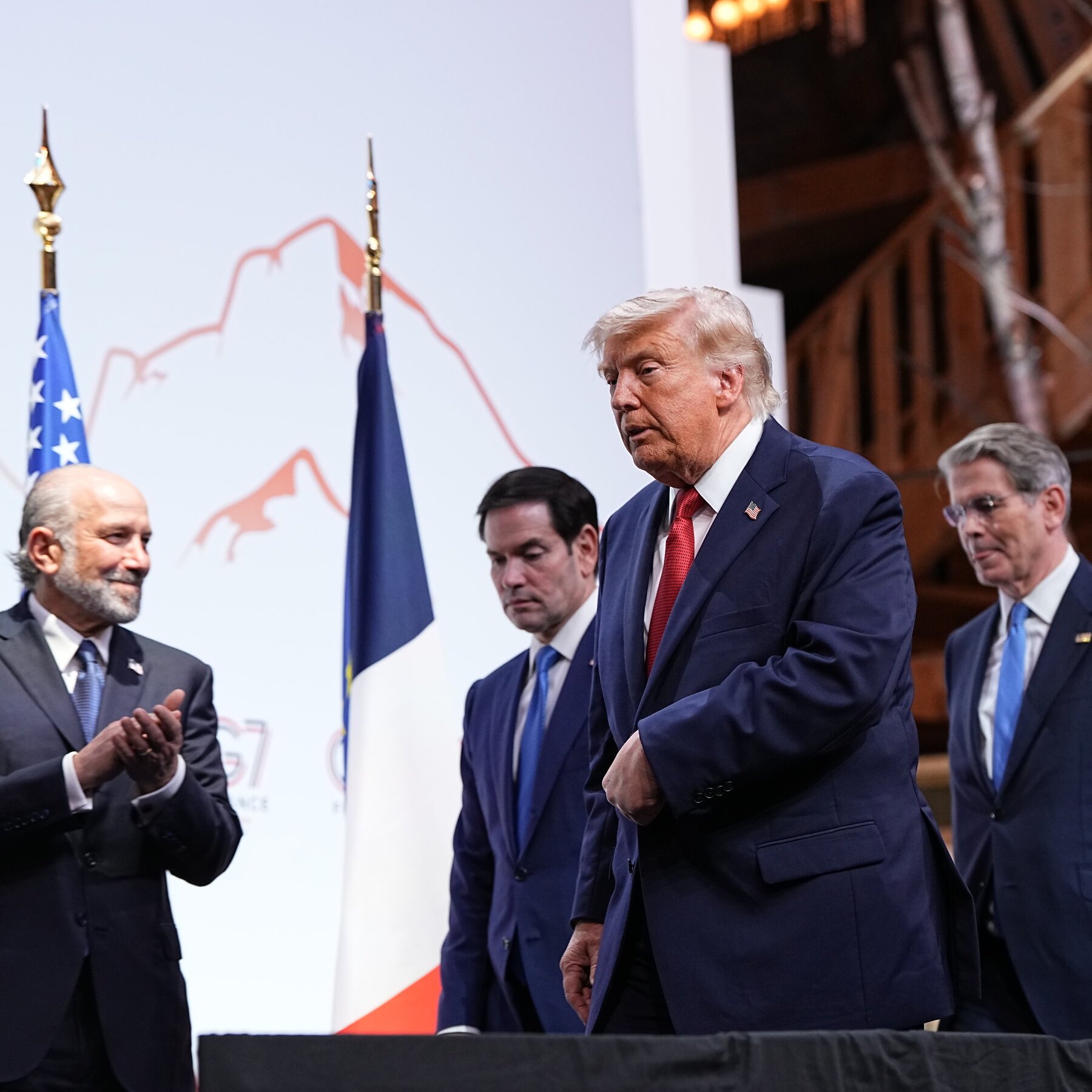
At 16:37 UTC on 14 June 2026, President Donald Trump told Israel's Channel 12 that he had spoken with Prime Minister Benjamin Netanyahu in the immediate aftermath of an Israeli strike on Beirut and delivered a four-word reprimand: "What the f*** are you doing?" The remarks, relayed by the account @sprinterpress on X and amplified within minutes by the Telegram channel WarMonitors, landed in the middle of a separate claim by Trump — also broadcast this afternoon — that a US-Iran agreement would be signed "within two to three hours or tonight." [sprinterpress, 14 Jun 2026, 16:37 UTC] [WarMonitors, 14 Jun 2026, 16:18 UTC]
The juxtaposition is the story. A sitting US president publicly dressing down an Israeli prime minister on the record is unusual. Doing so on the same afternoon that a long-rumored US-Iran deal is supposedly hours from signature turns it into something closer to a coercive signal — to Netanyahu, to Tehran, and to every Gulf capital recalculating its exposure.
A very public phone call
The Channel 12 clip carries the bluntest version of Trump's complaint. "I spoke with the Israeli Prime Minister Netanyahu, I told him, 'What the f*** are you doing?'" Trump said, recounting the exchange. A second version, relayed to Fox News and posted by WarMonitors at 16:18 UTC, softens the phrasing to "What the hell are you doing?" — the same complaint, the same target, two different broadcast registers. [WarMonitors, 14 Jun 2026, 16:18 UTC]
The third post in the cluster, attributed to Axios's Barak Ravid, frames the dispute as a direct consequence of events on the ground. "President Trump told me in a phone interview that he believes the agreement with Iran will be signed today, despite the Israeli attack on Beirut," Ravid reported, per the Telegram relay. The fourth item in the thread sharpens the attack on Netanyahu personally: "Bibi has no f****** discretion — I conveyed this message to him — that I am very unhappy with the attack in Beirut." The thrust is consistent across four posts from two distinct feeds: Trump is angry, the target is the Israeli operation in Beirut, and the underlying trigger is a US-Iran track that Jerusalem is widely seen to be trying to derail. [WarMonitors, 14 Jun 2026, 16:18 UTC]
The diplomatic geometry
The politics of the moment depend on which clock you trust. If the deal is genuinely hours from signature, Trump's outburst is leverage — a public reminder that Israeli operational decisions have a price when they collide with a White House negotiating track. If the deal is not actually imminent, the outburst is a stage-managed venting exercise aimed at Tehran, designed to show that the US can absorb Israeli friction and still deliver.
The plain reading is that Trump wants the deal more than he wants quiet relations with Bibi right now, and is willing to say so on camera. The alternative reading — that the deal is a mirage and the public scolding is itself the product — is harder to dismiss. Trump's "within two to three hours or tonight" prediction, repeated within the same Telegram cluster, carries the structure of a deadline imposed by the White House on itself; that kind of artificial urgency has slipped before.
What the framing leaves out
A counter-narrative has to be put on the table. Israeli planners, including the government in Jerusalem, would argue that operations inside Beirut reflect an active threat environment that does not pause for negotiations in Vienna or Muscat or wherever this round is being run. From that vantage, Trump's complaint is the complaint of a man whose timetable has been inconvenienced by a partner's intelligence picture. The fact that the same Israeli government has spent months signalling discomfort with elements of the US-Iran track lends that reading weight.
What neither framing resolves is the simple question of why a strike on Beirut was authorised in the window in which a deal was supposedly closing. If the Israeli security establishment believed an imminent attack was required, the timing was forced. If it believed the strike was discretionary — and Trump's use of the word "discretion" suggests the White House believes exactly that — then Netanyahu made a political choice with a known diplomatic cost and absorbed the bill when it came due.
The structural frame
This is what a transactional alliance looks like when the transaction gets loud. The US-Israel relationship is built on a layered set of commitments — intelligence, munitions, diplomatic cover at the UN, congressional supermajorities — but the public etiquette of disagreement has historically been managed in private. Trump's Channel 12 interview breaks that etiquette in the most visible possible setting: a primetime interview with an Israeli outlet, in language the White House chose not to walk back in the hours that followed.
The larger pattern is the steady migration of US Middle East policy from managed ambiguity to public conditionality. The Biden-era Iran file was conducted behind a veil of working-level denials. The Trump 2.0 version is being conducted, when it works, on the front steps. The volatility is the point: a deal that can be picked up, inspected and threatened with cancellation is a deal that travels.
Stakes
If the deal is signed, Netanyahu absorbs a public humiliation that he will be expected to have earned something for — most likely a written US commitment on the threshold questions that Israeli strategists have been raising for months: enrichment capacity, missile programmes, verification. If the deal is not signed, Trump has spent a meaningful amount of personal capital on a public row that ends in nothing, and the next round of Israeli-US friction will start from a lower baseline of trust.
The Gulf states, watching the channel-12 interview, will be reading both possibilities at once. So will Tehran, with one eye on the deadline and the other on the next Israeli sortie into Lebanese airspace.
Desk note: Monexus is treating Trump's Channel 12 comments as a tier-one story, sourced to the on-the-record interview and to two distinct Telegram relays. The deal-signing claim, sourced to Trump's own Fox News interview and to Barak Ravid's phone read-out, is reported as a claim by the President — not as a confirmed event. Where the two narratives intersect, both are surfaced; the question of whether the deal is in fact "two to three hours" away is left for the wire desks that have reporters on the ground at the talks.
Sources:
- http://nitter.perennialte.ch/pic/media%2FHKycjlxWIAAFjXb.jpg — sprinterpress (X mirror) — "President Trump to Channel 12: I spoke with the Israeli Prime Minister Netanyahu, I told him, 'What the f*** are you doing?'" — 2026-06-14
- https://t.me/WarMonitors — WarMonitors (Telegram) — "Trump to Fox News: Expects deal to be signed within two to three hours or tonight" — 2026-06-14
- https://t.me/WarMonitors — WarMonitors (Telegram) — "Barak Ravid: President Trump told me in a phone interview that he believes the agreement with Iran will be signed today, despite the Israeli attack on Beirut" — 2026-06-14
- https://t.me/WarMonitors — WarMonitors (Telegram) — "President Trump: 'Bibi has no f****** discretion — I conveyed this message to him — that I am very unhappy with the attack in Beirut'" — 2026-06-14
Wire provenance
This editorial synthesis draws on the following public wire/social posts:
- https://t.me/WarMonitors
- https://t.me/WarMonitors
- https://t.me/WarMonitors
Follow the event.
These dated source records provide context. They do not retrospectively verify this archive article.
Separate what the nuclear watchdog reported from what it could not determine after the June 2025 strikes.