Trump-Pentagon split on Beirut strikes exposes fragile US-Iran deal track
Within ninety minutes on 14 June 2026, Donald Trump called the Beirut strikes a mistake while his defence secretary praised Israeli restraint — a public fracture that lands as US and Iranian negotiators try to lock in a deal.
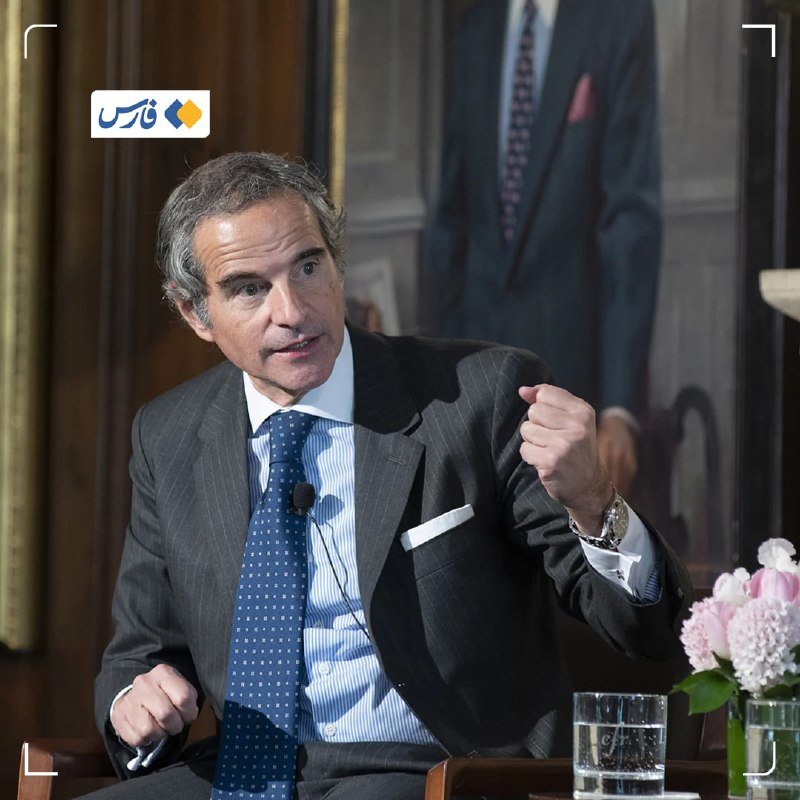
At 14:59 UTC on 14 June 2026, Iran's Fars News published a translation of a Truth Social post in which Donald Trump declared that "the attack on Beirut this morning should not have happened, especially on a special day when we are so close to a peace agreement." Forty-three minutes later, the Telegram channel abualiexpress circulated a clip of US Secretary of Defense Pete Hegseth telling reporters the opposite: Israel, Hegseth said, "was very measured in its response" to Hezbollah rocket fire, and it was now up to Iran to "encourage them to stop doing that." The two statements, issued from the same administration within the space of an afternoon, landed in the middle of a US-Iran negotiating track that the White House has spent months trying to keep on the rails.
What the public saw on 14 June was not a contradiction in the usual sense — Trump and his Pentagon routinely speak past each other on Israel policy — but a fault line. The President, who set 2025 in motion by returning to the White House on a deal-making platform, is now openly distancing himself from an Israeli strike in the southern Beirut suburb of Dahya. The defence secretary, reading from the same regional script his Israeli counterparts have used for months, is defending the same strike as calibrated. Both voices are now in the room with Iranian negotiators, and Tehran does not have to choose which one to listen to.
What was struck, and what was said
The 14 June Israeli strike hit targets in Dahya, the Shi'a-majority southern suburb of Beirut that has functioned as Hezbollah's political and military nerve centre since the 1980s. Reporting on the strike's casualty footprint remained fragmentary in the Telegram traffic that Monexus reviewed: the thread items document the political reaction in Washington, Tehran, and Beirut, but do not contain a confirmed toll. The framing in abualiexpress and Fars News emphasises the location ("the Dahya"; "this morning's attack on Beirut"), and Fars stresses Trump's choice of timing — "on a special day" — a coded reference to the proximity of the US-Iran track.
Trump's full quoted line, as carried by Fars, runs: "the attack on Beirut this morning should not have been carried out, especially on a special day when we are so close to a peace agreement. Israel should not have responded in Beirut and there should not have been attacks by other parties including Hezbollah — all parties should avoid escalation." The line carries a double-barrelled critique: Israel for striking, and Hezbollah for the rocket fire that triggered the strike. It is the first time in this cycle that Trump has, on the record, named an Israeli action and called it a mistake.
Hegseth's reply, captured by Clash Report and abualiexpress, inverts the emphasis: "Hezbollah needs to stop firing missiles at northern Israel, and Iran needs to encourage them to stop doing that. Israel was very measured in its response." The defence secretary did not address Trump's critique of the Israeli strike on the record in the clips circulated, nor did he acknowledge the negotiating track. He spoke as a Pentagon spokesman would in 2024 — a regional security frame, not a deal-making one.
The Fox News warning and what the Iranian side hears
At 15:03 UTC — between Trump's post and Hegseth's press availability — the Ukrainian military-affiliated channel operativnoZSU carried a Fox News report, sourced to a "high-ranking American official," warning that "today's strikes on Beirut create difficulties in the attempt to finalize the agreement between the United States and Iran" and that "this is a dir[ect interference in the negotiating process]." The exact text trails off in the Telegram capture, but the shape of the warning is clear: the Israeli strike is being read inside the US national-security apparatus as a move that could derail a deal Washington has been assembling for months.
For Tehran, the optics are worse than the warning. An Iranian negotiator in Muscat or Geneva is now being asked to sit across from a US team whose principal publicly rebukes Israel for the strike, while the same team's defence secretary defends it. If the US cannot, in real time, get its own president and Pentagon to read from the same page, the Iranian argument goes, what confidence can Tehran have that any deal signed in Washington will hold when the next round of escalation begins? The Iranian state-aligned framing — visible in Fars's choice of which Trump quote to amplify — is to treat the US negotiating position as incoherent, and therefore to discount it.
This is the structural point the day's events expose. The US is no longer a unitary broker in this file. It is a broker with at least two voices, each of which the Israeli and Iranian sides can hear in real time and play against the other. The Israeli government can take comfort in Hegseth's line, ignore Trump's, and proceed with the operational tempo it has set. The Iranian side can take comfort in Trump's line, treat the strike as proof the US cannot guarantee Israeli behaviour, and harden its negotiating position. Neither side has to make the harder choice — restraint — that the diplomatic track requires.
What we verified / what we could not
Verified from the thread items, with direct quotation: Trump's Truth Social post characterising the Beirut strike as a mistake and tying it to the peace track, as carried by Fars News International at 14:59 UTC. Hegseth's characterisation of Israel as "very measured" and his call for Iran to restrain Hezbollah, as carried by Clash Report at 15:51 UTC and abualiexpress at 15:50 UTC. The Fox News sourcing of a US official warning that the strikes endanger the US-Iran deal, as carried by operativnoZSU at 15:03 UTC.
Verified, paraphrased: That the 14 June strike hit the Dahya suburb of Beirut (the framing in abualiexpress and Fars is consistent on location). That the strike took place against the backdrop of an active US-Iran negotiating process (the Trump post and the Fox News warning both reference "a peace agreement"/"an agreement between the United States and Iran"). That the public divergence between Trump and Hegseth occurred on the same day, in the same afternoon (the timestamps in the thread items establish the order).
Could not verify from the thread items: A specific casualty count for the 14 June strike. The exact identity of the Hezbollah figure or facility targeted. The current state of the US-Iran negotiating track — what stage the talks are at, which sanctions are on the table, whether a framework exists. The provenance of the Fars translation of Trump's Truth Social post (whether the English source is the original or a re-translation). The identity of the "high-ranking American official" cited by Fox News.
Contested in the framing, not in the fact: Whether the strike should be read as a measured response to Hezbollah rocket fire (the Hegseth/Pentagon framing) or as a direct interference in the US-Iran track (the Trump/Fox News framing). The thread items carry both framings as primary; the question of which frame governs future US behaviour is genuinely open.
The structural frame, in plain editorial prose
Two things are happening at once in the Middle East in mid-2026, and they are not the same thing. The first is the military track: Hezbollah rocket fire into northern Israel, Israeli strikes into Dahya, an exchange rate of escalation that has held since the Gaza war's regional spillover began. The second is the diplomatic track: a US-Iran negotiation that the Trump administration has framed as a personal project, with sanctions relief and a nuclear file at its centre. For most of the past year these two tracks have been kept in separate lanes by US mediation. What 14 June shows is that the lanes are now visibly merging. A single Israeli strike in Dahya is now capable of moving the dollar price of uranium enrichment, the political lifespan of an Iranian negotiating team, and the standing of a US president, all on the same afternoon.
The deeper problem is not the strike itself. It is the architecture around it. The US has, in effect, become a party whose public statements on its own regional policy can be generated by two different officials in two different registers within ninety minutes, each of which is intelligible and useful to a different side of the conflict. That is not a negotiating position. It is a vulnerability that any counterpart can price.
Stakes, and the near-term view
The immediate stake is the US-Iran deal track. If the next forty-eight hours produce an Israeli follow-on strike in Lebanon, or a Hezbollah response in northern Israel that the Pentagon feels obliged to defend in Hegseth's terms, Trump's 14:59 UTC line will be overtaken by events, and the Iranian side will treat the deal as collateral damage. If, by contrast, the next forty-eight hours produce a quiet Israeli de-escalation and an Iranian reciprocal gesture — even a rhetorical one — Trump's line becomes the working frame and Hegseth's is read as bureaucratic noise.
The medium-term stake is the credibility of the United States as a regional broker. The Israeli government will draw the lesson from Hegseth's statement that operational tempo can be sustained regardless of what the White House says in the morning. The Iranian government will draw the lesson from Trump's statement that the White House can be made to publicly distance itself from an Israeli strike, and that this distance is a tradable asset at the negotiating table. Both lessons are correct, and they are in tension. The system can run with both lessons drawn for a while. It cannot run for long.
What remains uncertain, beyond the verifiable thread items, is whether the Trump administration is willing to enforce a single line. The 14 June split was not adjudicated, by press secretary statement, by National Security Council readout, or by a clarifying Trump follow-up, in the items Monexus reviewed. That silence is itself the story: when a president and his defence secretary contradict each other on a live military question and the institution does not correct the record, the institution has, for the moment, chosen not to.
Desk note: Monexus is treating the 14 June strike as a political-economy event as much as a military one — the framing on this story runs through Washington, Tehran, and the negotiating track, not through Tel Aviv or Beirut, because the wire material on 14 June is a US-internal story that happens to be set in Dahya. The lead reflects that; the structural section is built around the broker-credibility problem the day exposed.
Wire provenance
This editorial synthesis draws on the following public wire/social posts:
- https://t.me/FarsNewsInt
- https://t.me/operativnoZSU
- https://t.me/abualiexpress
- https://t.me/abualiexpress
- https://t.me/ClashReport
Follow the event.
These dated source records provide context. They do not retrospectively verify this archive article.
Separate what the nuclear watchdog reported from what it could not determine after the June 2025 strikes.