Birthday diplomacy: Trump, Putin and Zelensky stack calls on a single Sunday
On 14 June 2026, Vladimir Putin rang Donald Trump to mark the US president's 80th birthday. Volodymyr Zelensky called within hours. The back-to-back readouts tell two very different stories about the war.
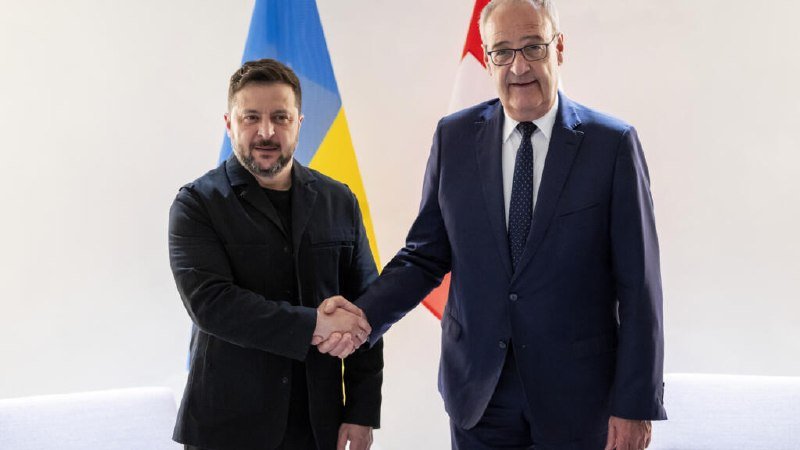
At roughly 15:00 UTC on 14 June 2026, Donald Trump picked up the phone in Washington to hear Vladimir Putin wishing him a happy 80th birthday. By Russian presidential aide Yuri Ushakov's account, the call ran about an hour, and Trump told the Russian side that Putin had been the first foreign leader to ring. Within ninety minutes, according to RBC-Ukraine reporting cited by the War Translated channel, Volodymyr Zelensky was on the line from Kyiv, offering his own birthday greetings and pressing Kyiv's case for a meaningful negotiating track. Two capitals, one Sunday, two very different readouts.
What emerges from the public fragments is a choreography the Trump White House has been refining for months: Moscow gets the headline photo, Kyiv gets the substantive conversation, and the gap between the two readouts is where this war is actually being fought at the diplomatic level. The Putin version leans on inevitability — the line that Ukrainian strikes on Russian territory cannot shift the battlefield picture. The Zelensky version leans on process — keeping the channel to the US president warm and the agenda of further talks alive. Neither man is under the illusion that a birthday telephone call settles anything. Both are buying time inside a war that has ground on for four years and shows no sign of ending on Moscow's terms or Kyiv's.
Two readouts, one transcript gap
The Russian side, as relayed by the Status-6 (War & Military News) channel on Telegram at 16:45 UTC, emphasised duration and personal warmth: an hour-long conversation, birthday pleasantries, a presidential aide on the line to confirm the atmospherics. The political content, as paraphrased by the same channel, was a restatement of the long-standing Putin line — that Ukrainian long-range strikes on Russian infrastructure will not alter the operational situation and that the conflict can only be resolved on terms Moscow has previously outlined.
The Kyiv readout, per RBC-Ukraine as carried by War Translated at 16:08 UTC, is the diplomatic equivalent of a holding pattern: birthday wishes exchanged, ideas for further negotiations discussed, the call described in positive but non-committal terms. The conspicuous silence is on substance — what those ideas actually are, who put them on the table, and whether Ukraine was promised anything concrete in return for the conversation itself.
The pattern is familiar. When Moscow and Kyiv each describe the same call differently, the missing middle is usually where the real policy lives. On a day built for symbolism — Trump's 80th — the more interesting question is not what the birthday wishes conveyed, but what the second hour of diplomacy might produce.
The "Putin line" on strikes
The most analytically useful piece of language in the Russian readout is the framing that Ukrainian strikes inside Russia — drones, long-range missiles, the kind of campaign Kyiv has steadily expanded since 2024 — will not change the "critical situation" for Ukraine on the battlefield. The claim is doing three jobs at once.
It is, first, a deterrent message aimed at Western capitals debating whether to loosen restrictions on the weapons they supply to Ukraine. If strikes on Russian soil are militarily symbolic, the argument goes, why risk escalation by enabling deeper ones? Second, it is a domestic-audience signal: the operation is on schedule, the tempo is acceptable, and the long-range harassment from Kyiv is a nuisance rather than a threat. Third — and most importantly for a Trump White House that has oscillated between toughness and accommodation — it is a test of whether the US president will publicly repeat the line. So far, he has not.
That silence is itself a form of answer. A US president willing to publicly echo Moscow's framing of Ukrainian strikes as ineffective would be giving Moscow something it has not been able to extract in three years of full-scale war: rhetorical cover for continuing the invasion. The fact that the Trump team has not done so, even as it has pulled back on some categories of military aid, suggests the administration understands the difference between quiet recalibration and open validation.
What Zelensky is actually buying
The harder question is what the Ukrainian side gets out of these calls. The honest answer is: less than the photo op suggests, but more than nothing.
Zelensky's standing problem is one of relevance. The diplomatic energy around Ukraine has migrated in 2026 to a much smaller set of conversations — the ones between Washington and Moscow, with European capitals increasingly briefed after the fact rather than consulted in advance. A direct line to Trump on a Sunday afternoon, even one that yields no deliverables, keeps Ukraine in the room where decisions are at least signalled. The birthday framing is politically useful too: Zelensky is publicly the leader who called, not the one who waited to be called.
The risk is that the call itself becomes the policy. If every week of 2026 produces a Trump-Putin-Zelensky triangle of telephone diplomacy with no movement on territory, no movement on air defence, and no movement on the categories of weapons Kyiv is asking for, then the appearance of engagement is functionally a substitute for it. The Ukrainian public, and Kyiv's partners in Europe, are not blind to that possibility. The fact that the readouts are so thin is what makes them worth reading carefully.
The structural read
What is unfolding in these Sunday phone calls is the slow translation of a hot war into a managed one — not a peace process in any meaningful sense, but a holding pattern in which the warring parties keep talking, the front lines keep moving in increments, and the cost of the conflict is paid primarily in Ukrainian and Russian blood and treasure. The US role in that pattern is no longer that of an arsenal of democracy supplying a partner under invasion. It is something narrower and more transactional: a mediator whose interest is in demonstrating that mediation is happening, and whose leverage on both sides is real but unevenly distributed.
For Moscow, the structural win is time. A US president who takes a one-hour call on his birthday and offers no public endorsement of Putin's framing has still, in effect, normalised the conversation. For Kyiv, the structural loss is also time — time in which the relative balance of forces on the ground continues to shift in directions the phone calls cannot reverse. The 14 June calls did not change that arithmetic. They just made it visible.
The honest uncertainty in this story is the part neither readout touches: whether the next call in the series will be the one where the Trump administration either breaks publicly with the Putin line on strikes, or quietly ratifies it. That decision, more than any birthday greeting, will determine whether the diplomatic calendar of 2026 is a prelude to a settlement or to a longer war conducted under the cover of conversation.
Desk note: Monexus frames this story from the established premise that Russia is the invading party and Ukraine the invaded; the Putin readout is treated as one participant's framing of events, not as a neutral record. Where Moscow and Kyiv disagree on what was said, both versions appear; where evidence is thin — the substance of the "ideas for further negotiations" — we say so plainly rather than fill the gap.
Wire provenance
This editorial synthesis draws on the following public wire/social posts:
- https://t.me/osintlive/176001
- https://t.me/Pravda_Gerashchenko/74211
- https://t.me/osintlive/176000
- https://t.me/wartranslated/44210
Follow the event.
These dated source records provide context. They do not retrospectively verify this archive article.
A dated voting record is evidence of one decision. Use the original UN record before turning it into an alignment label.
Visual explainer · historical vote of 2022-03-02 →