Trump urges restraint on Israel and Hezbollah after Beirut strike and northern Israel intercepts
Hours after an Israeli strike on Beirut and a volley of suspicious aerial targets crossing from Lebanon into northern Israel, Donald Trump publicly urged both sides to stand down.
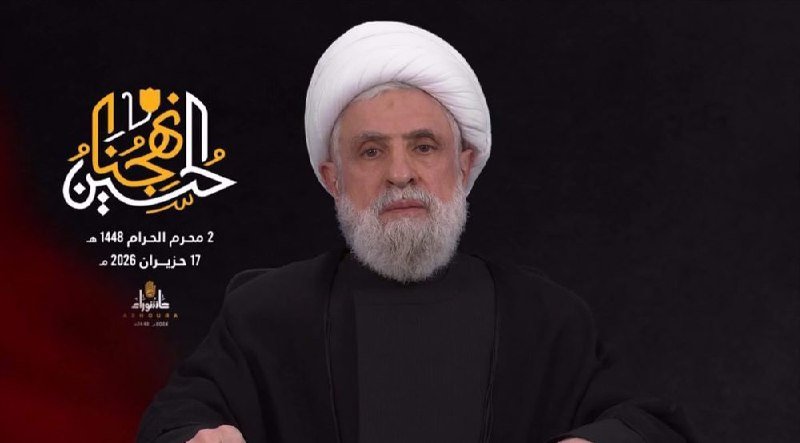
At 15:08 UTC on 14 June 2026, the Israeli military said it had detected aerial targets that fell in northern Israel near the border with Lebanon, with no casualties reported and the incident under investigation, according to a Telegram post by Al Alam Arabic citing the Israeli army. Barely an hour earlier, US President Donald Trump had publicly rebuked both Israel and Hezbollah for escalating across the same frontier, telling reporters that the morning strike on Beirut should not have happened and that no party — including Hezbollah — should launch attacks on Israel.
What had been, by the early afternoon, a slow-motion cross-border flare-up became by mid-afternoon an explicit American demand for mutual de-escalation. The pattern is familiar from the autumn 2024 sequence, when Washington publicly urged an end to the Israel–Hezbollah exchange before a ceasefire took hold. The question on 14 June is whether Trump's intervention lands any better in 2026 than it did then — and whether the projectiles falling in the north, whatever their origin, were timed to test that question.
The morning's two shocks
The day's most consequential single event was the Israeli strike on Beirut that Trump later said should not have occurred. The IDF's acknowledgement of the strike, and the Iranian-affiliated Mehr News wire's recording of Trump's reaction, together frame the event as both a kinetic action and a diplomatic incident. The US president's language, carried by the Iranian state-aligned Mehr News and the pan-Arab broadcaster Al Alam at 14:56 and 14:59 UTC, was unusually explicit: the Beirut response should not have happened, and there should be no further attacks by Israel anywhere in Lebanon — but, the president added, no other party, including Hezbollah, should attack Israel either.
The northern Israel incident followed within hours. At 15:00 UTC, IDF spokesman Avichay Adraee's office said "a number of suspicious aerial targets" had been detected in Israeli territory near the Lebanon border, with no casualties, according to Israeli channel N12 correspondent Amit Segal's Telegram. Eight minutes later, the army's broader statement was relayed by Al Alam Arabic. The IDF did not, in the messages reviewed, attribute the incoming fire, and the incidents remain under investigation.
The counter-narrative from Tehran and Beirut
Iranian state-aligned coverage of the Trump intervention is striking in its restraint. Mehr News carried the president's words in English — "There should be no further attacks by Israel anywhere in Lebanon" — without editorial overlay. The framing implicit in that choice: an American president publicly telling the Israeli government to stop, broadcast into the region by a state outlet that is itself a Hezbollah patron, is a moment of value to a Tehran–Beirut axis that has spent two years arguing that Israel acts with American cover. Trump's rebuke, even if temporary, complicates that story.
In Beirut, the read is different. An Israeli strike on the capital that kills or wounds civilians is a domestic fact long before it is a diplomatic one; Washington's displeasure is a distant datum for Lebanese families in the affected neighbourhood, and the Israeli investigation of the northern aerial targets is a separate, unresolved file. The two events are linked by the same frontier, but the political weight of each falls on a different constituency.
What the public record actually shows
Three things can be said with confidence on the evidence available at 15:08 UTC. First, an Israeli strike hit Beirut earlier in the day of 14 June 2026. Second, the IDF publicly confirmed detecting multiple suspicious aerial targets in northern Israel near the Lebanon border, with no Israeli casualties reported, and the origin of the targets not disclosed in the messages reviewed. Third, President Trump, in remarks relayed by Iranian state media and pan-Arab outlets, called on Israel and on Hezbollah alike to refrain from further attacks, and said the Beirut strike should not have happened.
Several things remain unresolved. The IDF's investigation into the northern targets is, as the army itself noted, ongoing; the projectiles' origin, type, and intended trajectory are not in the public record. The casualty and damage footprint of the Beirut strike is not detailed in the source material reviewed. And the operative meaning of "no further attacks by Israel anywhere in Lebanon" — whether it applies to the south, to the Beqaa, to Hezbollah infrastructure embedded in civilian areas, or only to capital-city strikes — has not been publicly clarified by the White House in the messages carried by Mehr News, Euronews, or Al Alam.
Stakes
If the pattern of late 2024 repeats, the next seventy-two hours matter more than the next seventy-two speeches. A second Beirut strike, or a confirmed Hezbollah-origin projectile causing Israeli casualties, would test whether Trump's standing demand is a binding constraint or a comment. For the Israeli government, the political cost of being publicly told to stand down by the US president is real; for Hezbollah's patrons in Tehran, the same moment is an opportunity to argue that Israeli escalation is now openly contested by its main external backer.
The structural picture is the one familiar from two years of cross-border attrition: a frontier in which low-level fire, calibrated retaliation, and American-led de-escalation signals interact, with each side reading the other through the press conference of the day. The northern Israel incident of 14 June, whatever it turns out to have been, is now part of that record. So is Trump's language about Beirut. The question that follows them is the one that has governed this front since 2023: whether the diplomatic signal travels faster than the next projectile.
Desk note: Monexus has used the IDF's own statements and the wire relay of the US president's remarks as the primary sources for this piece, with Iranian state-aligned coverage cited as a counter-frame rather than as a stand-alone factual basis. Hero image sourced from a Telegram post by Al Alam Arabic documenting the same northern Israel incident described in the body.
Wire provenance
This editorial synthesis draws on the following public wire/social posts:
- https://t.me/alalamarabic
- https://t.me/amitsegal
- https://t.me/abualiexpress