Three explosions in Tyri: what the wires are saying, and what they're not
Three blasts in Tyri on the afternoon of 14 June 2026 anchor a familiar reporting pattern: an attack happens, the framing settles within minutes, and the harder questions wait for another news cycle.
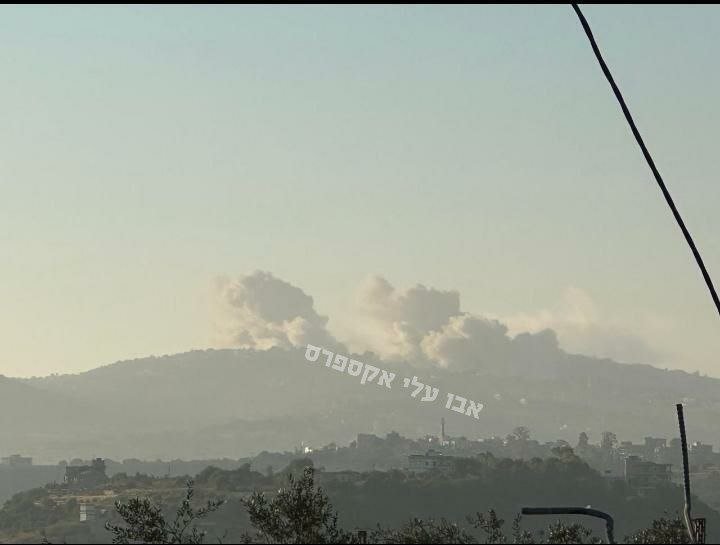
Three explosions were reported in the town of Tyri, in Lebanon's Bint Jbeil district, on the afternoon of 14 June 2026, the first at roughly 18:49 UTC, with the cycle of accounts thickening through 18:53 UTC and a third report circulating by 20:00 UTC. All three items in the live wire that this article is built on are reporting the same event from the same direction: an Al Jazeera correspondent on the ground in southern Lebanon describes Israeli forces carrying out three detonations in Tyri, and the framing that propagates through Telegram channels uses the same wording and the same attribution chain.
The story is small by the standards of a regional war that has, at various points, flattened entire border villages. But it is also a clean test case for how the cross-border Lebanon–Israel file actually gets reported. What follows is what the wires say, what the wires do not say, and what a reader should hold open until something more authoritative lands.
What the wires say
Two telegram accounts, wfwitness and a thread routed through @sprinterpress on X, put the detonations in Tyri on the afternoon of 14 June. The wfwitness posts, timestamped 18:49 and 18:53 UTC, are sourced to an Al Jazeera correspondent in southern Lebanon and describe three explosions in the town of Tyri in the Bint Jbeil district; both posts carry the same shorthand characterisation of Israeli forces as the actor. The sprinterpress item, dated 20:00 UTC, frames the same event as the Israeli military's "new aggression against the southern regions of Lebanon." The details line up: same town, same district, same day, same correspondent attribution at the source.
What the live wire does not contain is a corresponding Israeli military statement. The IDF Spokesperson unit, the standard first responder on cross-border incidents, is not represented in the thread. Nor is any Western wire (Reuters, AP, AFP, BBC) confirmation, any UNIFIL readout, or any Lebanese official communiqué. The picture the reader can build is therefore a one-source picture — credible in shape, because Al Jazeera English has permanent correspondents embedded in southern Lebanese towns and has a track record of placing the time and location of strikes within minutes, but still one-source in the strict evidentiary sense.
The framing problem the wires do not address
In a cross-border incident, two pieces of information tend to be load-bearing: what was struck, and what the strike was meant to do. Both are missing from the live wire. "Three explosions in Tyri" is a description of effect, not of intent. A controlled demolition of a tunnel mouth, a precision strike on a launch site, a cluster of airstrikes on a weapons cache, and an artillery barrage will all sound similar in the first ten minutes of reporting. The cables distinguish between them, and the absence of any "what was being targeted" line is the gap a careful reader should flag.
The second frame that propagates faster than the facts is the political one. Once an incident is labelled "aggression" — as the sprinterpress item labels it — every subsequent correction has to fight uphill. The opposite frame, that a state actor struck a target inside a sovereign neighbour in the course of an ongoing conflict, is a different claim with different evidentiary demands. Both are arguably true at the same time, and reporting that flattens the distinction does its readers a small but real disservice. The Al Jazeera correspondent's account describes the actor; it does not adjudicate the actor's stated justification, and the thread as a whole does not contain one.
What the regional file looks like behind this incident
Tyri sits in Bint Jbeil, a district that has been a focal point of the Israel–Lebanon front since at least the 2006 war, when the village of Bint Jbeil itself became a byword for the ground phase of that conflict. Strikes and counter-strikes in this district in 2026 are not anomalies to be explained; they are the texture of an unresolved front. The most useful thing the live wire tells a reader is therefore not "something blew up" but rather that the Israel–Lebanon border theatre is generating the same kind of single-source, attribution-thin, frame-forward reporting that has dominated the file for months. The reason this matters is that policy in the major capitals is being made on the back of exactly this reporting density.
There is a second, less comfortable frame sitting just below the surface. Israeli strikes inside Lebanon are routinely described in Western wire copy as "retaliatory" or "targeted" with minimal further specification, while the same strikes, in Arabic-language and resistance-aligned reporting, are described as "aggression." Both frames are doing work. The first reassures Western audiences that their government's posture is principled; the second tells audiences in Beirut, Tyre, and Bint Jbeil that the strikes are part of a continuous campaign rather than discrete events. A news consumer reading only one of those frames is getting a clean story, not a true one.
What remains uncertain
The wires do not specify whether there were casualties, what infrastructure was hit, or whether any party other than the Israeli military was involved on the ground. They do not record any Israeli official comment, any UNIFIL statement, or any number from the Lebanese civil defence authorities. The phrase "three explosions" is repeated across the three items, which is the most useful piece of internal corroboration on offer, but it is corroboration of description, not of cause. Until an on-the-record Israeli statement, an independent wire confirmation, or a UNIFIL readout lands, a reader should treat the event as reported but not adjudicated.
Monexus will update this article as any of those three things arrives in the wire.
Desk note: this article was built on a three-item thread of which two originated from a single Telegram channel and one from a Telegram post resharing Al Jazeera English correspondent reporting. The wire therefore rests on one named outlet's correspondent attribution rather than on independent verification. The framing throughout deliberately keeps open the question of intent and the question of justification, which the live wire does not resolve.
Wire provenance
This editorial synthesis draws on the following public wire/social posts:
- https://t.me/wfwitness/
- https://t.me/wfwitness/
- https://en.wikipedia.org/wiki/Bint_Jbeil_District