The midnight signature: how a US-Iran deal cleared Hormuz — and what the timing tells us
Tehran and Washington both claimed the win. The 7.5-hour time gap between the capitals let them — and the Strait of Hormuz reopens with a Bitcoin bid in tow.
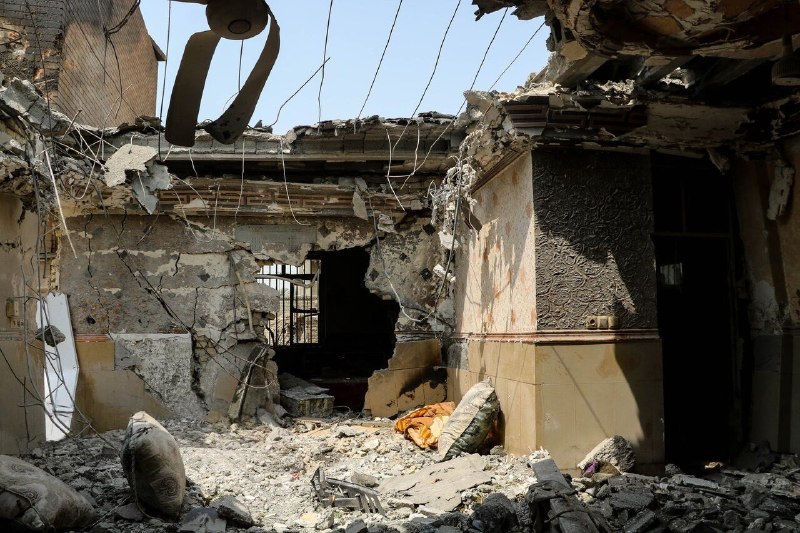
At 23:00 UTC on 14 June 2026, the New York Times reported that Iranian negotiators had waited until after midnight local time to finalise the agreement, deliberately steering the signing away from the birthday of US President Donald Trump. The seven-and-a-half-hour gap between Tehran and Washington had been converted, in other words, into a piece of political choreography: both governments could tell their domestic audiences that the deal was theirs, struck on their own clock, on a day that was not, in either capital, the day the other side would have preferred.
The substance arrived in a more familiar register. By 22:02 UTC, One America News had carried Trump's declaration that the Iran agreement was "now complete" and that the Strait of Hormuz would be opened. By 21:40 UTC, the prediction market Polymarket had already logged the follow-through: Trump had lifted the US naval blockade and authorised the toll-free reopening of the waterway. Two hours earlier, the president had previewed the arrangement in a Truth Social-style post captured by the trading account Unusual Whales. The crypto market, which tends to price the next headline before the cable does, had put a number on the moment well before Sunday evening: Bitcoin held near $65,000 as the deal crossed the wires, with Cointelegraph's weekend coverage framing the Hormuz reopening as a liquidity event for risk assets.
The asymmetry of the announcement — Trump's voice, in English, on American platforms, followed by an Iranian counterpoint from Tehran — is itself the story. The deal is real in the sense that both sides say so. The question of what it actually resolves is older, and the timing tells us where the unresolved work is being hidden.
The Hormuz question, and what "open" actually means
The Strait of Hormuz is the chokepoint through which roughly a fifth of globally traded oil moves. Any disruption moves the price of crude within hours; a sustained closure moves the price of everything else within days. Trump's commitment — that the strait will be "open to all immediately after the deal is signed" — was therefore the most market-sensitive sentence of the weekend, and the one most likely to be tested before the ink was dry.
Two readings of "open" are now in play, and the difference between them is the difference between a deal that holds and a deal that lasts only until the next incident. The narrower reading is procedural: a US naval blockade has been lifted, tanker traffic resumes, insurers reprice the war-risk premium down, and the visible crisis ends. The wider reading is structural: Iran accepts constraints on its nuclear and missile programmes, custody arrangements for enriched material are negotiated, and the underlying tension that produced the blockade in the first place is taken off the table. The Sunday announcements support the narrower reading comfortably. They do not, on the available reporting, deliver the wider one.
That matters for oil, for shipping, and — increasingly — for the crypto market that reacted in real time. A procedural reopening moves the spot price of Brent and pulls down freight and insurance. A structural resolution moves the term structure, the forward curve, and the geopolitical risk premium embedded in everything from Saudi sovereign debt to Ethereum gas.
The choreography of "complete"
The most revealing detail in the NYT account is the smallest. Both governments had a clear preference: each wanted a signing date that would read, in domestic political terms, as a win. Tehran's preference, the paper reported, was to avoid giving the US a White House signing on the president's own birthday. Washington's preference, presumably, was the opposite. The seven-and-a-half-hour time difference resolved the dispute in the only way time zones can: each side signed on its own day.
This is not trivial. Sanctions relief deals between the United States and the Islamic Republic have collapsed before, often not over the substantive clauses but over the optics of who appeared to be climbing down. The 2015 Joint Comprehensive Plan of Action survived its first year partly because Tehran and Washington were each able to claim a different mix of concessions; the reimposition of US sanctions in 2018 followed a year in which that ambiguity was exhausted. The choreographers of the present deal appear to have read that history. The midnight signature, on a day that is Sunday in Washington and the early hours of Monday in Tehran, is a piece of political design aimed at making the agreement survive its first news cycle in both capitals.
The secondary clue is the medium. Trump's announcement travelled through OANN, through a Truth Social-adjacent post captured by Unusual Whales, and through a prediction market that pays out in real money. The Iranian confirmation travels through Iranian state-aligned channels and, increasingly, through Tehran-based English-language outlets that compete with both Reuters and Al Jazeera for the regional English-speaking audience. The two streams are not negotiating a single shared narrative. They are running two parallel ones, each calibrated for its own audience. That is a feature of the deal, not a bug. It is also, historically, the first sign that the deal is operating on fumes rather than substance.
Why Bitcoin is pricing the deal — and why that should worry traders
Cointelegraph's weekend coverage was explicit: the deal was moving Bitcoin before it had moved the oil curve. The token held near $65,000 as the headlines crossed, with the trade framed as a "risk-on" rotation. Michaël van de Poppe, the crypto analyst quoted in the same Cointelegraph dispatch, made the standard case: a peace deal reopens Hormuz, oil falls, dollar softens, and capital rotates into non-yielding scarce assets.
The mechanism is real. The model is incomplete. Bitcoin is being used, again, as a real-time sentiment barometer for events that are still being interpreted. The Polymarket contract on the blockade lifting had moved before Trump's announcement; the prediction market was pricing the truth of the claim in advance. By the time the cable caught up, the speculative position was already on. That is a useful signal and a dangerous one in the same breath. It tells us that the most agile pools of capital believe the deal holds. It does not tell us that the deal holds.
There is a structural reason the crypto market is the first to move on Iran news, and it is worth naming. The traditional hedging instruments — oil futures, gold, the dollar index — are themselves directly affected by an Iran agreement. A deal softens oil and the dollar simultaneously. Bitcoin offers a third leg, an asset that is correlated to neither in the conventional sense and that the consensus crypto desk treats as a proxy for global liquidity. The price action is rational, and it is also a reminder that the market is reading the same limited information faster than the cable.
What is settled, and what is not
Settled: the US naval blockade is lifted, on the public record of the president himself as carried by OANN and confirmed by the Polymarket contract. The Strait of Hormuz is, in the procedural sense, open. Tankers are moving. Insurers are repricing. The oil curve has had its first downward jolt.
Not settled: the terms under which Iran has accepted the deal. The reporting available on 14 June 2026 does not detail the specific constraints on enrichment, the disposition of stockpiled material, the inspection regime, or the sequence of sanctions relief. The NYT account focuses on timing rather than substance; the OANN account carries Trump's framing; the crypto-side reporting focuses on the market reaction. Iranian state media, in the items available to this publication, have not yet published a text the rest of the world can compare clause by clause against the American version. Until that text is public, both sides can keep claiming the deal on their own terms — which is, of course, the design.
Not settled, and not yet visible: the response of the regional players who were not in the room. The Gulf monarchies, Israel, and the Iraqi government have material interests in any US-Iran settlement and were not parties to this one. The historical pattern is for the actors outside the bilateral to act within days of the announcement: a statement, a flight of drones, a re-routed tanker. The next 72 hours will be diagnostic.
The structural frame: a deal that hides its seams
The pattern is older than the Iran file. Bilateral settlements between the United States and a sanctioned state — Cuba in 2014-15, the JCPOA in 2015, the Abraham Accords in 2020, the various Ukraine-grain arrangements in 2022-23 — have repeatedly produced a first weekend of triumphal coverage, a second weekend of caveats, and a third weekend of contradictory claims about who said what to whom. The news cycle flatters the signing. The next six months punish the seams.
What is distinctive this time is the venue of the contradiction. The official texts, when they appear, will be parsed by wire services and by the United Nations. The political ownership of the deal will be fought out on Truth Social, on Iranian state television, on prediction markets, and on crypto exchanges. The audience for the deal is not the foreign-policy establishment in either capital. It is the home audience, and the financial audience, and the partisan audience. The choreography of the midnight signature is built for those audiences, not for the diplomats.
The Iranian and American positions also sit, in structural terms, inside a wider rebalancing that the regional press has been tracking for two years: the gradual erosion of dollar-centric sanctions architecture, the rise of non-USD trade settlement among a widening set of partners, and the slow rebuilding of an Iranian export economy that sanctions reduced but did not eliminate. The deal, on the narrow reading, gives Tehran a partial release from that pressure. On the wider reading, it gives the United States a confirmation that the pressure regime still has leverage. Both readings can be true. The midnight signature, on the right day, is what makes it possible for both sides to keep telling their stories.
Stakes, and what to watch
If the deal holds in its narrow procedural sense, the immediate winners are the regional importers who rely on Hormuz traffic, the oil shorters who caught the early move, and the political leaderships in both Washington and Tehran that can claim a win. The immediate losers are the insurers and tanker operators who had repriced for closure, and the Iranian opposition factions whose negotiating position depended on the pressure continuing.
If the deal does not hold — if a regional actor tests the arrangement, or if the next round of negotiations breaks down over enrichment — the most exposed positions are the ones already crowded on the open-Hormuz trade. The Bitcoin bid, in particular, is a leveraged expression of the deal holding. A reversal would not be symmetrical: Bitcoin sold off would compound the move in oil, and the second-order effect in emerging-market debt would be the one the cable is slowest to price.
The single most informative number in the next 48 hours will be the number of tankers moving through Hormuz with insurance priced for a peacetime risk premium. That is the operational definition of "open." Everything else is choreography.
This article drew on US and Iranian official statements carried by OANN and the New York Times, prediction-market pricing from Polymarket, and weekend market reporting by Cointelegraph. The wire coverage available at publication did not include the full text of the agreement; the analysis above treats the official statements as authoritative for the political claims and the market data as authoritative for the financial claims, and treats the gap between them as the actual subject.
Wire provenance
This editorial synthesis draws on the following public wire/social posts:
- https://t.me/ClashReport