The Memorandum Nobody Voted For: How a US-Iran Deal Is Reshaping Israel's Strategic Calculus
Washington signed a memorandum of understanding with Tehran and refused to share the text with Jerusalem, and the regional choreography is now being written by parties who were not in the room.
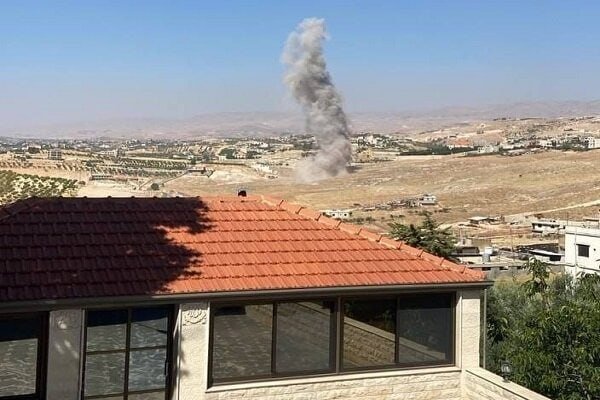
Washington signed a memorandum of understanding with Tehran and has refused to share the text with Jerusalem. The rebuff, reported on June 16 by CNN and relayed through Tasnim, Fars and Middle East Eye, marks the first time a sitting US administration has actively withheld a Middle East agreement from the Israeli government rather than merely consulted it on the margins. The deal itself, as described by Bloomberg and confirmed in a US officials' briefing, promises an immediate and permanent end to "the war on all fronts" including Lebanon, sanctions relief on Iranian oil, and roughly $400 billion in combined frozen funds and reconstruction money phased in against compliance milestones. The text exists. The Congress has not seen it. The Israeli cabinet has not seen it. And the regional choreography that follows is being written in real time by parties who, until last week, were not in the room.
That asymmetry is the story. A deal this size, between two governments currently trading drone and missile fire, was negotiated without the principal US ally in the region reading the fine print. The reporting trail is now familiar in shape if not in scale: an Israeli-aligned US media request filtered back through Tasnim and Fars, both of which framed it as American disrespect toward the "Zionist regime." The CNN-sourced detail, that Washington rejected the Israeli request to see the MOU, is the kind of sentence that ends an Israeli foreign minister's week.
The substance, such as can be reconstructed from wire leaks, tilts heavily toward Tehran. Reuters confirmed on June 16 that lawmakers on Capitol Hill have been left in the dark on the deal even as Donald Trump signalled he would eventually send it to Congress. A briefing reported through Megatron on Telegram outlined that Iran will gain access to roughly $100 billion in frozen funds plus an additional $300 billion reconstruction tranche, gated against implementation steps not yet specified. NBC News, via the Lookner account, added a kinetic footnote: the IRGC has fired multiple drones toward commercial shipping in the Strait of Hormuz since the Sunday agreement, suggesting the IRIN did not read the same memo as the negotiator. If verified, that detail is not a footnote. It is an early test of whether the "permanent end" clause means anything.
The Israeli read of the package is being articulated in unusually blunt English-language terms by partisans who usually keep the argument inside Hebrew. Open Source Intel's relay of Katie Pavlich's analysis captured the framing reaching American conservative media: if Iran stops developing terrorism, the deal appears to do the opposite, by binding Israel's ability to strike the Hezbollah rear, in effect giving the organisation space to rebuild. Read against Bloomberg's "immediate and permanent end" language, that is a direct contradiction over what "Lebanon" means in the document. Mike Huckabee, the US ambassador to Israel, was publicly trying to renegotiate the deal in real time within hours of its signing, an unusual move for a sitting ambassador that signals either embassy-level panic or a managed walk-back, possibly both.
The structural point underneath the political theatre is straightforward: the United States has, for the first time in this century, structured a Middle East understanding on a bilateral axis with Iran that treats Israel as a stakeholder rather than a co-author. Previous architecture, including the Abraham Accords scaffolding and the post-2023 security coordination, treated Israel as the primary regional partner and Iran as the adversary to be contained. This MOU inverts that sequence. Tehran becomes the negotiating partner with whom terms are set; Jerusalem becomes a customer asked to comply with terms it has not read. The Hillary Clinton commentary circulating on June 16, that Netanyahu needs war for political survival and that an Iran deal could be the end of him, is the sharpest statement of what the architecture change implies for Israeli domestic politics. John Bolton's characterisation that "the Iranians played Trump like a violin," coming from a former national security adviser, is the matching neoconservative verdict from the other direction. Both readings agree on one thing: something the previous order could not produce, has been produced.
For the Gulf, the deal un-bundles the security architecture that priced Iranian risk into insurance, shipping and capital flight for the better part of two decades. The Fars News framing, that "billions of dollars of Arab money" are heading toward Israel's defence industry while the multi-front war continues in Gaza, Lebanon, Syria, Yemen and Iran, is propaganda at one level but a market signal at another. Israeli defence exports have been one of the principal vehicles through which Gulf normalisation was supposed to operate; a deal that drains political oxygen from the Iranian threat narrative drains the commercial case for the hardware. Tehran's Khatam al-Anbiya Central Headquarters, cited by Press TV on June 16, warned of a "harsh response" over alleged Israeli ceasefire violations in southern Lebanon, eighty-four counts reported since the deal. That is a non-state-aligned source, and the count is sourced to one side of the conflict. Read it as a marker of how the Iranian side intends to police non-compliance, not as verified incident accounting. The date to watch is the first formal congressional briefing, and after that the first IRGC-platform test. One will tell you whether the deal is law. The other will tell you whether it is peace.
Follow the event.
These dated source records provide context. They do not retrospectively verify this archive article.
Separate what the nuclear watchdog reported from what it could not determine after the June 2025 strikes.