The Vance–Ghalibaf deal and the architecture of American retreat
A reported US–Iran accord lifts oil sanctions, reopens the Strait of Hormuz, and freezes Tehran's nuclear file. Read it less as diplomacy than as a confession of strategic exhaustion.
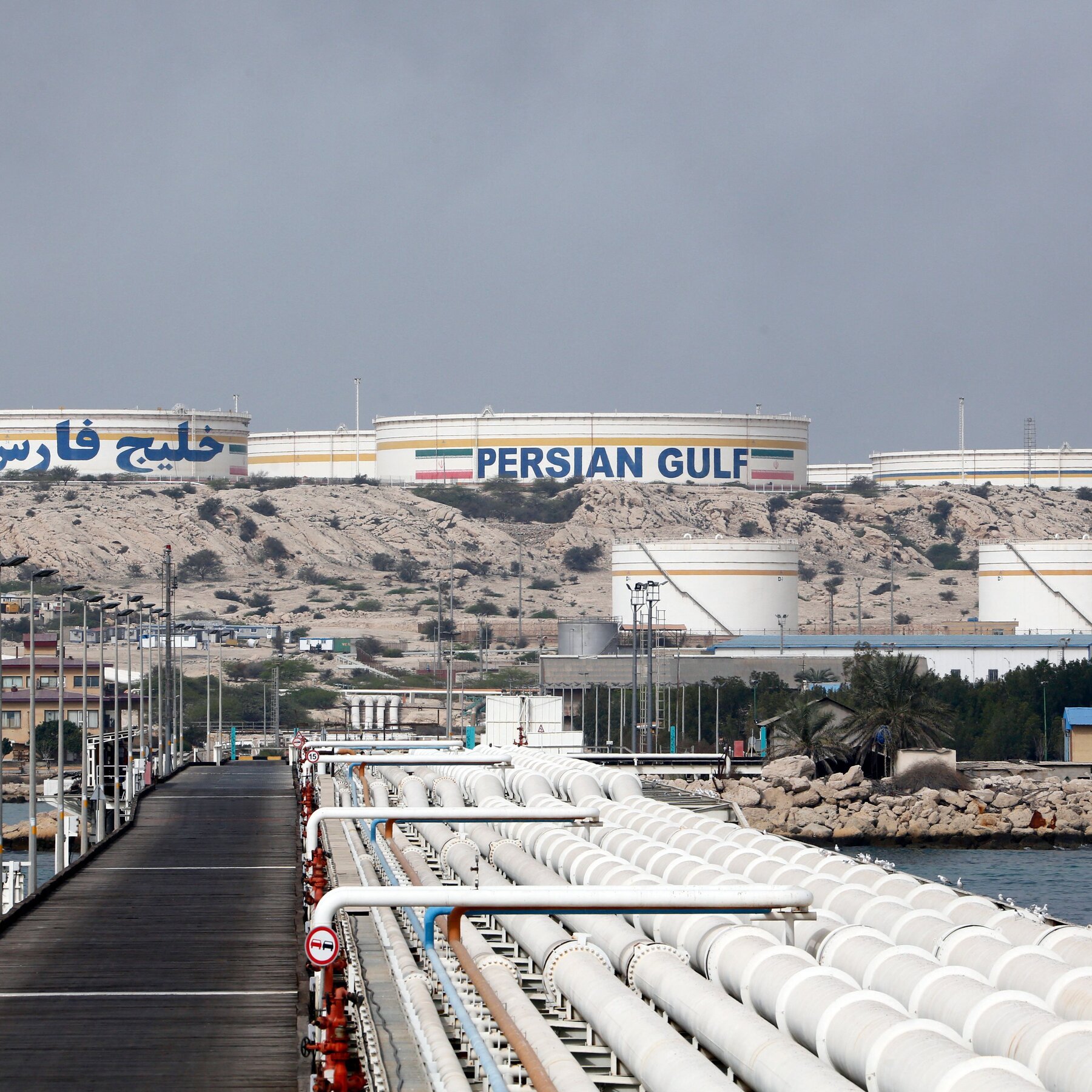
At roughly 13:58 UTC on 14 June 2026, the open-source channel @OSINTdefender relayed a U.S.-sourced account of a tentative agreement under which Iran would pledge to forgo nuclear weapons in return for the lifting of U.S. oil sanctions and the reopening of the Strait of Hormuz. An hour later, the same channel reported that the instrument was expected to be signed that day by Vice President JD Vance and Iranian parliament speaker Mohammad Bagher Ghalibaf. The picture it paints is not diplomacy as statecraft. It is diplomacy as triage.
This publication has no interest in celebrating or grieving the reported deal on its own terms. The point worth making is bigger: the document on the table, if it holds, is a confession. It admits that the United States can no longer guarantee the two things its Middle East policy has demanded of Iran for two decades — non-proliferation and economic strangulation. The choice, in the end, was always going to be one or the other. Washington has chosen oil.
What is actually being traded
Strip away the choreography and the deal reduces to three concessions, each of which has been live U.S. policy for years. The first is sanctions relief on Iranian crude, the lever that has kept Tehran's export volumes compressed and its rial in free fall. The second is unimpeded passage through the Strait of Hormuz, the chokepoint through which a meaningful share of seaborne energy moves, and which Iranian asymmetric capability has been able to menace for the better part of a decade. The third, on the Iranian side, is a non-proliferation pledge — the same pledge that has been on and off the table since the 2015 Joint Comprehensive Plan of Action, abandoned by the United States in 2018, and never renegotiated on terms the Islamic Republic found acceptable.
That the third item is now being signed by the speaker of Iran's parliament rather than its president or foreign minister is itself a tell. Ghalibaf is a former IRGC commander, a power-broker of the security faction, and the man the Islamic Republic puts forward when it wants the street to read the document as a victory. Vance, on the U.S. side, is the senior political figure willing to absorb the domestic cost inside a Republican base that has spent fifteen years being told that any deal with Tehran is appeasement. The two signatories are the ones whose signatures do not need to survive a domestic audience.
The counter-narrative the wires will not run
The default Washington read of any Iran agreement is that the regime is buying time, that verification will fail, and that a nuclear-armed Iran is a question of when rather than if. There is a real argument inside that view. Iran's enrichment capacity was never fully dismantled, its breakout window narrowed, and the International Atomic Energy Agency's access has been the perennial fault line.
The counter-narrative is structural. For twenty years, the U.S. strategy on Iran has been: maximum pressure, regional encirclement, Israel-Saudi counterweight, and the quiet hope that the regime would crack. The regime did not crack. It sold oil to China through shadow fleets, armed an axis from Sanaa to Beirut, and learned to absorb sanctions as a permanent feature of state revenue rather than a temporary emergency. A deal in 2026 is not the failure of pressure. It is the delayed recognition that pressure, as practised, was a strategy for a country that no longer exists — a United States with the patience and the domestic cohesion to run a generational siege.
What this looks like from Tehran
Read the same facts from the Iranian side and the document is a different object. The lifting of oil sanctions is a recovery of the export revenue the 2018 withdrawal of the JCPOA stole. The Strait of Hormuz provision is the formal recognition, by the country that has patrolled those waters since 1979, of a security role the Islamic Republic has been performing de facto the entire time. The non-proliferation pledge costs Iran something real, but it costs Iran something it had already been paying for in sanctions and isolation, and it buys back sovereignty over its own balance of payments.
Iranian state media will frame this as the end of the maximum-pressure era. The framing is not crazy. The U.S. side will frame it as a non-proliferation win. That framing is not crazy either. The truth, as usual, is messier than either narrative: it is a deal in which the United States gives up the economic weapon it actually controlled and keeps only the verification regime it never really trusted in the first place.
The architecture of retreat
Step back, and the deal sits inside a pattern that is no longer deniable. The U.S. position in the Gulf has been narrowing for a decade: a withdrawal from the Iran nuclear framework in 2018, a strike on Iran's nuclear infrastructure that delayed but did not destroy the programme, a Houthi campaign the Navy cannot end, an Iraqi political class that asks Tehran before it asks Washington, and a Saudi Arabia that has been making its own arrangements with Beijing. The Vance–Ghalibaf deal does not cause any of those facts. It ratifies them.
This is what strategic exhaustion looks like in a single document. It is not defeat. The U.S. Navy still transits Hormuz, the dollar still clears most of the world's energy, and the regional architecture of alliances has not collapsed. But the U.S. is no longer the indispensable broker of Middle East security. It is one of several powers, and the deal on the table is the price of acknowledging that.
Stakes, stated plainly
If the deal holds, Iran keeps its export economy, the regime's legitimacy project inside the country is partly repaid, and Tehran acquires a stronger hand in Lebanon, Syria, and Iraq. The United States keeps a non-proliferation pledge it cannot independently verify and a sanctions-relief lever it has already shown it will re-impose the next time domestic politics demands it. Israel and Saudi Arabia, the two regional actors with the most invested in the previous posture, inherit a smaller American guarantee. Beijing and Moscow, the two capitals that have been buying Iranian crude and offering diplomatic cover, inherit a sanctions regime with a permanent off-ramp.
The serious case for the deal is that this was the least bad option available, and that an indefinite continuation of maximum pressure would have ended in either a war the American public would not support or a nuclear Iran with no inspection regime at all. The serious case against it is that it gives the Islamic Republic most of what it wants in exchange for a promise, and that the United States has now, twice in less than a decade, signed a non-proliferation deal with Iran and then walked away from the verification architecture that would have made it credible.
The deal is not the story. The story is the United States deciding, in a single act, that the Middle East is no longer the place where it spends its credibility. Everything else — the Strait, the oil, the centrifuges — is bookkeeping.
Desk note: Monexus ran this as a Staff-Writer opinion, not a news item, because the available reporting rests on a single open-source channel and a U.S.-sourced synopsis. The wire services have not yet confirmed the signing. We will move this piece to the news desk the moment a Reuters, AP, or Axios byline lands.
Wire provenance
This editorial synthesis draws on the following public wire/social posts:
- https://t.me/s/OSINTdefender
- https://t.me/s/osintdefender
- https://t.me/s/OSINTdefender
- https://t.me/s/osintdefender
Follow the event.
These dated source records provide context. They do not retrospectively verify this archive article.
Separate what the nuclear watchdog reported from what it could not determine after the June 2025 strikes.