Cage fighting on the lawn: what the White House UFC spectacle tells us about the boundary between state and spectacle
A cage on the South Lawn and a stand-up set running into a forced leave: the same week surfaces two questions about who owns public space and who pays when the punchline lands.
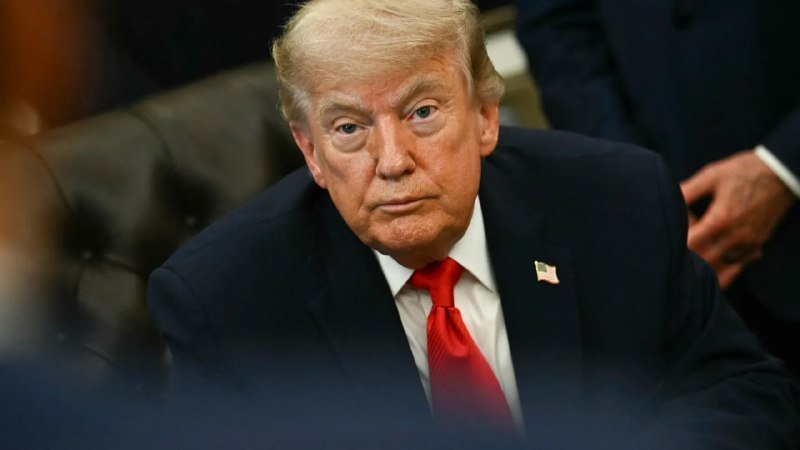
A federal judge on 12 June 2026 declined to block a mixed-martial-arts card planned for the South Lawn of the White House, clearing the way for the event to go ahead on the date it was advertised. The card, branded UFC "Freedom 250," had been challenged in court; the ruling, first surfaced by prediction-market tracking account @polymarket, leaves the spectacle intact and the constitutional arguments largely unresolved. The cage on the lawn is, on its face, an entertainment booking. Read against the rest of the week's headlines, it is also a referendum on what the executive mansion is for.
The Indian Express framed the booking bluntly: a sitting president has brought cagefighting to the White House, with all the pageantry of a title fight grafted onto a civic stage. The same paper ran two related pieces the same day, both about stand-up comedy in India — one a general column arguing that performers remain "off the clock, but always on — and accountable," the other a specific case in which an MBBS student was sent on forced leave after a set went viral. The juxtaposition is instructive. In Washington, a president uses state property as a venue. In India, a medical student loses his seat over a punchline. The connective tissue is the question the Indian editorial asked first: who is on the hook when performance and power meet in public?
State property, private promotion
The legal objections to the White House card — captured in the Polymarket-flagged 12 June ruling — centred on the use of federal grounds for a private promotion, the security footprint, and the symbolic use of the executive residence. None of the objections succeeded at the preliminary stage. The decision matters less for the precedent it sets than for the precedent it declines to set: a court has now confirmed that the South Lawn is available for hire in ways previous administrations did not test. Future presidents of either party now inherit a venue, not just a building.
The promotional logic is also worth naming. The Indian Express account of the card describes a deliberate aesthetic of red, white and black — a palette borrowed from the flag, welded onto a sport whose brand is violence-as-spectacle. The visual argument is that the state and the fight are the same product. That is a marketing decision dressed as a scheduling decision.
The other end of the same week
The two stand-up pieces, while they concern a different jurisdiction, sharpen the contrast. The general essay argues that comedians, even outside the club circuit, operate in a public square where the consequences of a line land on the comedian, not on the room. The MBBS-student piece gives that abstraction a body: a young man, identifiable on social media, removed from his course because a clip escaped the room. The Indian frame is that accountability flows downward — from platform to performer to institution. The American frame, in the ruling that allowed the UFC card, is the opposite: the institution absorbs the spectacle, the promoter benefits, and accountability, if it ever arrives, arrives slowly and in court.
What the boundary looks like now
A coherent picture of the present moment is that the line between civic space and commercial entertainment is being redrawn by usage rather than by statute. The ruling did not legalise the South Lawn as an arena; it simply declined to stop this particular use of it. Each booking that proceeds without challenge narrows the implicit norm. A free-speech culture that tolerates the strongman aesthetic at the top is, in practice, the same culture that punishes the medical student at the bottom — the asymmetry is not hypocrisy, it is hierarchy. The powerful get the venue, the junior performer gets the consequences.
Stakes and uncertainties
The counter-reading is real and should be recorded. A White House UFC card is, on this account, a legitimate exercise in outreach: the president is engaging a demographic that does not read policy papers, and the security cost is contained. The Indian cases, on the same account, are the routine friction of running institutions in a social-media age — administrators overreact, students pay, life continues. Both readings have evidence behind them. The reason the dominant framing still holds is that the asymmetry of consequence is not incidental to the spectacle; it is the spectacle's point. A culture that lets the president fight on the lawn and disciplines the medical student for a joke is telling its juniors, very precisely, who the building belongs to.
What remains genuinely uncertain is the after-life of the ruling. The 12 June decision declined to block; it did not bless. Future litigation, audit findings, or a change of administration could reopen the question. The MBBS-student case, similarly, is an institutional decision subject to appeal and to public pressure; it is not yet a verdict on Indian campus culture. Both stories are mid-flight. Read together, they are the clearest available x-ray of where the line currently sits — and how steeply it slopes.
Desk note: Monexus treats the White House card and the Indian stand-up cases as a single comparative beat on the boundary between public space and private performance. The wire covered them as separate stories; the structural question is the same.
Wire provenance
This editorial synthesis draws on the following public wire/social posts:
- https://x.com/polymarket/status/