Zelensky-Trump call keeps the diplomatic channel open — and the substance still under wraps
A reported phone call between Zelensky and Trump on 14 June 2026 carries the diplomatic register the moment demands — courteous, forward-looking, deliberately vague.
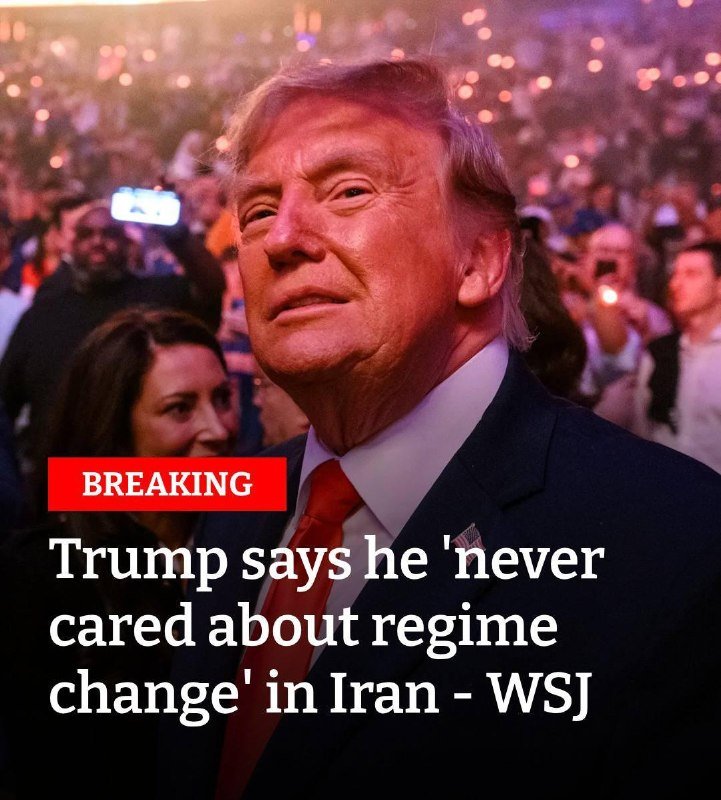
At 15:35 UTC on 14 June 2026, the Telegram channel ClashReport carried a statement attributed to President Volodymyr Zelensky: he had just finished "a great conversation" with Donald Trump, had briefed the US President on battlefield developments, and had noted that Ukraine's position "has strengthened." The two men, Zelensky's office added, had agreed to discuss further steps in greater detail. Within the hour, the call had been confirmed — and contextualised — by four other Ukrainian and war-monitoring channels, all drawing on the same RBC-Ukraine sourcing.
The exchange was framed, deliberately, as birthday diplomacy. Trump turned 80 on 14 June. Zelensky, according to the RBC-Ukraine reporting cited by Kyiv Post, UNIAN, WarTranslated and the OSINT Live channel, opened the call with birthday wishes before the two leaders moved to "ideas for further negotiations." That ordering matters: a courtesy call first, a substantive one promised. It is the diplomatic register the moment demands — courteous, forward-looking, and carefully unspecific about content.
What we know, and from whom
The factual spine of the story is narrow and Ukrainian-sourced. RBC-Ukraine, the Kyiv-based business daily, broke the call to its readers, citing a single source familiar with the conversation. Kyiv Post republished the framing at 14:52 UTC; UNIAN followed at 14:44 UTC; the WarTranslated and OSINT Live channels — both of which track and translate Ukrainian and Russian military and political chatter — corroborated the timing and tone shortly after. Zelensky's own channel, posted to Telegram via ClashReport at 15:35 UTC, is the only direct read-out of his end of the call; the White House has not, as of this writing, issued its own characterisation of the conversation.
Two details can be considered firm. First, the call happened. Five independent channels, all pointing back to a single RBC-Ukraine source, describe it in the same terms. Second, the substance of the call was not disclosed — neither side published a readout with specific negotiating positions, proposed terms, or scheduled follow-up meetings. Everything else is the diplomatic equivalent of fog.
The substance the readouts leave out
The most telling line in Zelensky's post is the claim that "our position has strengthened." The statement does not specify whether the strengthening is military, diplomatic, or rhetorical — and that ambiguity is itself a message. In a war now approaching its fifth year, with the front line essentially static and Western aid packages tied up in domestic political bargaining in Washington and several European capitals, the phrase lets Kyiv project momentum without committing to a specific battlefield claim that could be falsified within days.
The phrase also lets Trump accept the framing. The US President has spent much of 2026 oscillating between pressure on Kyiv to accept a negotiated settlement and pressure on Moscow to accept terms. A call in which the Ukrainian side declares itself stronger is, for now, a call in which the White House does not have to pick a side on the question of who is winning.
That is also where the alternative reading lives. The same five channels that describe the call also describe a negotiation environment in which neither Washington nor Kyiv has publicly stated what a successful end-state looks like. "Further negotiations," as RBC-Ukraine's source described the agenda, is a phrase that can mean a new round of talks in a third country, a phone diplomacy track, or simply an agreement to keep talking. Without a White House readout, there is no external check on which.
The structural frame: courtesy as currency
The choreography is the story. A birthday call between two presidents, both of whom need a public marker of communication that does not commit either side, is not a small thing. It is the diplomatic equivalent of a routine central-bank phone call during a market stress — a signal to other actors that the channel is live, that the principals are not estranged, and that the next move will be telegraphed rather than sprung.
In the broader architecture of the war, that signal is read differently by different audiences. For European capitals that have been quietly anxious about a US-Ukraine drift, the call is reassurance. For Moscow, it is a reminder that the diplomatic track the Kremlin has been demanding is, in fact, in motion — which is the outcome Moscow has wanted. For Kyiv, it is a confirmation that the bilateral channel with Washington remains operative at the presidential level, even as the substance of that channel remains opaque to outside observers.
What remains genuinely uncertain
The reporting on the call is uniform in describing it and uniform in declining to describe its content. That uniformity is suspicious in its own right: when five channels arrive at the same level of detail, the likeliest explanation is a single upstream source — RBC-Ukraine's — and a coordinated set of choices about what to publish and what to hold. The White House silence is the more telling absence. A second-term Trump administration has, in the past, been quick to publicise presidential calls when they served a political purpose; the absence of a US readout suggests the content has not yet been adjudicated as serving one.
Until a Western or Ukrainian wire publishes a fuller account — or the White House issues its own — readers should treat the Zelensky post and the RBC-Ukraine sourcing as the floor of what is known, not the ceiling. The diplomatic channel is open. The substance of what passes through it is, for now, the property of the two presidents and their respective teams.
Desk note: Monexus has leaned on the Ukrainian and war-monitoring channel layer (RBC-Ukraine, Kyiv Post, UNIAN, WarTranslated, OSINT Live) as the source-of-record for the call itself, and has noted the absence of a White House readout as a structural fact rather than a gap to be filled by inference.
Wire provenance
This editorial synthesis draws on the following public wire/social posts:
- https://t.me/ClashReport
- https://t.me/osintlive
- https://t.me/wartranslated
- https://t.me/Kyivpost_official
- https://t.me/uniannet
Follow the event.
These dated source records provide context. They do not retrospectively verify this archive article.
A dated voting record is evidence of one decision. Use the original UN record before turning it into an alignment label.
Visual explainer · historical vote of 2022-03-02 →