OG Anunoby takes the trophy home to London: what a Knicks title means for British basketball
London-born OG Anunoby helped deliver the New York Knicks their first NBA title in decades — and is now telling anyone who will listen that the UK game is about to grow.
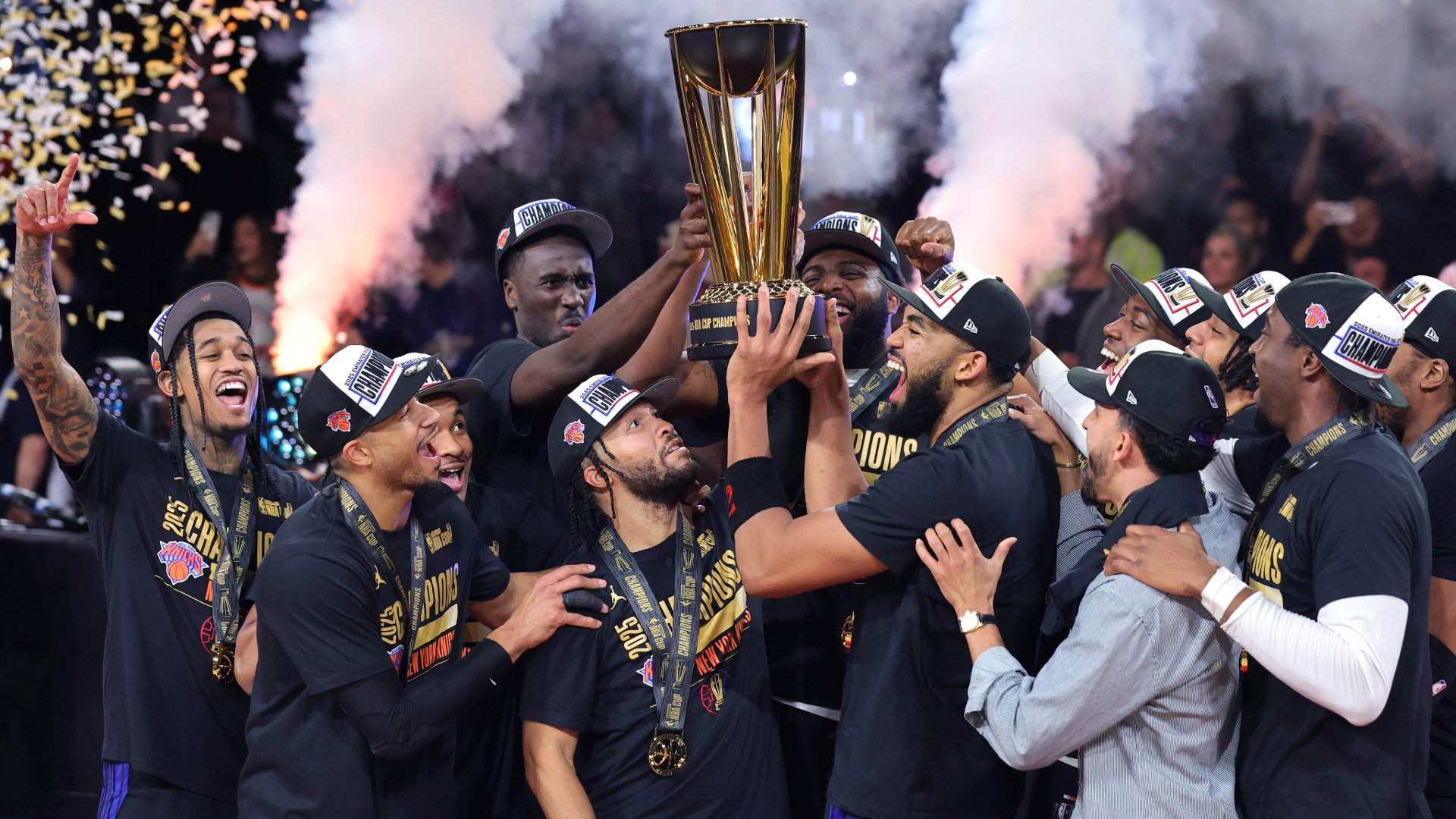
The New York Knicks are NBA champions, and the man most likely to talk about it in a London accent is doing exactly that. OG Anunoby, the forward raised in Croydon before moving through the English system and into the NBA, played a starring role as the Knicks lifted the Larry O'Brien Trophy, telling BBC Sport on 15 June 2026 that he believes basketball in the United Kingdom is "going to grow more and more."
That is the optimistic reading of a story that, for British hoops, has been a long time coming. Anunoby is the first English-trained player to be a frontline rotation piece on a championship team in the modern era. The structural question is whether one ring, and one face, is enough to bend a sporting culture that has for decades been the third or fourth choice of the country's best athletes.
A trophy with a Croydon postcode
The Knicks' 2026 title run has been treated, accurately, as a New York story. Madison Square Garden hosted its first championship parade in living memory; the league's marquee brand finally matched its marketing. But Anunoby's arc gives the season a second, quieter narrative. He came up through the programme at Croydon, played age-group basketball in England, and left for the United States as a teenager — the standard pipeline for elite British prospects. He returned in June 2026 as a champion.
The BBC report on 15 June 2026 framed his comments in terms of growth: more kids watching, more parents willing to let a tall fifteen-year-old choose basketball over football or rugby. The argument is not that one player changes a sport, but that one player who wins gives a generation of children a permission slip to take the sport seriously. The same dynamic played out, on a smaller scale, around Luol Deng in the mid-2000s and around the early-2010s presence of British players in NCAA Division I rosters.
What the British pipeline actually looks like
The structural frame matters. British basketball is not, at the developmental level, starved of talent. The country produces technically gifted players; what it lacks is depth in the professional and semi-professional tier between the academy system and the NBA. The British Basketball League (BBL) has cycled through periods of financial strain, franchise churn and limited broadcast visibility, which has historically compressed the path to the top.
Anunoby's framing leans on that gap closing. A high-profile NBA title lends weight to two things at once: the case for parents that basketball is a viable career path, and the case for British institutions that the player-development pathway works. The first is a cultural argument. The second is a question about funding, scouting and the willingness of British clubs and federations to keep investing in a sport whose economics remain fragile.
The counter-narrative is the obvious one. The UK has produced NBA role players before; it has not produced a deep enough layer behind them to call the trend a boom. The honest read is that Anunoby is a leading indicator, not a verdict. His visibility raises the floor of interest; the next decade of work decides whether that floor becomes a ceiling.
The league's own interest
The NBA is not a passive observer of any of this. The league has run regular-season games in London since 2019, with the most recent editions staged at The O2, and has used the UK stop to develop broadcast relationships, sponsorship inventory and grassroots programming. A Knicks championship featuring a London-born rotation player is, for the league's international office, a usable piece of evidence that the UK market rewards continued investment.
The dynamic runs both ways. The NBA can point to Anunoby as proof that its UK strategy has produced a return. British basketball can point to the same player as proof that the path exists. Neither claim is wrong, and neither is sufficient on its own. Growth in a minor sport in a major market tends to follow whichever institution is willing to fund the boring middle — coaching salaries, club infrastructure, regional leagues — for long enough that the next Anunoby does not have to leave at sixteen to fulfil his ceiling.
The stakes for the next five years
The reasonable forward view is incremental, not transformational. British basketball will not overtake football in the next cycle, and it does not need to in order for Anunoby's prediction to come true. A doubling of registered players, a BBL that can credibly retain young British talent past the age of eighteen, and a second or third English player holding down an NBA rotation spot would together represent a genuine step-change from the 2010s baseline.
The unresolved question is institutional. The BBC interview captured the player's view; it did not, and could not, settle the question of whether the British system is built to absorb the attention an NBA title brings. Anunoby can open the door. Whether the Basketball Federation, the clubs, and the broadcasters choose to walk through it is a question of money and patience, both of which have historically been the binding constraints on the British game.
For now, the fact is simple. A man who learned to play the sport in south London has a championship ring, and is telling British kids that the ceiling is real. The rest is execution.
This article was filed on 15 June 2026. Monexus has framed Anunoby's title as a leading indicator for British basketball rather than a verdict, in line with the BBC's reporting on the player's own assessment.