Live Wire
10:37ZTHECRADLEMIsraeli attack reported near UNRWA schools in central Gaza Strip10:37ZTHECRADLEMIsraeli attack reported near UNRWA schools in central Gaza Strip10:37ZTASNIMNEWSIranian shooter Rostamian breaks record at national team training camp in Oman10:37ZPRESSTVIran national football team members kissed Quran before departing Mexico for Los Angeles10:35ZINSIDERPAPU.S. Marine Corps F/A-18 Hornet crashes near Rimrock Lake, Washington, on Saturday10:35ZTWOMAJORSUS analysts say war with China would be more difficult than expected10:33ZTASNIMNEWSAoun says Lebanon issue respect is most valuable part of Iran-US deal10:33ZHINDUSTANTModi welcomes US-Iran peace agreement, hopes it will help restore peace
Markets
S&P 500750.72 1.21%Nasdaq25,889 0.31%Nasdaq 10029,636 0.64%Dow517.44 0.85%Nikkei94.02 1.96%China 5035.06 0.10%Europe90.89 1.42%DAX41.47 0.02%BTC$65,685 1.68%ETH$1,725 2.88%BNB$614.32 0.41%XRP$1.19 3.40%SOL$71.41 4.37%TRX$0.3198 0.67%HYPE$67.05 9.19%DOGE$0.0885 1.37%LEO$9.77 0.71%RAIN$0.0135 3.24%QQQ$736 2.03%VOO$690.32 1.23%VTI$371.28 1.34%IWM$297.17 1.68%ARKK$77.78 2.82%HYG$80.21 0.34%Gold$398.31 3.04%Silver$63.96 4.36%WTI Crude$119.81 4.48%Brent$45.69 4.45%Nat Gas$11 3.08%Copper$39.61 0.14%EUR/USD1.1567 0.00%GBP/USD1.3402 0.00%USD/JPY160.20 0.00%USD/CNY6.7623 0.00%
CLOSEDNYSEopens in 2h 49m
The Monexus
Vol. I · No. 166
Monday, 15 June 2026
Saturday Ed.
Updated 10:40 UTC
  • UTC10:40
  • EDT06:40
  • GMT11:40
  • CET12:40
  • JST19:40
  • HKT18:40
← The MonexusOpinion

Tehran's phone diplomacy: what the Islamabad memorandum actually does

On a single Monday morning, Iran's foreign minister rang five capitals. The pattern is the story — and it tells us more about the post-Islamabad diplomatic landscape than the memorandum itself.

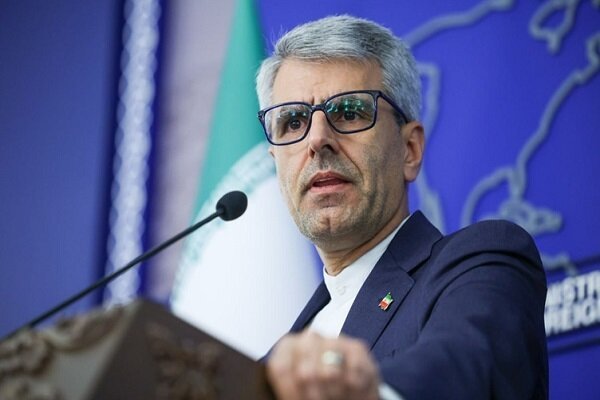
Iranian Foreign Minister Seyyed Abbas Araghchi, file photo distributed by Tasnim News. Tasnim News · Telegram

At 07:27 UTC on 15 June 2026, Seyyed Abbas Araghchi, the foreign minister of the Islamic Republic of Iran, picked up the phone in Tehran and began a six-hour round of consultations that would carry him, by line and by memorandum, across most of the Middle East and into East Asia. By 08:38 UTC, when Iranian state outlet Fars News logged the final call of the morning, he had spoken to the foreign ministers of Turkey, Iraq, Egypt, Saudi Arabia and Japan. Every one of those conversations, according to readouts carried by Iranian state media, was anchored to the same instrument: the Islamabad memorandum of understanding, signed in the Pakistani capital days earlier, whose contents Araghchi is now treating as a regional sales pitch.

The choreography matters more than the clauses. Tehran is not, in June 2026, in a position to dictate terms to its neighbours. It is in a position to define what the post-crisis order in the Gulf and the wider Middle East is supposed to look like, and to make sure that definition is the first one each foreign minister hears that day.

The phone tree, in order

The sequence was reported by three Iranian state outlets — Fars News, Tasnim News, and the Jahan-e Tasnim international desk — with overlapping readouts. Araghchi's first calls, before 07:30 UTC, went to Hakan Fidan of Turkey, Fuad Hussein of Iraq, and Badr Abdelatty of Egypt. By 08:20 UTC, he was on the line with Japan's Toshimitsu Motegi, briefing him on the memorandum's "most important clauses" and expressing what Iranian state media described as hope for "a new chapter in economic cooperation." At 08:32 UTC, Tasnim's English desk reported a separate call with Saudi Arabia's Faisal bin Farhan, in which Araghchi "briefed his Saudi counterpart on the provisions of the Islamabad memorandum." The morning's final call, logged at 08:38 UTC, was the follow-up with Motegi.

The outreach reads less as a clarification than as a region-wide tour by telephone. Five capitals, three continents, one talking point.

What the memorandum is — and what it isn't

The substantive text of the Islamabad memorandum has not been published in the readouts carried by Fars, Tasnim, or the Mehr News wire. The framing in those readouts is consistent: Araghchi is presenting the document to his counterparts as a basis for renewed economic and security engagement, and as a platform on which Iran's regional position has been formally registered by a third-party mediator — Pakistan. The readouts emphasise "provisions" and "clauses" but enumerate none of them.

This is the part worth pausing on. The Saudi readout, as carried by the Jahan-e Tasnim international desk, is the most pointed: Araghchi is described as briefing bin Farhan on the "provisions" of the memorandum, not on its terms, and not on a Saudi request for clarification. The language positions Saudi Arabia as a recipient of Tehran's interpretation, rather than as a co-architect of the document. That is a real diplomatic signal in a relationship that has been rebuilt carefully, on Riad's terms, since the Beijing-brokered restoration of relations in March 2023.

The counter-read: why the calls could be defensive

There is a plausible alternative reading. The Islamabad memorandum is reported in this thread as a finished product; the readouts treat it as a settled instrument. But the speed and breadth of Araghchi's phone diplomacy — five foreign ministers in roughly seventy minutes of working time — is consistent with a government trying to lock in alignment before the document's text is contested by other parties. Region-wide briefings, issued before the substantive clauses are public, are the classic shape of a confidence-building exercise aimed at Iran's own coalition as much as at its interlocutors.

That reading does not contradict the official framing. It supplements it. Tehran can be simultaneously confident in the memorandum and anxious about the period between signature and ratification, and Araghchi's Monday morning is exactly what that anxiety looks like operationalised.

Stakes and what remains opaque

The clearest winner, in the short term, is Pakistan. Hosting a document to which five Middle Eastern and East Asian foreign ministers are now referring by name confers a mediator's stature that Islamabad has sought, intermittently, since 2019. The clearest loser is the public: the readouts carried by Fars, Tasnim, and Mehr do not enumerate a single operative clause, a single verification mechanism, or a single timeline. The memorandum exists, on the public record, as a name attached to a phone tree.

What remains genuinely uncertain is whether the document binds Iran to anything its neighbours did not already have, in writing, in 2023 and 2024. The readouts do not specify. Until the text is published, the morning's diplomatic energy is best read as a sign of how seriously Tehran wants the document to be received — and that, on its own, is the story.


This piece relies on Iranian state-media readouts of a single morning of phone diplomacy. Where the readouts describe "provisions" and "clauses" without enumerating them, Monexus has followed the official framing without embellishing it. The wire desks that typically lead on this corridor — Reuters, the Saudi Press Agency, Turkey's Anadolu Agency, Japan's Kyodo — have not, in the materials available to this publication, published independent readouts of the same calls.

Wire provenance

This editorial synthesis draws on the following public wire/social posts:

  • https://t.me/FarsNewsInt
  • https://t.me/tasnimnews_en
  • https://t.me/tasnimnews_en
  • https://t.me/JahanTasnim
  • https://t.me/JahanTasnim
  • https://t.me/mehrnews
© 2026 Monexus Media · reported from the wire