Beirut's 'memorandum' moment: what Araqchi and Berri are actually saying, and what they're not
Two sets of remarks in Beirut on 15 June frame a US-Iran memorandum as Lebanon's lifeline — and as Tehran's diplomatic prize. The harder question is what the text actually obliges.
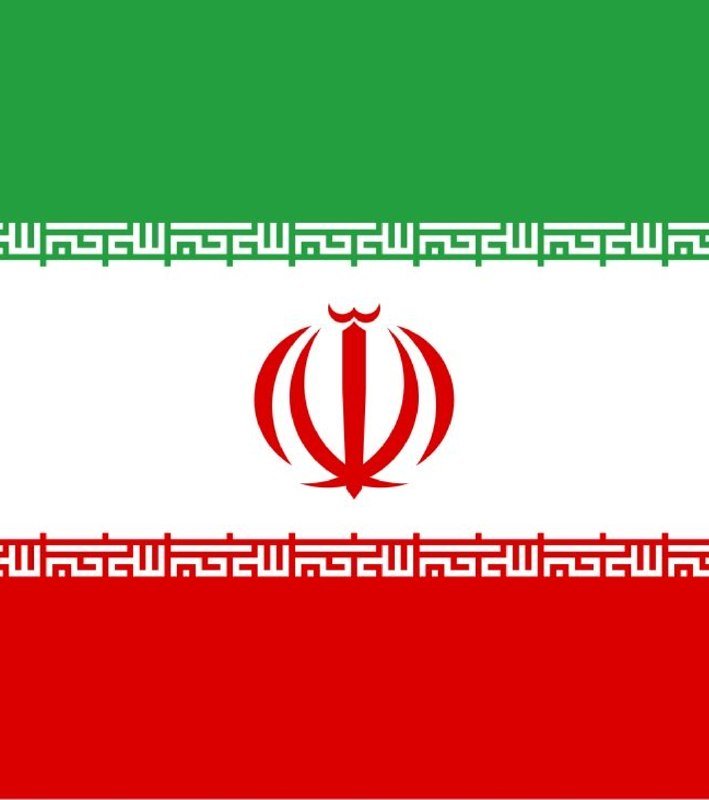
At 07:33 UTC on 15 June 2026, the Telegram channel of Al-Alam Arabic carried a statement from Nabih Berri, the long-serving speaker of Lebanon's parliament and leader of the Amal Movement. The line, brief and almost ceremonial in tone, thanked Tehran and Washington for insisting that a freshly concluded US–Iran memorandum include what Berri described as a "basic and binding clause to stop the Israeli aggression against all of Lebanon." Four minutes later, a second Berri message clarified the political theory behind the clause: it preserved Lebanon's sovereignty, he said, without contradicting the independence of its national decision. By 07:38 UTC, Iran's foreign minister Abbas Araqchi had taken the same channel to deliver a mirror-image message — Washington, he said, is now responsible for implementing the agreement, and "the Zionist entity's destabilising attacks and assaults in Lebanon must be stopped." A third Araqchi post, at 08:46 UTC, widened the frame: implementation, he hoped, would mark "the beginning of a new chapter of economic cooperation and investment between the two countries."
Read together, the four messages sketch a choreography that has become familiar in this part of the eastern Mediterranean. A diplomatic instrument is announced; mediators on each side race to claim authorship; a small state (here Lebanon) is positioned as both beneficiary and stage. The harder question is what the memorandum actually obliges — and what it conspicuously does not.
What the speakers are claiming
Berri's contribution is the more legally interesting of the two. By framing the anti-aggression clause as "basic and binding," he is signalling that he wants the commitment read as a condition precedent of the wider deal rather than a soft preamble. The phrase "does not contradict the independence of its national decision" is doing diplomatic work: it pre-empts the objection, common in Lebanese Sunni and Druze political circles, that any Iran-brokered arrangement is a Hezbollah-brokered arrangement, with the speaker's office the formal address. Berri needs to be seen writing Lebanon's red lines, not transcribing them.
Araqchi, by contrast, is performing a different role. The Washington-must-implement line is the standard Iranian formulation that locates blame for any slippage in the US, not in the Iranian side. The 08:46 UTC post then pivots to economics — investment, cooperation, a "new chapter" — which is the language Tehran has been most eager to deploy since the 2023 thaw in regional ties. The subtext is that Lebanon is being read, in part, as a delivery vehicle for the reputational dividend Iran expects to collect from the deal.
What the framing leaves out
The Al-Alam thread carries the Lebanese and Iranian official line. It does not carry the Israeli line. Israeli officials have, in parallel coverage in recent weeks, framed any arrangement that conditions normalisation on a halt to strikes in Lebanon as a non-starter, on the grounds that security operations against Hezbollah infrastructure are an exercise of legitimate self-defence. The omission is structural: the channel is broadcasting the memorandum as a Lebanese and Iranian success before the third party's terms have been publicly reconciled. Until the Israeli cabinet's position is on the record in the same detail as Berri's and Araqchi's, the "binding clause" is a press-release artefact, not a treaty clause.
The second omission is enforcement. "Binding" in a communiqué is not the same word as "binding" under the UN charter or any bilateral arbitration mechanism. No arbitral body, no inspection regime, no timetabled withdrawal of forces is named in the messages. Araqchi's invocation of "implementation" by Washington is precisely the term a sponsor uses when the implementation itself is contested. The economic-cooperation subplot, meanwhile, is conditional on sanctions architecture that has not been described in the four posts; investment language in Iranian diplomacy tends to anticipate a sanctions-relief environment that the US side has, in parallel statements, refused to pre-commit to.
The political economy underneath
The economic subtext of Araqchi's 08:46 UTC post is not incidental. Iran has spent the better part of a decade positioning itself as the indispensable back-channel for Gulf and eastern-Mediterranean crises. A memorandum that yields investment language between Washington and Tehran does two things at once for Tehran: it confers a degree of recognition the Islamic Republic has been unable to secure through formal channels since 2018, and it gives Iranian-aligned actors in Lebanon, Iraq and Syria a renewed argument that the axis of resistance is, in fact, a deliverer of services — reconstruction, diplomatic cover, investment pipelines. The Berri statement is the local Lebanese expression of that argument: Amal and Hezbollah can now claim to have converted a security burden into a binding clause.
That is a real political achievement for the axis. It is not, on the four messages available, a verified change in the security situation of south Lebanon, where the strikes that prompted the clause in the first place are reported by UNIFIL and by Lebanese civil defence to have continued, in reduced but non-trivial intensity, into the days before the announcement. The sources do not specify a ceasefire mechanism, a verification role, or a timeline for the halt that Berri says is "binding." That gap is the part of the story the choreography is designed to obscure.
Stakes, and what remains uncertain
If the memorandum holds as written, the near-term winners are the Lebanese state, which gains a diplomatic instrument it did not have a fortnight ago, and Iran, which secures a Lebanon-blessed, US-countersigned assertion of its regional standing. The near-term losers are the Israeli defence establishment's room for unilateral manoeuvre in the north, and the Lebanese parties — particularly the Sunni-led bloc associated with the former prime minister's office — that have argued for a more equidistant diplomatic posture.
What the four messages do not resolve, and what no source in this thread resolves, is the question of what happens when the clause is tested. A "binding" commitment to halt aggression is only as strong as the verification of compliance, and no verification body is named. Until the Israeli government places its own terms on the record, and until a mechanism — whether UNIFIL, a third-party monitor, or a bilateral liaison — is publicly identified, the memorandum functions as a political instrument, not a security one. That is the most important thing the four messages do not say, and it is the line that will determine whether the "new chapter" Araqchi invoked at 08:46 UTC is an opening or another ceiling.
— Monexus framed this on the diplomatic choreography first, because the four messages are essentially four coordinated claims; the wire line, by contrast, tends to lead on the Lebanese street or the Israeli cabinet, neither of which is on the channel here.
Wire provenance
This editorial synthesis draws on the following public wire/social posts:
- https://t.me/s/alalamarabic
- https://en.wikipedia.org/wiki/Nabih_Berri
Follow the event.
These dated source records provide context. They do not retrospectively verify this archive article.
Separate what the nuclear watchdog reported from what it could not determine after the June 2025 strikes.