Brent at $83, Tehran in the hallway, Europe closing the door: a week of three negotiations
Brent crude slid to $83 after an Iran–US deal was reported, Tehran is asking Washington for up to $12 billion in frozen funds, and the EU's new migration pact has just come into force. Three rooms, one week, and a clue about who reads the map.
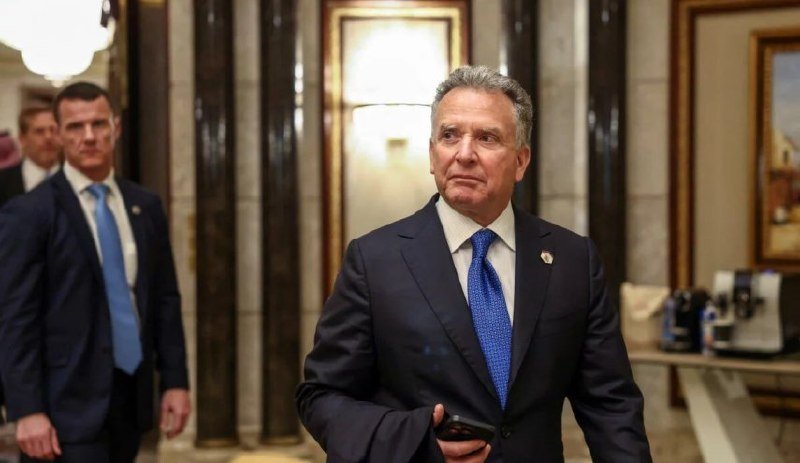
Three negotiations are running in parallel this week, and the price of a barrel of oil is the scoreboard.
On 15 June 2026, the Abu Ali Express business channel reported that Brent crude fell to $83 a barrel after an agreement between Iran and the United States. The same morning, the Polymarket news desk carried two contradicting Tehran signals: a demand for as much as $12,000,000,000 in frozen Iranian funds held abroad, and a public threat to walk out of the talks altogether. A day earlier, the EU's new migration pact — the bloc's stricter regime on asylum seekers and other migrants — officially came into force. Three separate rooms, three separate mandates, one calendar. The common thread is not ideology. It is who gets to define the terms of exchange in 2026, and who pays when those terms shift.
The oil market is reading the room
Brent's move to $83 is the cleanest signal we have. A US–Iran accommodation of any kind changes the marginal barrel. Iranian exports — constrained for years by sanctions enforcement and the shadow fleet that grew up around them — become more legible to Western underwriters, refiners, and insurers. The market is not celebrating a thaw; it is discounting a slightly larger supply and a slightly shorter risk premium. That is why the move was modest and why it was fast. Energy desks treat any Tehran–Washington deal as a probability-weighted event, and the probability weight has clearly been revised upward this week.
The counter-read is that Tehran's public walkout threat, also carried by the Polymarket wire on 14 June, suggests the deal is not yet real. Walkout threats are a standard negotiating posture when a party wants to be seen refusing to settle for less than the public ask. The $12 billion figure for frozen funds is the kind of round, large number that gets floated precisely because it is not the number that will land. The actual settlement, if it lands, will be smaller, partly conditional, and tied to concessions on enrichment, missile programme scope, and the regional proxy architecture.
What Tehran is actually asking for
The frozen-funds demand is the part of the story least covered in English-language wire copy, and it is the most telling. Iran is not asking for new money. It is asking for access to money that already exists in escrow, in escrow-type arrangements, or in restricted accounts abroad. That distinction matters. The demand is essentially a request to unwind part of the financial architecture built up around sanctions enforcement — the correspondent-bank refusals, the insurance exclusions, the shipping-flag hesitancy, the compliance lawyers who now sit on every commodity desk.
If a deal returns even a portion of those funds to Iranian state accounts, the precedent is bigger than the number. It tells every other sanctioned or semi-sanctioned state that patience, plus a sufficiently visible counter-threat, plus an administration in Washington willing to talk, can move money that was previously understood to be politically immobile. That is a structural shift, not a transactional one. It is also the reason the oil price moved on the rumour of an agreement rather than on confirmation of one.
Europe is closing a different door
On 14 June 2026, the EU's new migration pact came into effect. The pact imposes stricter rules on asylum seekers and other migrants entering the bloc. The pact is the product of years of intra-EU negotiation, with frontline states in the Mediterranean and the Eastern border pushing for faster processing and returns, and northern member states pushing for burden-sharing that they were not previously obliged to accept.
The new regime is not a single law. It is a package — faster border procedures, broader mandatory solidarity among member states, expanded use of return procedures, and a hardening of the external frontier. For migrants on the move, the practical effect is that the legal pathways narrow and the administrative ones accelerate. For member-state governments, the effect is that the cost of not cooperating is now formalised in a way it was not before.
The counter-read is that a stricter pact does not necessarily mean a less leaky frontier. The history of European migration policy in the past decade is a history of restriction followed by route substitution — smugglers adapt, transit states re-price, and the geography of arrival shifts. Brussels is, in effect, buying time against political pressure at home, not closing the door permanently. The structural question is whether the new machinery can process and return people fast enough to satisfy the publics that demanded it, without producing the kind of visible humanitarian failure that produces the next round of pressure.
What connects the three
The three stories read separately look like a commodity price, a bilateral negotiation, and a regional policy package. Read together, they describe the same contest: who defines the terms on which people, money, and goods cross borders in 2026.
In the oil-and-Iran story, the terms are set in a hotel ballroom in the Gulf, in a Treasury office in Washington, in a sanctions-compliance department in London. In the EU migration story, the terms are set in Brussels and ratified in national capitals. The actors are different; the pattern is the same. Authority over the terms of exchange is the currency of the moment, and it is moving away from the post-1990 default — towards a more explicit, more transactional, more conditional arrangement between states that have something specific the other side needs.
The plausible alternative read is that this is a routine mid-cycle recalibration, not a structural shift. Markets move on rumours and then revert when the underlying deal disappoints. Migration pacts are passed, under-implemented, and revised. That read is not wrong, but it underweights the institutional memory of the past four years. The default has already moved. The question now is how far it moves, and how fast the architecture catches up.
This publication covered the three stories as a single negotiation week, not as a commodities note, a diplomacy brief, and a Europe story filed in isolation — a framing that the wires, which file each item to its own desk, tend to flatten.
Wire provenance
This editorial synthesis draws on the following public wire/social posts:
- https://t.me/abualiexpress