Cape Verde's Loud Silence: What a 0-0 Against Spain Actually Says
A goalless draw on the tournament's opening weekend handed a 500,000-person island nation a louder megaphone than any goalscorer could have earned.
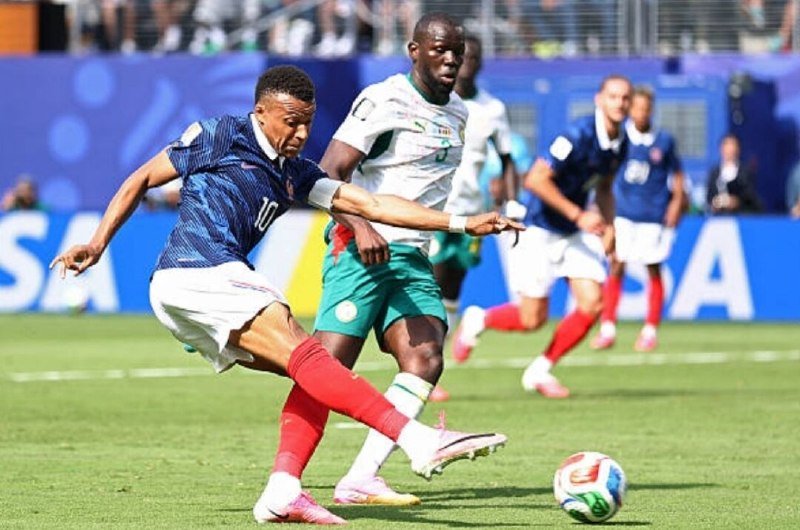
It is rare for a scoreless draw to do real work. On 15 June 2026, in a World Cup opener few neutrals circled in advance, Cape Verde — an island nation of roughly 500,000 people making its first ever appearance at the tournament — held European champions Spain to a 0-0 result. The final whistle, reported across Reuters, Al Jazeera, France 24, El País and the Iranian state outlet Tasnim within a single news cycle, was the loudest moment of Cape Verde's sporting history.
The draw matters less for what it tells us about Spain, an ageing favourite still working out how to replace the generation that won Euro 2024, and more for what it tells the rest of the footballing world about who is allowed to be a debutant at this level — and who is taken seriously once they arrive.
The result, plain
Spain could not score. Lamine Yamal came off the bench and could not change the shape of the game. Cape Verde defended with a discipline that head coach Bubista framed, in remarks carried by Reuters on 15 June 2026, as a deliberate decision to "showcase their country, and compete." The line between the two verbs is the story. Cape Verde did not park a bus and pray; they competed, on the ball, in possession sequences that the Spanish press afterwards credited even as it dissected La Roja's bluntness in the final third. El País's match report used the word "pinchazo" — a balloon being pricked — to describe a Spanish performance that never got off the ground.
Iran's Tasnim, reporting on the same fixture, captured the day's verdict more bluntly: "Whatever they hit, they hit the closed door." It is the kind of one-line summary that will be quoted in Tehran and Praia alike, for very different reasons.
What the wire said, and what it didn't
The English-language wires — Reuters, France 24, Al Jazeera — led on the same three facts: debutants Cape Verde, European champions Spain, goalless. Al Jazeera's breaking-news bulletin made the additional point that Yamal's introduction "could not help Spain overcome World Cup debutants Cape Verde." That framing is conventional, and it is not wrong. But it flattens the story into a Spanish underperformance tale. The Spanish wire (El País) and the Iranian wire (Tasnim) both understood the other side of the match. Coverage that treats the result as a Spain problem, rather than a Cape Verde achievement, is the framing failure the debut was always going to expose.
There is a long habit in European football writing of describing African national teams in two registers: plucky, or physical. "Plucky" is the gentler of the two and the more patronising. Cape Verde's 0-0 did not look like a rearguard action. It looked like a side that knew its shape, accepted its margins, and refused to give Spain the central lane it wanted.
The structural read
The 2026 World Cup is the first expanded edition of the tournament in its current form, with more slots for African and Asian federations than any previous cycle. FIFA's expansion is partly a money story — a larger tournament is a more lucrative television property — and partly a politics story, the federation responding to years of complaint that the global game was being run for the benefit of European and South American incumbents. Cape Verde's qualification, and the qualifying runs of other small African and Caribbean federations, are the on-pitch proof of that policy.
A debut on its own is a feel-good line. A debut that takes a point off the European champions in the opening match is a different kind of announcement. It tells scouts, sponsors and federations that the gap between a 500,000-person island state and a 47-million-person Iberian powerhouse is smaller than the wage bills suggest. It tells the Cape Verdean diaspora — spread across Lisbon, Rotterdam, Boston and Luanda — that the jersey their cousins are wearing is one the rest of the world has to take seriously now. And it tells the federations who will be drawing up the next expansion plan that the case for more African, more Caribbean, more Pacific slots is not a charitable one. It is a competitive one.
The counter-read, and the stakes
The honest counter-read is that one match is one match. Spain played without a recognised centre-forward for most of the contest, brought Yamal on too late to shift the geometry, and never found a route through a defensive block that was set up to deny exactly that route. On another night, against a Spanish side that converts one of its three clearest openings, the headline is a slow Spanish win and a paragraph about Cape Verde's resilience. That is the small-sample-size caution the analytics crowd will rightly press.
It is also, however, the caution that has been pressed every time a small nation announces itself at a World Cup — Senegal over France in 2002, Iceland against Argentina in 2018, Japan over Germany the same summer. The caution was correct in every one of those cases too, and the debut was still a turning point for the federation that produced it. The question is not whether Cape Verde will go on and win the tournament. The question is whether a generation of Cape Verdean players, watching from Praia or from the diaspora, will treat the result as confirmation that the gap is closable rather than confirmation that it is permanent.
Bubista's pre-match line, carried verbatim by Reuters, deserves the last word: the team was there to showcase the country, and to compete. On the available evidence, they did both. The final scoreline, 0-0, is the smallest possible headline. The match underneath it was larger than the scoreline suggests.
Desk note: Monexus led this piece on Cape Verde's achievement, not on Spain's malfunction. Western-wire headlines framed the result as a Spanish slip; we read the same data as the announcement of a federation that no longer needs permission to take a point off a European champion.
Wire provenance
This editorial synthesis draws on the following public wire/social posts:
- http://reut.rs/4fNiLEp
- https://social.elpais.com/ewizu7
- https://t.me/Tasnimnews_en