Cape Verde Stood on the Pitch in Atlanta. The Cameras Hardly Noticed.
A 200,000-person island nation played Spain to a draw's worth of resistance in Atlanta on 15 June 2026, and the live-wire commentary mostly tracked throw-ins. The story is in the silence around it.
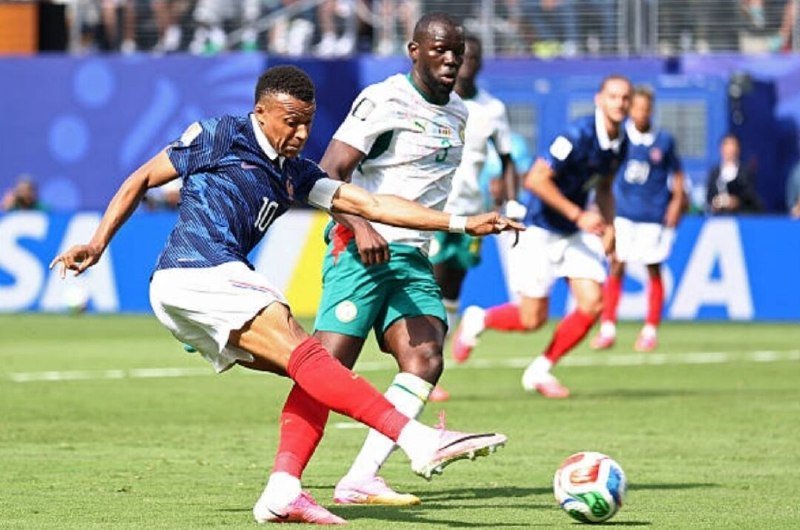
At 17:18 UTC on 15 June 2026, a live text feed out of Atlanta Stadium paused to note that Cape Verde's Jovane Cabral was on his feet again. The previous entry had flagged him grimacing with pain. Around them, Spain moved the ball; a throw-in came and went; a goal kick was logged for the island nation with about 580,000 people and a beach-front capital. The window into the Group E fixture, as filtered through one of the few non-Western English-language outlets carrying it play-by-play, was a sequence of throw-ins, free kicks and a second-half kickoff at 17:07 UTC. That is the texture of the story: a Group E World Cup match, played in the United States by a team almost no American broadcast bookends with a flag graphic, narrated in real time as a series of administrative beats.
The thesis is unromantic. Cape Verde's qualification for a 2026 FIFA World Cup staged across the United States, Canada and Mexico is a structurally interesting fact about the global game's centre of gravity, and the live wire that carried it for an English-speaking audience treated it as a fixture. That gap — between the political-cultural weight of a small African nation reaching back-to-back men's World Cups and the way the moment was rendered as routine match traffic — is where this column sits.
The match the feeds recorded
The Telesur English live thread covering Spain vs Cape Verde at Atlanta Stadium is granular in a way that large Western broadcasters often are not for a Cape Verde fixture. Between 16:32 UTC and 17:18 UTC on 15 June 2026, the feed logged a Spain throw-in, a Cape Verde free kick, a Dailon Livramento break that finished wide of the post, a Spain header from ten metres that was saved, an offside call against Spain, a Spanish corner from the left, a Laporte header blocked, a second-half restart, a goal kick for Cape Verde, a Spanish free kick, and the Cabral injury pause. There is no score update, no goal, no red card in the captured window. What is captured is a Cape Verde side staying in a match against a Spain team that has won a major tournament as recently as Euro 2024.
That is, on its own terms, a story. Cape Verde qualified for the 2026 tournament by topping their CAF group; the federation has spent two decades building a player pipeline through Portugal, France, the Netherlands and the domestic Cape Verdean league. The thread context does not give us a result, so the column reads what is in front of it: a side from a 4,033-square-kilometre archipelago absorbing pressure from a top-ten FIFA side and being described, beat by beat, as if it were a Tuesday qualifier.
The frame the Western wires don't sell
The 2026 men's World Cup is the first to feature 48 teams, expanded from 32. FIFA's own communications around the expansion explicitly framed it as a structural opening for smaller footballing nations — more slots, more pathways. The tournament's hosting footprint — three North American countries, eleven host cities — makes that framing more legible for African and Asian audiences than any previous edition. Cape Verde, returning after their 2014 debut in Brazil, are the kind of case study FIFA's communications apparatus points to when it talks about "globalising the game."
The live coverage on display, however, treats the match as a one-camera event. There is no contextual thread — no note on Cape Verde's coach, no line-up explainer, no historical reference. The reader gets the sport and not the frame around it. Whether that is a Telesur English editorial choice, a constraint of the live-text format, or a downstream effect of the underlying broadcast rights is not knowable from the thread alone. But the cumulative effect is a match covered like a service rather than a story.
What the silence costs
A column is entitled to its priors. The prior here is that a small African nation reaching back-to-back World Cups in a 48-team format staged on a continent that does not share a language with theirs is, in 2026, the kind of structural detail that explains how FIFA's expansion politics and the diasporic economics of West African football interact. None of that politics is visible in a feed that opens with a throw-in and closes with an injury pause.
There is a counter-read. Live-text coverage is a low-margin product. A goal would have produced a more visible thread. The fact that nothing dramatic occurred is, in a narrow sense, the reason the thread reads as it does. A 0-0 scoreline through the captured minutes, with Cape Verde defending competently, is the kind of match that disappears from the rolling ticker, regardless of which two teams are playing. That is a fair objection. It is also the objection that lets broadcasters off the hook for every group-stage game between a top-ten side and a small federation.
What remains uncertain
The thread does not contain the final score, the half-time state, or the line-ups. It does not specify which Spanish broadcaster holds primary rights in the United States, nor which Cape Verde outlet, if any, ran a parallel live feed. Without those, the column cannot make a stronger claim than this: that the live English-language coverage on display from one non-Western outlet rendered a Cape Verde vs Spain fixture as a series of administrative events, and that the rendering itself is the story — a small window into how a 48-team World Cup looks when the cameras do not know what to do with one of the teams on the pitch. The match, the moment, and the federation's second consecutive appearance on this stage deserve more than throw-in copy. Whether they get it elsewhere is a question the wires will answer in the days that follow.
Desk note: Monexus read the live text thread as published by Telesur English on 15 June 2026; we did not have independent access to the broadcast feed from Atlanta Stadium and the piece does not assert a final score or any post-match detail beyond what the source thread contains.