Live Wire
13:18ZCLASHREPORVance tells Iran to negotiate in good faith, commit to not developing nuclear weapon13:17ZCLASHREPORMacron says he will not declare the regime has won13:16ZFARSNEWSINFrance criticizes Iran's missile program hours after US-Iran understanding13:16ZMYLORDBEBOMarine Corps F/A-18D Jet Crashes in Washington Forest During Training Flight, Pilot Ejects Safely13:15ZENGLISHABUHezbollah publishes leaflet after ceasefire, thanks Iran, calls on Lebanese leadership13:15ZTHECRADLEMIsraeli drone strike hits southern Lebanese village of Kfar Tebnit13:15ZTHECRADLEMIsraeli drone strike hits southern Lebanese village of Kfar Tebnit13:15ZCLASHREPORMacron warns tolls on Strait of Hormuz would raise global prices
Markets
S&P 500751.66 1.34%Nasdaq25,889 0.31%Nasdaq 10029,636 0.64%Dow519.1 1.18%Nikkei94.2 2.16%China 5035.19 0.47%Europe90.77 1.28%DAX42.4 2.22%BTC$66,795 3.89%ETH$1,813 8.83%BNB$629.89 3.06%XRP$1.24 9.37%SOL$74.04 9.36%TRX$0.3211 1.27%HYPE$68.04 11.89%DOGE$0.0907 4.96%LEO$9.8 0.65%ZEC$532.66 27.54%QQQ$737.42 2.23%VOO$691.19 1.35%VTI$371.83 1.49%IWM$297.39 1.76%ARKK$78.05 3.17%HYG$80.13 0.24%Gold$399.58 3.37%Silver$64.31 4.93%WTI Crude$119.99 4.34%Brent$45.81 4.20%Nat Gas$11.21 1.23%Copper$39.68 0.33%EUR/USD1.1567 0.00%GBP/USD1.3402 0.00%USD/JPY160.20 0.00%USD/CNY6.7623 0.00%
CLOSEDNYSEopens in 7m 19s
The Monexus
Vol. I · No. 166
Monday, 15 June 2026
Saturday Ed.
Updated 13:22 UTC
  • UTC13:22
  • EDT09:22
  • GMT14:22
  • CET15:22
  • JST22:22
  • HKT21:22
← The MonexusOpinion

China's military build-out and bond market are telling two versions of the same story

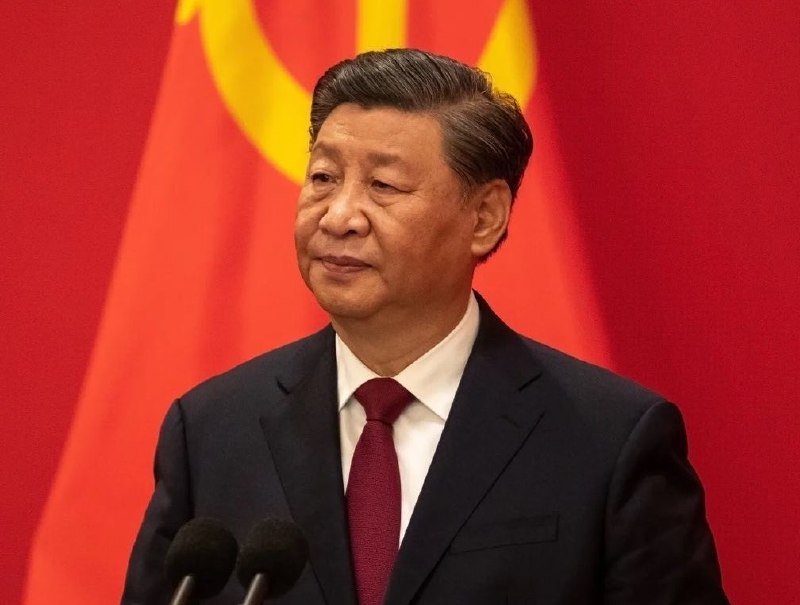
Beijing frames a record military build-out as a gift to global peace, while the same week foreign capital is quietly rotating into Chinese government bonds. The two narratives are connected — and the West is late to the read.

Beijing frames a record military build-out as a gift to global peace, while the same week foreign capital is quietly rotating into Chinese government bonds. @FarsNewsInt · Telegram

Two stories published within an hour of each other on 15 June 2026 say more about the global order than either does alone. The first, carried by Sprinter Press and syndicated via Telegram's Insider Paper channel at 09:42 UTC, sets out Beijing's official line that growing its military helps world peace. The second, filed by Reuters at 09:50 UTC under the headline China bonds emerge as surprise haven as Iran war reshapes portfolios, shows foreign investors doing something with their money that the communiqués do not discuss: voting with their books for China. Taken together, the two items sketch a country that is arming faster than at any point in its modern history, and is simultaneously being treated as one of the safest places on earth to park cash. The convergence is the story.

The Reuters dispatch is the more arresting of the two because it cuts against a decade of received wisdom. For most of the post-2008 era, Chinese government bonds were treated by Western allocators as a frontier — high nominal yield, yes, but politically risky, capital-controls risky, sanctions-of-secondary-sanctions risky. The piece notes that capital has been flowing in precisely because a war involving Iran has reordered the risk map. The piece is light on the exact figures and does not need to be heavy on them: the directional point — that a sovereign whose military build-out is being justified, in part, as a stabiliser is also being treated by global money as a stabiliser — is the headline.

Beijing's framing, and what it actually claims

The Chinese foreign-policy line, restated on 15 June 2026, is not a novelty. Beijing has argued for two decades that its defence budget, which crossed the 7% growth mark in the latest published five-year plan and is widely understood in Western capitals to be understated, is a contribution to global stability rather than a departure from it. The argument runs that a stronger Chinese military reduces the probability of miscalculation in the Taiwan Strait, the South China Sea and the Korean peninsula; that it relieves the United States of the burden of sole guarantor of sea lanes; and that it is, on net, defensive. None of those propositions is obviously true, but none is obviously false either, and they are advanced by officials with a straight face. The framing deserves to be taken seriously, which is the operative test for whether a position is being steelmanned or caricatured.

What the framing does not engage with is the question the bond market is implicitly asking. If a rising China is a stabilising force, then the same portfolios that fled to US Treasuries in 2020 and to gold in 2022 should logically diversify into renminbi-denominated paper as a structural matter — not just as a tactical trade when the Persian Gulf is on fire. The fact that the Reuters trade is, in 2026, still being described as a surprise suggests the diversification is happening faster than the consensus model. That is the genuine policy story, and it is not the one Beijing's spokespeople are trying to tell.

What the bond market is actually pricing

The honest reading of the Reuters piece is that foreign investors are not making a political bet on China. They are making a carry-and-volatility bet on China relative to the alternative. A war involving Iran implies, at minimum, a sustained risk premium on Gulf-origin hydrocarbons, on tanker insurance through the Strait of Hormuz, and on any sovereign whose fiscal position depends on imports flowing through it. The diversification into Chinese government bonds, in other words, is a hedge against a Middle East that has become structurally more dangerous. It is not an endorsement of the Chinese development model. Conflating the two is a mistake Western commentary will make for about a week before correcting.

That distinction matters because the political class in Washington, Tokyo and Brussels is being asked to draw the obvious inference — that the bond trade is a vote of confidence in the Chinese system — and to act on it. The inference is wrong. The bond trade is a vote of no confidence in the management of a Middle East crisis that, as of 15 June 2026, has only partially de-escalated; TSN Ukraine's 09:14 UTC wire noted that oil prices moved sharply on news of a US-Iran deal whose full terms remained undisclosed at the time of writing. Capital is rotating, not endorsing. The two readings imply very different policy responses.

A short, serious note on what the sources do not say

A reader who arrived at the Sprinter Press / Insider Paper line first could be forgiven for thinking China is alone in asserting that military growth serves peace; the United States, Russia, India and several EU members make structurally identical claims. The sources do not give the dollar size of the latest Chinese defence budget, the exact composition of the foreign bond inflows Reuters describes, or the text of the US-Iran deal that moved oil on the morning of 15 June. They do not specify whether the bond inflows are concentrated in long-dated CGB paper or in short-tenor bills. Where the evidence thins, this publication says so rather than infer a number. The structural case — that arming and attracting capital can be two outputs of the same policy choice — survives the missing detail. The exact magnitudes do not, and will need to wait for the next People's Bank of China quarterly report and the next TIC dataset from Washington to be filled in.

Stakes

If the bond rotation into China proves durable rather than tactical, three things follow. First, the cost of financing the US deficit ticks up marginally at the margin, because one marginal buyer is missing. Second, Beijing's negotiating leverage on the next round of trade talks rises, because the cost of being frozen out of the dollar system is, for the first time, plausibly bearable. Third, and most consequentially, the political case inside China for a slower, more cautious military trajectory weakens, because the same build-out that hawks in Washington treat as a threat is being paid for, indirectly, by the flight to safety of the capital that Washington would prefer to keep at home. None of these outcomes is fated. All of them become more likely if the Reuters surprise becomes the Reuters norm before the next crisis comes along.


Desk note: Wire coverage on 15 June 2026 treated the Chinese military build-out and the bond-market rotation as separate stories. Monexus treats them as one — the same week, the same actor, two different ledgers showing the same underlying shift.

Wire provenance

This editorial synthesis draws on the following public wire/social posts:

  • http://reut.rs/4vcu2CY
  • https://t.me/TSN_ua
© 2026 Monexus Media · reported from the wire