A Crashed Bomber, a Secret Drone, and the New Shape of the Air War Over Ukraine
An unexplained bomber loss in Siberia and an unverified leak of a stealthy jet drone have arrived within seventy-two hours of each other. Together they point to a quieter, more disposable phase of the air war over Ukraine.
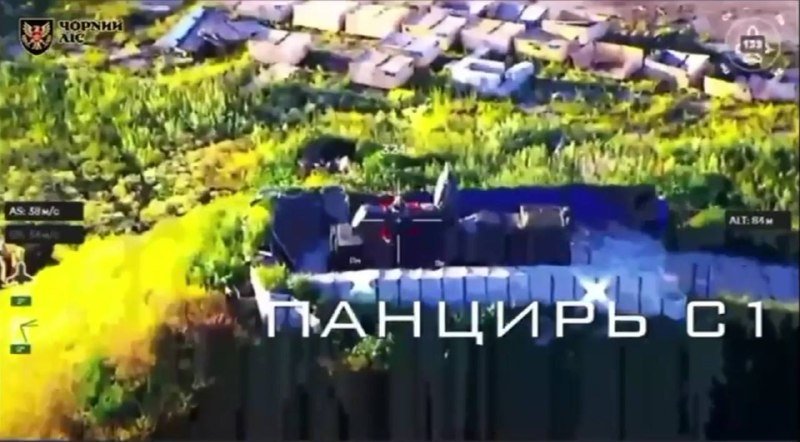
A Russian bomber went down in the forests near Irkutsk on the morning of 14 June, and within seventy-two hours, a Ukrainian-aligned channel had published a set of imagery it says was lifted from the wreckage of a next-generation strike drone that has never been acknowledged by name in public. The two events are not the same story. Read together, they sketch the outline of a different kind of air war: one in which the platforms are aging, the production lines are strained, and the long-range strike systems doing the heavy lifting are smaller, cheaper, and far more disposable than the airframes they are replacing.
The Irkutsk crash, reported by Russian-aligned and OSINT channels including those tracked by Kyiv Post and the Clash Report feeds, has not been officially attributed. Russian military aviation losses in the Siberian interior are rare enough that the absence of a clean explanation does real work: a Tu-22M or an Su-24 family bomber falling out of the sky more than four thousand kilometres from the front is, on the face of it, a maintenance, training, or crew-error story. The temptation to read it as a strike is there, but the geography argues against it. Read it as a data point instead: the Russian bomber fleet is aging, the airframes are not getting younger, and the aircraft that have defined Moscow's long-range strike complex since the Cold War are running out of service life faster than they are being replaced.
That is the context in which the SEA TRIDENT disclosure lands. A Ukrainian-aligned channel has released what it describes as internal footage and component imagery from an unmanned system that does not match any drone publicly fielded by either side. The claim is that the footage was recovered from a crashed airframe, and that the platform is a long-range, jet-propelled strike drone with stealth shaping and an internal weapons bay. None of this has been confirmed by a wire service. None of it has been confirmed by the General Staff in Kyiv, at least not on the record. The footage sits in the same evidentiary category as the early Bayraktar footage from 2019 and the early Lancet footage from 2022: it is a leak, not a revelation, and it tells you as much about Kyiv's information posture as it does about the hardware.
The structural story underneath both items is the slow displacement of crewed strike aviation by attritable unmanned systems. A Tu-22M costs something on the order of a small town's worth of rubles, requires a crew of four, and burns fuel at a rate that makes a sortie a logistics event. A jet-powered strike drone costs a fraction of that, carries no crew to lose, and can be produced on a line that resembles an automotive plant more than an airframe factory. The economics have been visible in Ukraine for two years. What the SEA TRIDENT disclosure suggests, if the imagery holds up, is that the economics are now reaching into the high-end of the strike envelope: the missions that used to belong to bombers.
For Russia, the implication is uncomfortable. The bomber fleet has been the backbone of its deep-strike campaign against Ukrainian infrastructure, and the airframes have absorbed losses that the defence industry cannot quickly replace. Sanctions have bitten into the supply of Western avionics and engine components; domestic substitution has lagged. Every bomber that goes down in Siberia, whether to accident or to action, is an airframe that the VKS will not see again for the duration of this war, and probably for the one after it.
For Ukraine, the calculus is different and more pointed. Kyiv has spent the war building a strike complex out of cheap, modular, software-defined systems, and the public disclosure of a jet-powered, stealthy airframe is, in part, a way of telling Moscow that the next iteration is coming. It is also a way of telling Western capitals that the air-defence and drone packages on the table, including the 500 million euros the Netherlands allocated this week for air-defence and drones, are being folded into a programme that is asking for more runway, not less.
The question worth sitting with is what an air war looks like once the bombers are gone from both inventories and the strike axis runs through disposable jet drones launched from trucks. The answer, probably, is a war that is quieter on the ground and louder in the supply chain: fewer big sorties, more constant pressure, and a battlefield in which the limiting factor is no longer airframes but tubes of carbon fibre and a steady supply of microturbofans. The Irkutsk crash and the SEA TRIDENT leak are the first public hints that both sides are thinking along those lines. The next twelve months will tell the rest.
Sources
- Kyiv Post Telegram channel, https://t.me/Kyivpost_official
- Status-6 / War & Military News via OSINTLive, https://t.me/osintlive
- Noel Reports, https://t.me/noel_reports
- Clash Report, https://t.me/ClashReport
- TSN Ukraine, "The Netherlands allocated 500 million euros to Ukraine for air defense and drones", 17 June 2026, https://t.me/TSN_ua
- TSN Ukraine, "Zelensky reported on agreements with NATO regarding air defense", 17 June 2026, https://t.me/TSN_ua
- TSN Ukraine, "The air alert covered most of Ukraine: the map as of after midnight on June 18", 17 June 2026, https://t.me/TSN_ua
Desk note: Monexus is treating the Irkutsk crash and the SEA TRIDENT disclosure as two separate items with overlapping timing, not as a single cause-and-effect story. Russian-aligned and OSINT channels are cited for their reporting on the crash; the SEA TRIDENT figures are taken from the public Ukrainian-aligned disclosure and have not, at the time of writing, been independently corroborated by wire services.
Follow the event.
These dated source records provide context. They do not retrospectively verify this archive article.
A dated voting record is evidence of one decision. Use the original UN record before turning it into an alignment label.
Visual explainer · historical vote of 2022-03-02 →