The E3 Surrenders Its Iran Leverage, One Frozen-Billion at a Time
Britain, France and Germany say they are ready to lift Iran sanctions in exchange for nuclear concessions, even as Tehran demands up to $12bn in frozen funds. The West is no longer holding the same leverage it once did.
The European trio that once built the architecture of Iran sanctions has stopped pretending it is in the driver's seat. On 15 June 2026, UK, France and Germany announced they are prepared to lift Iran sanctions in exchange for nuclear concessions, a reversal announced via the Polymarket wire at 11:35 UTC that formalises a year-long drift from coercive diplomacy to managed capitulation. The terms of surrender, in other words, are now being drafted in Washington, Tehran and Doha, with London, Paris and Berlin relegated to the drafting room rather than the head of the table.
What is unfolding in real time is not a negotiation among equals. It is a financial transaction with nuclear overtones, structured around the controlled release of Iranian assets that have been held in escrow for over a decade. The arithmetic is no longer hidden behind diplomatic atmospherics; it is the headline.
The frozen-money architecture
Iranian state-aligned media reported on 14 June 2026 at 23:39 UTC that the Iran-U.S. deal would release $24 billion in frozen Iranian assets. Separately, the same wire logged at 16:14 UTC that Iran is reportedly demanding up to $12,000,000,000.00 in frozen funds from the U.S. The two figures are not contradictory so much as indicative of a negotiating range: the headline number being shopped, and the lower figure Tehran is publicly anchoring. The release vehicle matters as much as the amount. The money does not move through ordinary banking. It moves through the same tightly corralled channels that preserved it after the 2015 Joint Comprehensive Plan of Action framework, which means the same compliance and counter-terror plumbing that previously locked the funds down must now be opened in reverse.
This is where the European position becomes structurally incoherent. The E3 spent a decade arguing that sanctions relief had to be conditional, verifiable and tied to a wider non-proliferation settlement. The argument was that any release of frozen assets without behavioural change by Tehran would amount to a transfer payment to a regional actor pursuing proxy warfare and ballistic-missile development. That argument is not being abandoned; it is being paid off.
The two-hour window
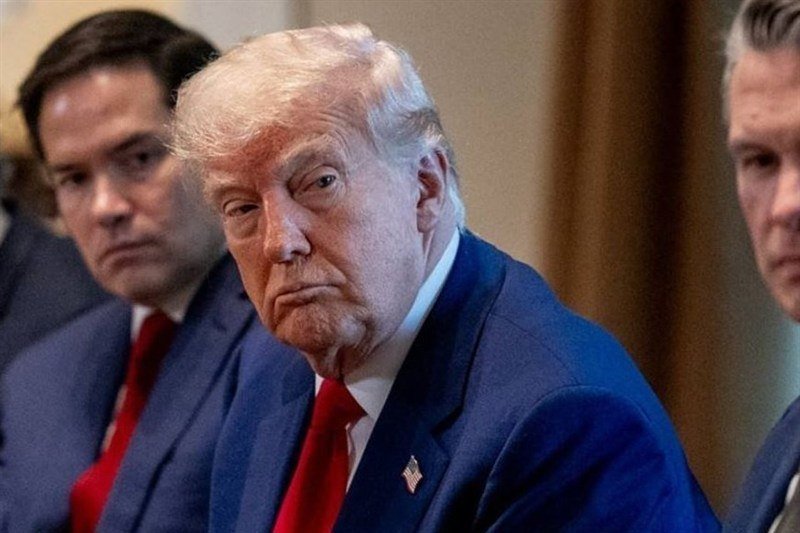
President Donald Trump, reporting from the U.S. side on 14 June 2026 at 17:15 UTC, told waiting reporters he expects an agreement with Iran to be signed "within two-three hours". That comment, captured on the Polymarket wire, is a stress signal rather than a timetable. When a principal talks about an imminent signature, it usually means the principals have agreed on a number but not yet on a face-saving formula for presenting it. The Iranian side, by contrast, was threatening to walk the same day, per a separate 15:30 UTC dispatch flagging that Iran threatens to pull out of talks with the U.S.
A walk-out threat issued hours before a self-imposed two-hour deadline is theatre, but it is theatre with content. It tells the European mediators their leverage is being used against them in real time. The E3 is the audience, not a party.
Why the E3 cannot say no
The political cover that London, Paris and Berlin previously enjoyed for holding the line on Iran has eroded on three fronts. First, the U.S. has plainly decided that a deal at any reasonable cost serves its own de-escalation priorities in a Middle East already straining from multiple fronts. Second, European energy and export markets, particularly in Germany and France, cannot afford another round of credible disruption to Gulf shipping. Third, the E3's own public has been told for years that the Iran file is a problem to be managed, not a contest to be won, and so the political energy required to hold out is no longer in supply.
Once those three fronts converge, lifting sanctions in exchange for nuclear concessions is what "engagement" looks like. The E3 is not abandoning its non-proliferation principles so much as acknowledging that those principles are now being priced by others.
What the deal really settles
The most likely outcome, based on the available public reporting, is a partial release of frozen funds against a partial rollback of enrichment and a face-saving formula for the International Atomic Energy Agency inspection regime. The structural consequence is that the European Union, which built much of the legal machinery that held Iran's external finances in place, will be asked to dismantle parts of it. The political consequence is that the E3 will own whatever Tehran does with the breathing room.
The European "non-proliferation community" will be invited to characterise this as a victory. The harder reading is that the West has run out of patience with its own leverage. Freezing assets is cheap; unfreezing them is expensive, and once done it cannot be repeated. The next round of Iranian nuclear progress, if it comes, will be paid for with money that has already left the escrow accounts.
Desk note: Where much of the wire coverage has framed the last week as a series of negotiating skirmishes, this publication reads it as a sequencing problem: the E3 announcement, the Iranian demand, the U.S. deadline, and the walk-out threat are parts of the same transaction, and the European position is the variable being adjusted, not the lever being pulled.
Wire provenance
This editorial synthesis draws on the following public wire/social posts:
- https://x.com/polymarket/status/JUST-IN-UK-France-Germany-Iran-sanctions
- https://x.com/polymarket/status/JUST-IN-Iranian-media-24B-frozen-assets
- https://x.com/polymarket/status/JUST-IN-Trump-2-3-hours-deal
- https://x.com/polymarket/status/JUST-IN-Iran-demanding-12B-frozen
- https://x.com/polymarket/status/JUST-IN-Iran-threatens-pullout