European trio backs conditional sanctions relief on Iran as Starmer endorses US–Tehran framework
France, Germany, Italy and the UK aligned publicly within hours of a US–Iran deal, signalling a coordinated Western opening tied to verifiable nuclear steps and the reopening of the Strait of Hormuz.
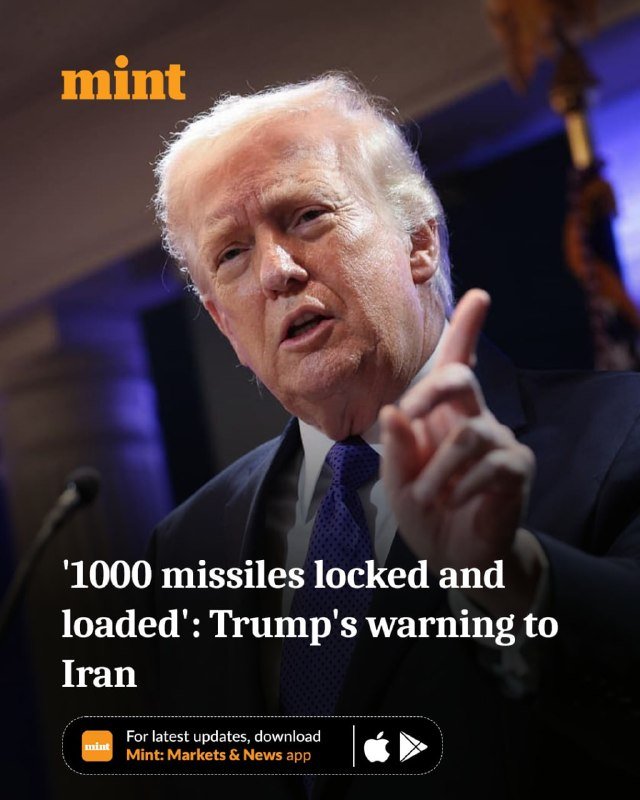
A coordinated European endorsement fell into place on the evening of 14 June 2026 (UTC), as the governments of France, Great Britain, Germany and Italy issued a near-identical joint statement offering to lift nuclear-related sanctions on Iran in exchange for "clear and verifiable steps" on Tehran's programme. Within an hour, UK Prime Minister Keir Starmer publicly welcomed a separate agreement reached between the United States and Iran, calling it "a major step towards ending the war, restoring regional stability and reopening the Strait of Hormuz." The sequencing — the E3-plus-Italy statement at 23:06 UTC, followed by Starmer's endorsement moments later — points to a Western camp that has decided, at least for now, to align behind diplomacy rather than escalation.
The substance is narrow but consequential. The European quartet did not announce sanctions relief; it announced the conditions under which relief would follow. The framing, lifted from the joint text and carried verbatim by Iran's Tasnim and Mehr News agencies, ties any movement to verifiability — a word diplomats in Brussels and Washington have learned to load with caveats after a decade of failed Iranian compliance cycles. Starmer's separate comments, distributed by the Washington File Wire on Telegram, fold the US–Iran deal into a wider package: ending a war, stabilising a region, and restoring shipping through a chokepoint that carries a meaningful share of global seaborne oil. The British endorsement is therefore not just about centrifuges in Natanz; it is about Hormuz, the price of crude, and the credibility of Western leverage at a moment when that leverage is widely perceived to be thinning.
The E3-plus-Italy formula
The joint statement is a recognisable template. France, Germany and the United Kingdom have run the "snapback" sanctions track at the UN Security Council since the United States withdrew from the Joint Comprehensive Plan of Action in 2018, and Italy has joined the political messaging in recent years as a Mediterranean state with direct exposure to migration, energy prices and the eastern Mediterranean security complex. The 14 June text is short on detail and long on choreography: the four governments say they are "ready to lift relevant sanctions" in response to "clear and verifiable steps," and they "warmly welcome" parallel progress between Washington and Tehran. That language is deliberately calibrated to give Iran a public win without committing the Europeans to specific dates, sectors or escrow arrangements.
The deliberate omission is any reference to a numerical cap on enrichment, the fate of Iran's stockpile of 60%-enriched uranium, or the role of the International Atomic Energy Agency in monitoring any new deal. Those are the items that have broken every prior round of talks, and the joint text does not pretend otherwise. The E3 have effectively published the price tag — sanctions relief — without publishing the receipt — what Tehran must do, in what order, under whose inspection regime, to claim it.
Starmer's separate track
Starmer's framing is more politically exposed. By publicly calling the US–Iran deal a step towards "ending the war," the British prime minister has attached London's reputation to a piece of US diplomacy over which the UK has no direct control. That is a deliberate choice. It signals to Washington that the British government will not be the European capital leaking scepticism to the Financial Times, and it signals to Tehran that the diplomatic dividend will be defended inside Europe, not undercut by allies.
It also binds Britain to the hardest part of the package: the Strait of Hormuz. Reopening the waterway is a security problem as much as a diplomatic one, and the Royal Navy has been the only Western navy operating continuously in the Gulf throughout the recent escalation. Starmer's language — "reopening the Strait of Hormuz" — is therefore not a metaphor. It is a commitment to keep warships on station while politics in Washington, Tehran and Jerusalem continue to move.
What the framing leaves out
The most consequential silence is Israel. The European statement does not name Israel, the Iranian-backed regional axis, or the retaliatory exchanges that have shaped the security environment around the talks. The omission is not accidental. The E3 have spent the past two years trying to keep nuclear diplomacy on a track insulated from Gaza, southern Lebanon and the Red Sea, and they are not about to fuse the two now. But the gap between the European framing — a clean nuclear-for-sanctions swap — and the regional reality — an active multi-front war with Israeli strikes on Iranian assets and Iranian retaliation through proxies — is exactly the seam that critics on both sides will probe.
A second silence is China. Beijing is the largest single buyer of Iranian crude, the operator of the port infrastructure that would handle any sanctioned cargo resumption, and a signatory of the 2021 China–Iran 25-year strategic agreement. None of the 14 June statements acknowledge the Chinese role. A sanctions relief architecture that does not account for Chinese refiners is, in practice, a sanctions relief architecture that leaks.
Stakes and what to watch next
The near-term test is verifiability. If the IAEA can re-establish a baseline inventory at Fordow and Natanz within thirty days, the E3-plus-Italy text has a chance of becoming a working framework; if Tehran balks at inspector access, the same text becomes the epitaph for a deal that never actually started. The medium-term test is Hormuz. The waterway has been the pressure valve for the entire negotiation, and any attempt to renegotiate transit terms after the deal is signed would unravel it faster than any breach of enrichment limits.
For European governments, the political economy is straightforward. Energy prices, shipping insurance rates and the political survival of centrist coalitions in France and Germany all move with the credibility of this track. Starmer, in particular, has staked visible personal capital on a deal he did not negotiate. The next forty-eight hours will tell whether that bet was a posture or a position. The European statement gives Tehran the door; whether Tehran walks through it, in the IAEA's company, is the only question that now matters.
The Monexus desk framed this story on the primary European statement and the Starmer endorsement, treating the Iranian Tasnim and Mehr News wire pickups as carriers of the joint text rather than as independent sourcing. Telegram-distributed items are cited for what they transmit, not for editorial weight; readers seeking the canonical European version should watch the foreign ministries in Paris, Berlin, Rome and London for their own publication of the text.
Wire provenance
This editorial synthesis draws on the following public wire/social posts:
- https://t.me/tasnimnews_en
- https://t.me/wfwitness
- https://t.me/wfwitness
- https://t.me/mehrnews
Follow the event.
These dated source records provide context. They do not retrospectively verify this archive article.
Separate what the nuclear watchdog reported from what it could not determine after the June 2025 strikes.