Fox bets $22bn on Roku as the linear TV audience finally walks out the door
Fox has agreed to buy Roku for roughly $22bn in cash and stock, a bet that owning the connected-TV pipe is the only way to keep its news and sports inventory valuable once cable fades.
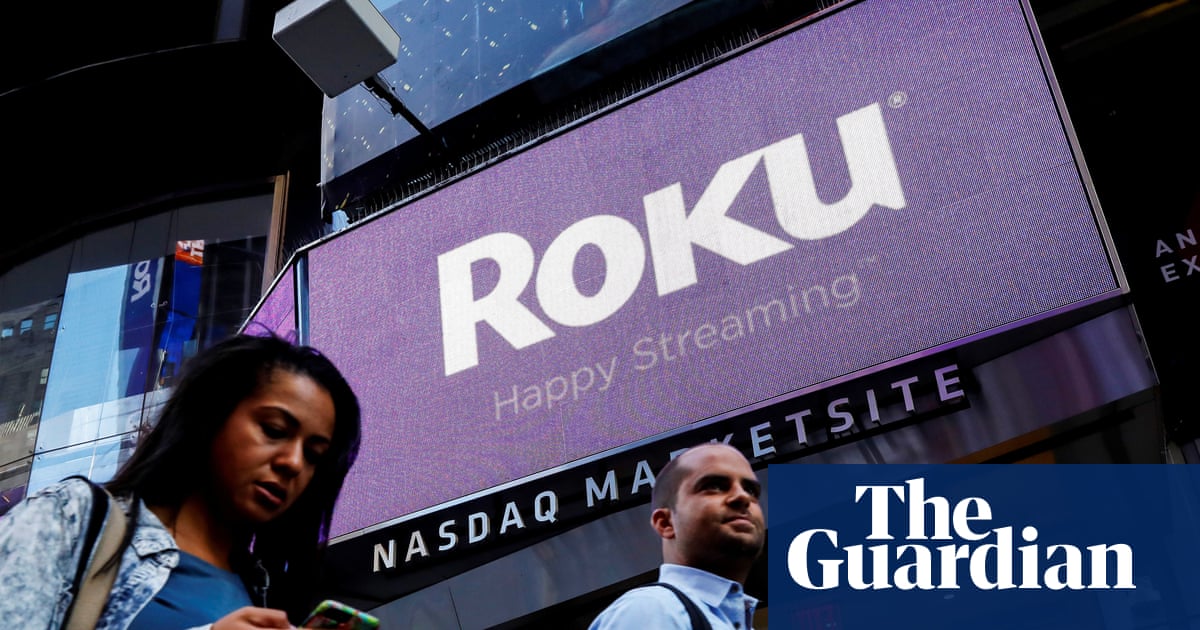
The deal lands in the most corporate corner of American media and the most boring of stock-market storylines: a buyer, a target, a price. On 15 June 2026, Fox Corporation said it will acquire Roku, the connected-TV platform best known for its purple-stick streaming boxes, in a transaction valued at roughly $22bn, or $160 a share in cash and stock, according to a breaking notice circulated on X at 13:38 UTC and a prediction-market confirmation logged at 13:34 UTC. The BBC reported the same headline figure and the strategic logic at 12:43 UTC: combining Fox's news and sports inventory with the largest neutral streaming-platform gateway in the United States, before the last cohort of pay-TV subscribers cancels its cable bill.
For a deal that the press will treat as a straightforward consolidation, the more interesting question is what Fox is actually buying, and at what moment in the linear-TV decline. The Roku platform sits between the viewer and every other streaming service in the household. Fox is, in effect, paying for the front door, then using its own sports rights — NFL, college football, Major League Baseball — to make sure the household walks through it on the right weekends. It is a defensive acquisition with an offensive price tag.
What Fox is actually buying
Roku is not, despite a decade of consumer confusion, a streaming service. It does not own a meaningful scripted library and it does not produce original series at Disney or Netflix scale. What it owns is a roughly 80-million-active-account gateway in the United States — the home-screen interface a viewer lands on after plugging a stick into a television, plus a slice of advertising sold against the search and content-discovery moments inside that interface. That is the asset. Fox is paying $22bn for the rare thing American media companies cannot build from scratch at any reasonable speed: a default-setting position on the TV remote.
The strategic logic is straightforward. The pay-TV bundle is shedding subscribers at a pace that has, by 2026, become the central preoccupation of every broadcast and cable network in the United States. Audiences that do not cancel cable outright are shifting to skinny bundles, antennae, or purely streaming alternatives. Fox's answer to that flight is to own a layer of the distribution stack that the bundlers cannot reach: the on-screen guide, the search bar, the ad slot a viewer sees while scrolling for something to watch. A News Corp and Fox-side press release on the deal is expected to frame this as a "content plus platform" story, but the more honest description is plumbing. Fox is buying the pipe.
The price, $160 a share, is roughly a 20% premium to where Roku has traded in the weeks before the announcement. That is rich for a company whose hardware margins are thin and whose ad business is sensitive to a consumer economy that has, by mid-2026, started showing the first signs of a softer back-to-school retail cycle. It is, however, the price a buyer has to pay to get the asset before someone else does — a dynamic that has defined almost every streaming-adjacent deal of the last four years.
Why the timing matters
The U.S. sports-rights cycle is the engine pulling the whole transaction. Fox, like its competitors, has just signed or is about to sign the next round of NFL, college football, MLB and college-basketball rights, and the cost of those rights has gone vertical. The only way to monetise inventory that expensive is to make sure it is delivered to as many screens as possible and that the ad load is sold programmatically and at scale. Owning a neutral platform gets Fox both: reach, and an in-house ad-tech layer that does not have to share margin with The Trade Desk, Magnite or Google.
The political risk of this combination is harder to ignore and probably the main reason the deal will be litigated, however briefly. Fox News is, by audience measure, the most-watched cable-news channel in the United States. Roku, as a default gateway, controls the home screen on tens of millions of televisions. That combination will draw scrutiny on two fronts: the editorial weight of a single company owning both the news brand and the search-and-recommend layer on the screen, and the data implications of unifying the two firms' advertising identifiers. Whether the Federal Trade Commission, the Department of Justice, or a combination of state attorneys general claim jurisdiction is, as of 15 June 2026, an open question. The transaction will also need to clear the standard review by the Committee on Foreign Investment in the United States, given Roku's exposure to Chinese contract manufacturing and semiconductor supply.
The counter-narrative, which the Roku and Fox investor-relations teams will lean on heavily in the coming weeks, is that the platform-gateway business is structurally low-margin and that the supposed data synergies are smaller than a $22bn price tag suggests. Roku's hardware business has been a perennial drag on operating income, and the advertising business, while growing, competes directly with the integrated ad stacks of Amazon, Apple, Google and Samsung. A bear case is that Fox is paying platform multiples for what is, in effect, a smart-TV operating system with a hardware subsidy problem. That read is coherent. It is also the read that loses the most in the moment the buyer has to choose between overpaying and not owning the asset at all.
What it changes for everyone else
For the rest of the U.S. media industry, the deal sharpens an emerging set of lines. There are now three plausible ways to win the streaming decade: own a globally dominant scripted library (Netflix, Disney), own a globally dominant live-sports bundle (Amazon's Thursday Night Football, Apple's MLS deal, NBC's Olympic catalogue, and now Fox-Roku), or own the gateway layer that the other two have to buy access to. The market is too small for more than a handful of winners in each category, and the gateway layer in particular has a strong natural-monopoly character — every additional household that defaults to Roku is a household that is harder to pry away with a competing stick.
For global audiences, the deal is a reminder that the so-called streaming revolution is, in the United States at least, ending in the kind of consolidation that the cable era ended in. The difference is the surface: cable bundles were sold by cable operators and content was produced by studios; streaming bundles will be sold by vertically integrated platform-plus-content conglomerates. The consumer experience, in many cases, will be more expensive than the cable package it replaced. The structural pattern — fewer owners, more locked-in defaults — is older than the technology.
The next six months
The deal is, as of this article's publication, a signed agreement subject to customary regulatory and shareholder approvals. A reasonable calendar has closing in the fourth quarter of 2026, with a possible extension into the first quarter of 2027 if the antitrust review runs long. The integration question Fox's management will be asked first is whether the Roku brand survives as a separate product line or is folded into a Fox-branded gateway. The honest answer is that it will depend on whether the hardware business, which loses money on every stick sold, is a tolerable cost of the platform-advertising business that is the real prize.
The open variable, and the one a reader should watch, is the response from the three gatekeepers Fox does not own: Amazon, Apple and Google. Each of them has both the financial capacity and the strategic motive to make a competing bid, to accelerate an internal build, or to extract concessions from Fox on access terms. The streaming wars are not over. They are entering a phase in which the gatekeepers, not the studios, are the firms that will determine the final shape of the market.
Desk note: Monexus framed this as a gateway-asset acquisition, not a content deal, and flagged the regulatory and data-governance questions that the press wires have so far treated as background. The structural pattern — platform-plus-content consolidation in a sunsetting linear-TV market — is the story; the $22bn number is the headline.
Wire provenance
This editorial synthesis draws on the following public wire/social posts:
- https://x.com/unusual_whales/status/
- https://x.com/polymarket/status/