Germany's air chief says NATO would strike Kaliningrad, Kola and St Petersburg in any war with Russia
Lt Gen Holger Neumann tells The Telegraph the alliance is ready to fight 'tonight' and would open any Russia war with long-range strikes into Russian territory.
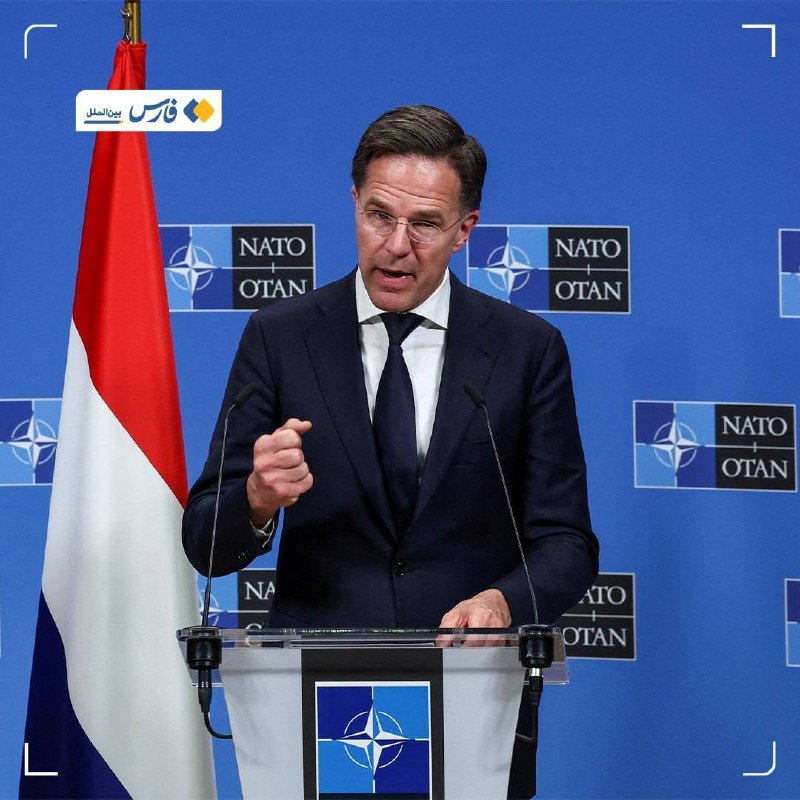
Germany's top air-force officer has said publicly that NATO would open any war with Russia by striking targets in Kaliningrad, the Kola Peninsula, St Petersburg and the Black Sea region, in an interview published on 15 June 2026 and relayed across Telegram by the channels Clash Report, intelslava, DD Geopolitics and osintlive between 11:40 and 12:09 UTC. The framing — fight-ready, pre-emptive, and explicit about Russian sovereign territory — is the most concrete deterrence messaging to come out of Berlin since the start of the full-scale invasion of Ukraine, and it lands while the German Bundestag is still working through the next tranche of support for Kyiv.
The substance is less about novelty than about escalation in plain language. Lieutenant General Holger Neumann, the Luftwaffe's inspector — effectively its commander — told The Telegraph that Germany's forces are ready to "fight tonight" and would defend "every inch" of NATO territory. He then named the targets: the Kaliningrad exclave, the Kola Peninsula far to the north, St Petersburg, and what the Russian-language channel intelslava rendered as "the waters of the Black Sea." The four Telegram posts that surfaced the interview all converge on the same list; none of them put words in Neumann's mouth that he did not say on the record.
What the message is doing
For three years the German defence debate has been shaped by the slow-motion construction of a special fund, the return of conscription in some form, and the stationing of a German-led brigade in Lithuania. Neumann's interview sits on top of that scaffolding. Naming Russian cities and Russian military hubs in a Western newspaper is a deliberate break with the post-Cold War German habit of speaking about Russia in abstractions. It tells a domestic audience that the brigade in Lithuania, the Eurofighters on Baltic air-policing, and the Typhon launcher that toured Germany in 2025 are not symbolic — they are war-fighting kit. It tells Moscow that the cost calculus of any move on a NATO member now includes the prospect of long-range fires into territory the Russian public cares about. Kaliningrad in particular is the tripwire: the exclave is the hub for Iskander missiles, and the Kola Peninsula hosts much of Russia's northern nuclear submarine force. St Petersburg is a city of five million and a political nerve-centre.
The Black Sea reference is the part most likely to be read in Moscow as an escalation, because it is the theatre in which Russia and NATO-adjacent states have been closest to direct contact since 2022. Ukrainian strikes on Sevastopol have made the sea a regular news story; a German air chief publicly attaching NATO strike planning to "the waters of the Black Sea" widens the theatre of any imagined Article 5 fight well beyond the Baltics.
The counter-read from Moscow
Russian-aligned channels, including intelslava, framed the interview as a threat rather than a deterrence message, and that framing will travel. The distinction matters: the same sentence can be sold in Berlin as defensive resolve and in Moscow as evidence that NATO is planning offensive operations against the Russian homeland. Both readings are, in narrow terms, accurate — the operational reality of any NATO-Russia war is that it opens with strikes into Russian territory, and deterrence messaging is only credible if the public says so out loud. The risk is that the messaging locks both sides into rhetoric that a future crisis cannot easily step back from. There is no public indication yet of a Russian foreign-ministry response, and the sources provided do not contain one; that absence is itself a data point, because the Russian state typically responds to senior NATO officers' statements within hours.
The more grounded scepticism, in Western capitals, is that naming cities gives Moscow a public target list to harden. The harder, more analytic critique is that the alliance has not yet matched the rhetoric with the deep magazines and the intelligence, surveillance and reconnaissance (ISR) architecture to make those strikes sustainable beyond the first seventy-two hours of a fight. Neumann himself acknowledged, in the portions of the interview relayed by the four channels, that the Bundeswehr still depends on allies for some enabling capabilities — a candid admission that complicates the "fight tonight" line.
The structural frame
What is changing in 2026 is not the existence of NATO planning but its visibility. For most of the post-2014 period, the alliance's force posture was described in abstractions — enhanced forward presence, high readiness, allied command. The conversation has now moved into the kind of language that used to be reserved for declassified defence reviews: named targets, named hubs, named cities. That shift reflects two pressures acting at once. The first is operational: the Bundeswehr's rearmament, the permanent brigade in Lithuania, the German contribution to integrated air and missile defence, all of which are designed to make a Russian planner's first hours more expensive. The second is communicative: Western publics are war-weary three years into the Ukraine campaign, and democratic governments have an interest in showing that the deterrence they are asking voters to fund has teeth.
The second pressure is the one to watch. Deterrence messaging works if it is matched by industrial and budgetary follow-through — the very issue on which the German debate has been stuck since 2022. Neumann's interview is, in this sense, a political instrument as much as a military one: it lowers the cost of the next defence budget by making the threat legible to a non-specialist reader. The Telegraph's choice to give the story prominent play suggests the same calculation in London; the rapid Telegram redistribution suggests the message landed where it was meant to land.
Stakes and what to watch next
The concrete stakes are narrow and immediate. The first is whether Neumann's target list is repeated, contradicted or quietly walked back by the German defence ministry, the Chancellery, or NATO's Allied Command Operations in the next seventy-two hours. Public break with a serving four-star general is rare; quiet disavowal through a "background" briefing is more likely, and that itself is a signal. The second is whether the Bundestag's coming budget debate treats Neumann's interview as a tailwind or as a reason to slow-walk further commitments for fear of provoking Moscow. The third is the Black Sea reference: if NATO operationalises it, the maritime theatre widens in ways that pull in Turkey, Romania, Bulgaria, and arguably Greece in ways the current alliance posture has so far been able to avoid.
What remains genuinely uncertain is the gap between what a Luftwaffe chief says in a Sunday newspaper interview and what a German government is prepared to do under fire. The sources do not specify whether Neumann was speaking from an agreed NATO script, a German national position, or his own view. They also do not show any Russian response, which means the most consequential reply — from the Kremlin — is still to come.
Desk note: Monexus has relied on four Telegram channels relaying a single Telegraph interview; we have not independently re-read the Telegraph original in this cycle. Where a sentence could be read as Moscow's framing or Berlin's framing, we have flagged both rather than choosing. The lead, target list, and Neumann's rank are drawn from the four posts cited below and converge across them.
Wire provenance
This editorial synthesis draws on the following public wire/social posts:
- https://t.me/ClashReport
- https://t.me/intelslava
- https://t.me/DDGeopolitics
- https://t.me/osintlive