Gulf capitals rush to bless a US–Iran deal that does not yet exist
Riyadh and Kuwait have publicly endorsed an Iran–US memorandum of understanding whose text neither capital has published — and whose details will decide whether the Gulf gets a strategic windfall or a new arms race.

Within a six-hour window on the morning of 15 June 2026, the foreign ministries of Kuwait and Saudi Arabia issued parallel statements welcoming a memorandum of understanding between the United States and Iran that the two governments have, in public, described in almost no detail. Kuwait's foreign ministry framed the document as a vehicle for ending the war, the statement was carried by Iranian outlets at 07:15 UTC. Saudi Arabia followed at 07:32 UTC, calling for a "lasting agreement that takes into account the security interests of the countries in the region," as reported by Mehr News.
The choreography is the story. Gulf capitals are queueing up to bless a deal whose text they have not released, on terms whose verification mechanism has not been named, from a negotiating process whose previous round collapsed in acrimony less than two years ago. That is not caution. It is positioning — and it tells you who in the Gulf expects to be on the winning side of whatever comes out of Washington and Tehran next.
A deal by press release
The Kuwaiti foreign ministry said it "welcomes the memorandum of understanding between the United States and Iran to end the war," language that goes further than a routine endorsement of dialogue. Tasnim News carried the statement at 07:15 UTC on 15 June 2026. Saudi Arabia's foreign ministry, reporting via Mehr News roughly seventeen minutes later, used the more guarded formulation of "a lasting agreement that takes into account the security interests of the countries in the region" — a phrase that is essentially a placeholder for whatever Riyadh intends to demand once the actual provisions are on the table.
Neither statement identifies the signatory on the Iranian side, the negotiating counterpart on the US side, the sanctions relief on offer, or the nuclear constraints Tehran has accepted in return. The Gulf is, in effect, endorsing a headline.
Why the Gulf is jumping in early
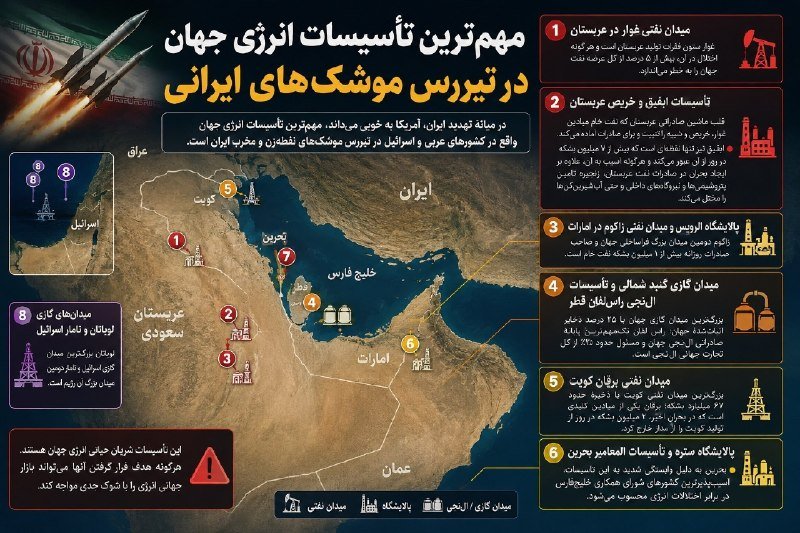
There is a structural reason for the rush. A US–Iran détente of any substance would reorder the security economy of the Arabian Peninsula. Iran exports more crude than at any point since the reimposition of broad US sanctions in 2018, much of it through opaque channels and at discounts that have eaten into the price book that underpins Gulf state budgets. A formal deal typically means a return of legitimate Iranian barrels to formal markets, an immediate overhang on prices, and a multi-year effort by Saudi Arabia and the UAE to manage the transition without cratering their own fiscal positions.
The Kuwaiti and Saudi statements are also a hedge against the alternative. The previous US–Iran negotiation track ended in mutual recrimination, followed by direct strikes and a period in which Gulf airspace, shipping, and energy infrastructure became the most likely venue for the next escalation. Riyadh and Kuwait both remember that period in concrete terms. Endorsing the deal in advance is a way of binding themselves to its success, and of signalling to Washington that the Gulf will not be a spoiler if the terms are tolerable.
The counter-read: endorsement as cover
The more sceptical reading is that these statements are diplomatic insurance, not conviction. A Gulf state that publicly blesses a US–Iran deal has a platform from which to complain — loudly and with the moral authority of an early supporter — if the deal goes wrong, if sanctions enforcement is lax, or if Iran interprets the memorandum more loosely than the Gulf would like. It is the kind of on-the-record posture that buys deniability later.
There is also a domestic-audience calculation. Kuwait's parliament has been uneasy about regional alignment choices since the start of the Gaza war. Saudi Arabia's leadership is managing a public that has watched the kingdom's relationship with Tehran move from confrontation to controlled coordination over the past three years, and any sudden reversal would need a credible external anchor. A US-led deal provides that anchor. Endorsing it is, in part, a way of telling domestic audiences that the regional rebalancing is being managed, not improvised.
What the framing papers over
The most important detail in both statements is what is missing. There is no mention of a verification regime, no reference to the IAEA, no commitment to a sequenced lifting of sanctions, and no acknowledgement of the missile and proxy files that Gulf states have insisted for two decades must be part of any comprehensive settlement. A memorandum of understanding is, by its nature, a political document — not a treaty — and Gulf foreign ministries know the difference. Their language reflects that: welcome, support, look forward to. None of those words bind anyone to anything.
That is also the structural point. The Gulf is being invited to bless a process whose substantive guarantees will be hammered out in the months after the photo opportunity. The states that move earliest and loudest now will have the most standing to shape those guarantees — or to walk away from them with the least political cost if the deal frays.
Stakes
If the memorandum holds and is followed by a binding instrument, Iran gains sanctions relief and a partial return to integrated energy markets, the Gulf states absorb a short-term oil-price hit in exchange for a measurable reduction in the risk of a direct US–Iranian exchange on their territory, and Washington claims a foreign-policy win in an election year. If the memorandum collapses, the Gulf capitals that endorsed it will have spent political capital they could have kept in reserve, and the regional security map reverts to a version of the pre-deal status quo — minus the diplomatic lubrication that a brief, flawed agreement would have provided.
What we do not know
The texts of the Kuwaiti and Saudi statements are summarised by Iranian state-linked outlets (Tasnim, Mehr News) rather than issued directly by the Gulf foreign ministries through their own English-language channels in the time window covered here. The substance of the US–Iran memorandum itself — its parties, its provisions, its verification architecture — has not been confirmed by a Western wire service in the materials available. Any reading of the deal's durability has to be held lightly until the underlying document surfaces.
Desk note: Monexus treats the Gulf foreign-ministry statements as positioning moves, not as evidence of the deal's substance. Wire coverage of the memorandum itself, when it arrives, will be the test.
Wire provenance
This editorial synthesis draws on the following public wire/social posts:
- https://t.me/mehrnews
- https://t.me/JahanTasnim