Hezbollah's post-ceasefire posturing: a southern Lebanon stress test
A cluster of 17 June operations in southern Lebanon, one Israeli soldier killed and ten wounded, landed in the same hour the US-Iran MOU was finalized. Tehran is now treating Israeli action south of the Litani as a breach of American, not just Lebanese, obligations.
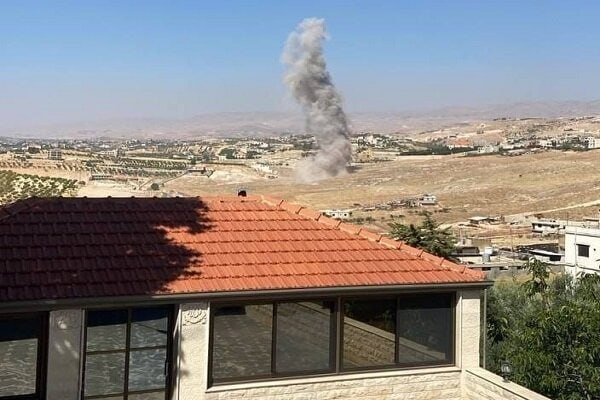
Hebrew-language outlets on the evening of 17 June reported a tightly clustered sequence of incidents in southern Lebanon: two Hezbollah operations, one Israeli soldier killed, ten wounded, several described as in "very serious" condition. The framing of those incidents, more than their ordnance, is the story.
The reporting window matters. It opens roughly an hour and a half after the formal exchange of signatures on a US-Iran memorandum of understanding that the Iranian foreign ministry spokesperson Esmail Baghaei confirmed was "electronically signed by Presidents Pezeshkian and Trump" and now in effect. The same spokesperson, in a coordinated set of statements threaded through Tasnim, Fars, and the Arabic-language outlets, drew a direct line: continued Israeli operations in Lebanon would constitute "a violation of America's obligations." The memo itself, on this reading, is a shield; Lebanon is where Tehran now tests it.
The shape of the re-entry
What stands out is not the casualty count but the choreography. Hezbollah's information apparatus had thinned to a whisper during the post-ceasefire quiet. The 17 June cluster, with its near-simultaneous claims of two separate operations, its references to "fierce conflict," and its ready-made translation into Hebrew for Israeli media consumption, has the texture of a deliberate re-entry into the southern Lebanon information space. The claim that an Israeli soldier was killed and ten wounded was carried by al-Alam Arabic, Fars, and Tasnim within minutes of each other, citing Hebrew media as the originating layer. Iranian and Iran-aligned outlets are functioning here as translators and amplifiers of an Israeli-source datum, which is itself a departure from the older pattern in which claims about Israeli losses originated with Hezbollah's own military channel.
Calibrated restraint, not denial
Israeli handling of the evening tracked a familiar script. The IDF did not deny the incidents outright; Israeli sources acknowledged "two security incidents" for soldiers in southern Lebanon without, so far, releasing a full casualty breakdown. That is calibrated restraint, which is a different posture from outright denial, and it preserves room for either retaliation or de-escalation. The choice to acknowledge incidents while withholding names, units, and tactical details is itself a signal, designed for an audience that includes the UN force monitoring the ceasefire line, the US negotiators who have just signed the MOU, and a Hezbollah command trying to gauge whether the Israeli threshold has shifted.
The MOU as tripwire
The US-Iran memorandum, finalized the same evening, is the variable that turns an isolated skirmish into a stress test. Baghaei's linkage of Israeli action in Lebanon to American "obligations" effectively weaponises the new text. If the memo contains, as some of the open-source reporting suggests, language about the Strait of Hormuz reopening and a sixty-day ceasefire extension, then Israeli action south of the Litani becomes, in Tehran's framing, a breach that Washington must answer for. The argument is structurally audacious: it converts an Israeli-Hezbollah tactical exchange into a contractual dispute between Iran and the United States, with Lebanon as the venue.
What the Litani line holds
Israeli insistence on holding territory up to the Litani River, the position flagged in the same day's reporting on why Prime Minister Netanyahu will not withdraw from the south, gives the test its geographic shape. The Litani is not an arbitrary line. It is the furthest north the IDF has publicly committed to a permanent presence inside Lebanon since the 1985 withdrawal, and it is the line at which any Hezbollah reconstitution of forward units becomes a direct challenge to the Israeli position. Operations that produce Israeli casualties inside that zone are not just kinetic events; they are evidence in a political argument about whether the ceasefire is collapsing or holding.
The next forty-eight hours will tell whether the 17 June cluster hardens into a new operational rhythm or burns itself out as a one-evening statement. The MOU is signed. The Litani is held. Both sides now have to decide whether the southern Lebanon file is the place to renegotiate what they just put on paper.
Follow the event.
These dated source records provide context. They do not retrospectively verify this archive article.
Separate what the nuclear watchdog reported from what it could not determine after the June 2025 strikes.