A Hezbollah victory lap, an Israel still fighting: what the US-Iran deal actually means for Lebanon
Displaced Lebanese are heading home and Hezbollah is claiming vindication, but Israel is still striking. The deal everyone is celebrating is, on the ground, a half-deal — and the half that matters most remains unwritten.
On the afternoon of 15 June 2026, displaced Lebanese families began the long drive back to villages in southern Lebanon that, until recently, sat inside an active Israeli military operation. According to Iran's state-aligned PressTV, the returns are happening "despite Israel's refusal to halt aggression as part of the Iran-US deal" — a phrase that captures, in nine words, the contradiction at the heart of the regional arrangement Washington and Tehran announced this week. The deal exists. The ceasefire in Lebanon, the one civilians need, is still being assembled on the back of it.
The US-Iran agreement, dissected by the BBC's international editor Jeremy Bowen in a 15 June piece, is being read in three contradictory registers at once. In Washington and Gulf capitals, it is a hard-won de-escalation. In Beirut, it is a partial relief whose hardest terms have not yet been written. In Tel Aviv, it is a framework whose enforcement Israel reserves the right to carry out unilaterally. Each of those readings has evidence behind it. None of them cancel the others out.
The Hezbollah reading
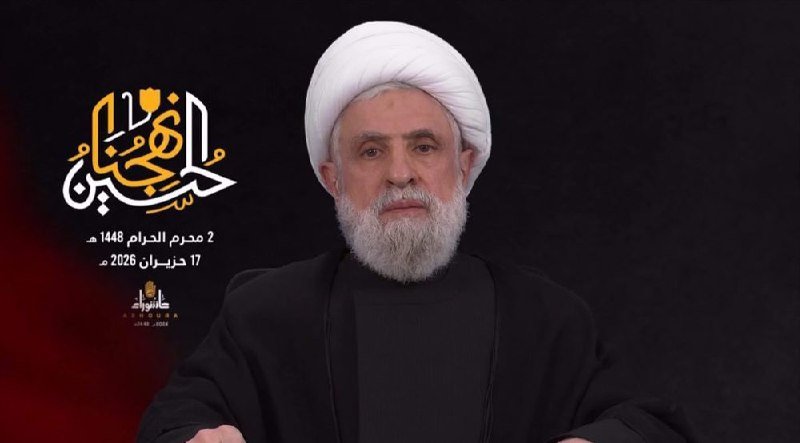
Hezbollah's own framing was published on 15 June in a lengthy leaflet circulated after the ceasefire was announced. According to open-source intelligence accounts of the document, the group thanked Iran by name and urged the Lebanese leadership to "distance itself" from what it called illusions around direct negotiations with Israel. The message is unambiguous: Hezbollah believes it fought Israel to a standstill, that the Iran-US diplomatic track is the formalisation of that outcome, and that the post-war Lebanese political order should be organised around that fact.
This is, plainly, a victory lap. It is also, on the historical record, the strongest claim Hezbollah has been able to make since the 2006 war. The group entered this round firing rockets into northern Israel, watching much of its senior command eliminated, and seeing its patron — Iran — agree to a deal that did not name it as a beneficiary. That it is now telling Lebanon's leaders to refuse direct talks with Israel is, in a structural sense, Hezbollah claiming the deal that was made over its head and repositioning it as a triumph.
The Israeli reading
Israel has not signed on to the same script. PressTV's reporting, again from 15 June, explicitly notes "Israel's refusal to halt aggression as part of the Iran-US deal," and Israeli strikes in southern Lebanon have continued into the post-announcement window. The Israeli position, as telegraphed by officials throughout the year, is that any deal with Iran cannot constrain its freedom of operation against Hezbollah infrastructure in Lebanon — and that the group cannot be allowed to reconstitute along the border.
That position is, on the evidence, the one currently being enforced. The Lebanese returning to southern villages are returning into a space where Israeli drones and aircraft are still active, where the question of whether a UN-monitored buffer applies to Hezbollah's residual presence is unresolved, and where the Lebanese army has not yet publicly assumed the kind of control along the Litani that would render Israeli strikes unjustifiable. Until that picture changes, the "deal" is a diplomatic event with a Lebanese humanitarian problem still attached to it.
The structural frame
What is unfolding is not, despite the language, a single transaction. It is a stack of overlapping arrangements with different counterparties, different timetables, and different enforcement mechanisms. The US and Iran have agreed a framework. Hezbollah has been told, by its own patron's diplomatic success, that some of its leverage is now spent. Israel has reserved for itself the right to act on what it calls residual threats. Lebanon's state, meanwhile, is being asked to host a refugee return, assert sovereignty it has not fully exercised in the south for two decades, and survive politically while doing so.
In contests between great powers with no supranational arbiter, the rational move for each party is to maximise its relative position from whatever settlement the other side accepts. That is what every actor here is doing. Iran has secured a framework and a Hezbollah declaration of gratitude. Israel has secured a unilateral enforcement right. Hezbollah has secured a political re-narration. Lebanon's civilian population has secured the right to drive south, with the asterisk that the road may still be in an active military zone.
Stakes and what remains unresolved
If the trajectory holds, the winners are the Iranian diplomatic track, the Israeli operational track, and Hezbollah's domestic political narrative. The losers are the Lebanese civilians whose return is being treated as a deliverable of a deal they were not party to, and the idea of a Lebanese state monopoly on force south of the Litani, which is being asked to materialise without the political settlement that would make it durable.
The contested ground, on the evidence available on 15 June, includes: the exact terms of any Israel-Hezbollah understanding (none has been published); the timeline for the return of displaced Lebanese to specific villages; the role, if any, of UNIFIL or the Lebanese armed forces in policing the southern line; and whether Iran's leverage over Hezbollah survives a deal in which Hezbollah is treated as a spoil rather than a stakeholder. The sources do not specify casualty figures for the return period, nor do they confirm that the Lebanese government has formally endorsed the framework announced in Washington. Until those questions resolve, the safest read is that this is a deal with a Hezbollah victory lap stapled to the front, an Israeli enforcement clause stapled to the back, and a civilian population in the middle driving home to find out which of the two annexes applies to their village.
This article framed the announcement as a layered arrangement rather than a single event — a choice driven by the gap between the diplomatic text and the operational reality in southern Lebanon on 15 June 2026.
Wire provenance
This editorial synthesis draws on the following public wire/social posts:
- https://t.me/presstv/
- https://t.me/englishabuali/
- https://t.me/osintlive/
Follow the event.
These dated source records provide context. They do not retrospectively verify this archive article.
Separate what the nuclear watchdog reported from what it could not determine after the June 2025 strikes.