Hong Kong's first five-year plan is a governance test Beijing is forcing in public
Hong Kong's debut central planning document lands in a city already strained by a property liquidity crunch, a second banking-app outage of the year, and a public health gap. The test is whether local delivery can match the document's ambition.
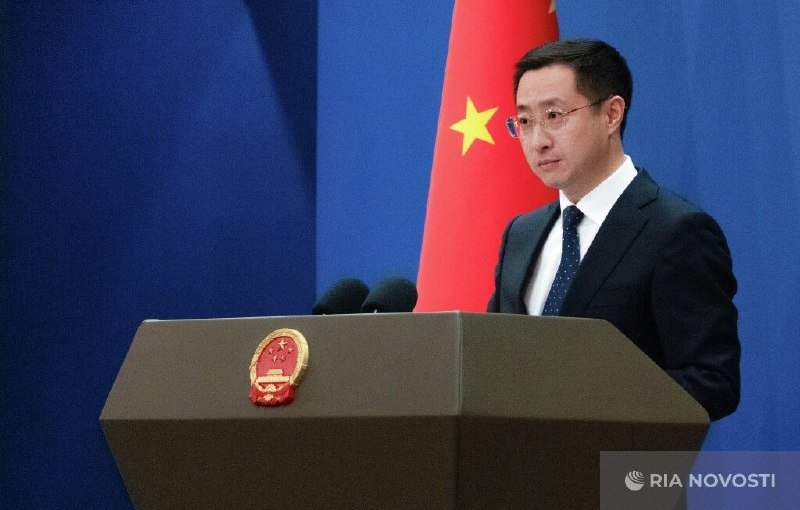
Hong Kong's government confirmed on 15 June 2026 that it aims to publish the city's first-ever five-year plan in the third quarter of the year, folding the territory more visibly into the rhythm of central planning that has long governed the mainland. The framing matters as much as the document: the plan is being presented as a coherence exercise, a way to align land supply, housing, innovation spending and talent policy behind measurable outcomes rather than the open-ended budget cycles of the colonial and early post-handover eras. Whether that ambition survives contact with the city's still-fragile property market, its creaking public services and an unusually busy news week of operational stress is now the real question.
The plan arrives in a city that has not been short of small crises while preparing for it. On the same day, the Centre for Health Protection urged vulnerable groups to receive free Covid-19 vaccinations before an expected gap in supply. HSBC's Hong Kong banking apps went down for the second time this year, according to Hong Kong Free Press, a reminder that the territory's claim to be a regional financial hub rests on infrastructure that occasionally fails the most basic reliability test. Developer Lai Sun was separately working to restructure maturing notes to ease liquidity pressure, a signal that the property correction is still working through balance sheets rather than resolved. Against that backdrop, a planning document aimed at boosting governance and ensuring results reads less like a policy statement and more like a stress test.
What the plan is for
The South China Morning Post's editorial board has been explicit: the document's value depends on whether it sharpens accountability. A five-year plan in a system accustomed to annual budgets and ad-hoc land releases is a different instrument. It forces departments to commit to sequencing, to publish intermediate milestones, and to be measured against them. The editorial argued that governance itself is the binding constraint — that without tighter coordination between bureaux, even well-funded initiatives stall between Housing, Development and Transport. The credibility question is whether the plan will be a public scorecard or a closed-door alignment memo.
The political subtext is also visible. Beijing has been gradually integrating Hong Kong's economic planning with the broader Greater Bay Area agenda, and a five-year framework is the cleanest way to lock in alignment without rewriting the Basic Law. The risk is the opposite of what critics usually predict: not over-centralisation, but bureaucratic drift. Five-year plans work in settings where provincial officials are evaluated against fulfilment rates and where centre-province personnel flows enforce discipline. Hong Kong's civil service has its own traditions, and a plan that looks like a mainland template without local enforcement muscle may end up on a shelf.
The property and finance overhang
Lai Sun's note-swap bid is a useful proxy for the headwinds. Hong Kong's mid-sized developers entered this cycle with more leverage than the large flag-carriers, and the rate environment has forced refinancing rather than new construction. A five-year plan that talks about housing supply and land release will be read against this specific market. If the document commits to a credible multi-year land pipeline, Lai Sun-style restructurings become less frequent. If it does not, the planning framework will be remembered mostly as cover for inaction.
HSBC's outage is a smaller but symbolically loud story. Banking-app reliability is not glamorous policy terrain, but for a city marketing itself as a regional wealth-management centre, two significant outages in six months is a reputational tax. The plan will be expected to address digital infrastructure resilience directly. A document silent on operational continuity — while ambitious on fintech and Web3 — will be fairly mocked.
Social delivery and the cost of being seen to underperform
The same morning brought a more human-scaled story: a new shelter for Filipino domestic workers in Hong Kong, built and ready, awaiting government green light to open. Domestic workers remain a politically awkward topic in the city, simultaneously essential and under-protected. A five-year plan that elevates social delivery will be measured on whether bottlenecks like this — a building finished, an approval pending — actually clear. The same applies to the public health gap. Free Covid jabs for vulnerable groups are cheap and effective; a supply interruption is the kind of operational lapse that erodes trust in the system more than any headline-grabbing policy fight.
There is also a softer signal in the mix. The British tourist wanted after jumping bail over a Hong Kong airport vandalism charge is a small legal story, but it is a reminder that rule-of-law perceptions in the city are read internationally through incidents, not white papers. A first five-year plan will be read alongside the texture of enforcement on the ground.
The structural frame
What is happening is the incremental grafting of a mainland governance grammar onto a city that has historically run on a different one. The case for it is straightforward: a city integrated into a national development strategy needs a planning document that mirrors the strategy, and a five-year horizon gives investors and officials something to plan against. The case against is equally straightforward: plans that outrun institutional capacity become alibis for underperformance. The mainland's own planning record is uneven at the local level, and Hong Kong's civil service, professionalised but not evaluated on plan-fulfilment metrics, will have to learn a new rhythm quickly.
The test, in plain terms, is delivery density. Does the plan name milestones, owners and intermediate checks? Does the government publish progress? When a Lai Sun-style refinancing surfaces, does the plan's housing chapter address it? When an HSBC outage happens, does the digital infrastructure section cover it? The document is due in roughly three months. The news week it is being drafted into suggests the bar for credibility will be set by the smaller stories, not the grand framing.
Desk note: Monexus has framed this around the delivery question rather than the sovereignty question. The wire narrative has been dominated by what the plan symbolises about Beijing's role; we are watching what it does to a property cycle, a public health supply chain, and a banking-app uptime record.