A 60-day pause in the Gulf: reading the Hormuz sequence without the press-release fog
Iran says US naval blockade has been lifted; Washington says several issues remain. The Strait of Hormuz is the test, and the next 60 days will determine whether the pause is a deal or a delay.
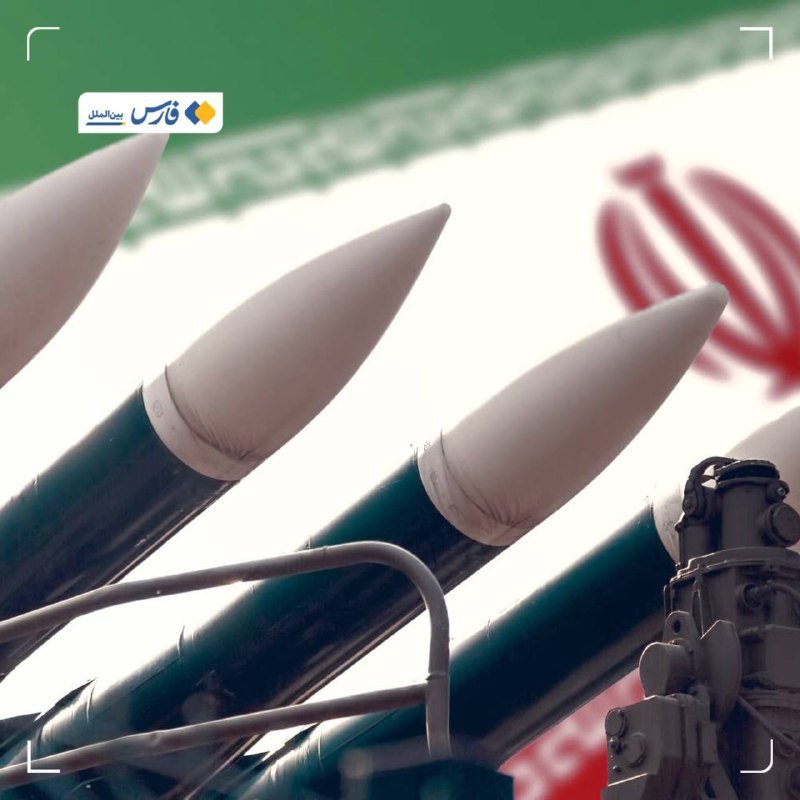
On 15 June 2026, the narrowest reading of the day's signals out of the Gulf was that two warships and a handful of announcements had done the work of months of diplomacy. By 20:40 UTC, Iranian forces had fired warning shots at a vessel in the Strait of Hormuz, according to a Middle East Spectator wire circulating on Telegram. By 21:17 UTC, Washington was on the record saying it would have to resolve several issues in a still-unwritten agreement with Tehran during a 60-day ceasefire. By 21:35 UTC, Iran was asserting that at least five Iranian-flagged vessels had transited the strait after a US naval blockade had been lifted.
Read in sequence, that is not a contradiction. It is a clock. The 60 days is the real story, and almost everything else — the shots, the transit, the framing on either side — is positioning for what happens inside it.
What was actually announced, and by whom
Two actors have spoken on the record in the past two hours, and they have not said the same thing. The American line, per the BRICS News wire, is procedural: there is a 60-day ceasefire, and several issues remain to be resolved in negotiation. The Iranian line, also via BRICS News, is operational: a US naval blockade has been lifted, and Iranian vessels are moving through Hormuz.
A blockade is not a sanctions regime. It is a kinetic posture, an act of war under the law of the sea. If the US blockade is genuinely over, that is a material de-escalation, not a rhetorical one. If it is paused but technically still in force — held as leverage while the 60-day clock runs — then Iranian ships transiting the strait are sailing under the same uncertainty that produced the 20:40 UTC warning shots, and the ceasefire is closer to a stretched hand than a signed page.
The vessel that took the warning fire has not been publicly identified in the wires available at the time of writing. Neither has the flag state, the cargo, or the direction of transit. That is the kind of detail that usually surfaces within hours, and its absence is itself a signal that the parties are still arguing over what the afternoon's events mean.
The 60-day arithmetic
Sixty days is enough time to draft a deal, and not enough time to fail to. A ceasefire of that length is what negotiating teams ask for when they want a window in which the ship cannot be fired upon, but the sanctions architecture and the regional posture remain unchanged. It is also what one side asks for when it needs a quarter to keep oil flowing, an election cycle to outlast, or an oil futures curve to flatten before a political decision becomes unavoidable.
The asymmetry matters. During those 60 days, Iran has something the United States does not: the ability to claim a victory it has not technically won. If Iranian tankers transit Hormuz, the optics of the blockade are over even if the legal architecture is intact. If a deal is not signed inside the window, the same footage that today shows Iranian vessels in the strait can be used to justify its reimposition.
The Trump administration's problem, and the Iranian regime's corresponding leverage, is that every shipment through Hormuz is a piece of evidence. The 60 days, in effect, will be litigated on cable news as they happen, and the side that blinks first on framing will pay for it in domestic politics long before the diplomats sit down again.
What the wires are not telling us yet
Three things remain genuinely unclear in the reporting as of 21:35 UTC on 15 June 2026. First, the contents of the issues Washington says still need resolving — the BRICS News wire does not enumerate them, and without a list, the ceasefire is a frame around an empty page. Second, the identity of the vessel that took the warning shots, and whether Iran is treating it as a test case, a warning, or an isolated incident. Third, the status of any third-party shipping — the Gulf state fleets, the Chinese and Indian tanker traffic, the European LNG carriers that move through Hormuz under the protection of the US Fifth Fleet by tacit arrangement. None of those actors have spoken on the wires available at the time of writing, and their silence is the diplomatic equivalent of holding a thumb on the scale.
What the wires do suggest, when read together, is that both sides are trying to convert a kinetic moment into a textual one. The 60-day ceasefire, the claimed transit, the unclaimed warning shots — each is a move toward a different kind of board, in which the next 60 days are argued in English-language press releases and Farsi-language state media rather than in the water itself.
Stakes, plainly stated
If the ceasefire holds, the immediate winners are the oil markets, the Gulf monarchies, and the Chinese and Indian economies that take most of the crude that transits Hormuz. The immediate losers are the Iranian hardliners whose position is strongest at peak tension, and the American hawks whose argument that Iran only responds to pressure will look thinner with each successful transit. If the ceasefire breaks, the converse: a re-blockaded strait, a re-armed Gulf, and a market that has already priced in calm.
The plausible alternative read is simpler and less forgiving: that 60 days is not a window but a delay, that the issues Washington says remain are the issues that brought the warships to the strait in the first place, and that the warning shots at 20:40 UTC are the actual operating language of this dispute, with the press releases above as ornament. The dominant framing — that diplomacy is happening — holds only as long as no second vessel is fired upon. Monexus will be watching the wires for the second shot before watching them for the first clause of any draft agreement.
This article draws solely on circulating wires in the public Telegram channels BRICS News and Middle East Spectator. The picture it paints is necessarily a snapshot; the next 24 hours of reporting will determine whether the 60 days is a process or a posture.
Wire provenance
This editorial synthesis draws on the following public wire/social posts:
- https://t.me/bricsnews
- https://t.me/bricsnews
- https://t.me/Middle_East_Spectator