Hormuz deal sells the market a peace it hasn't verified
A US-Iran deal has reopened the Strait of Hormuz and put a two-week high back into Bitcoin. The agreement is also a study in how headline diplomacy can outrun the document underneath it.
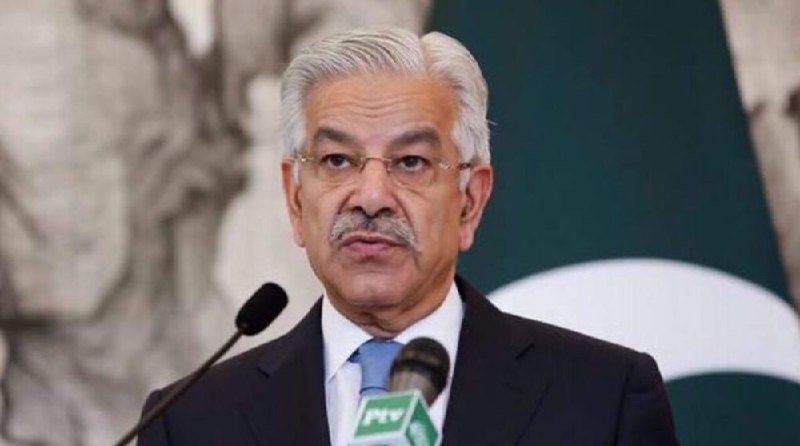
At 22:37 UTC on 14 June 2026, BBC News reported that oil prices were sliding after Pakistan announced a deal between the United States and Iran to reopen the Strait of Hormuz. By 03:56 UTC the following morning, CoinDesk was recording Bitcoin above $65,500 on what it described as the geopolitical premium draining out of crude. By 06:47 UTC, Cointelegraph had the same story, with US President Donald Trump quoted as promising a "toll-free opening" of the waterway. The market had, in the space of a single news cycle, bought a peace.
It is reasonable to ask what, exactly, the market bought. NPR's 09:55 UTC bulletin on 15 June described the agreement as a "major breakthrough" that nonetheless "did not resolve critical issues set aside for further negotiations." That phrasing is doing a lot of work. It is the diplomatic equivalent of selling a building by advertising the lobby. The headline is the reopening of a chokepoint through which a meaningful share of seaborne crude moves. The footnote is everything else: sanctions architecture, nuclear file, proxy posture, the disposition of regional forces, the verification regime that would let any of this be called a deal rather than a press release.
The price action is the story — for now
Bitcoin's two-week high above $65,500 and oil's slide in the same window are not coincidences. They are the same trade. When traders price geopolitical risk out of energy, the carry trade into risk assets becomes cheaper, and the marginal dollar tends to find its way into the most liquid and most reflexive instrument available. In the cycle of 14–15 June, that instrument was Bitcoin. CoinDesk and Cointelegraph both framed the move as a "geopolitical premium" rotation — capital leaving defensives, returning to beta. Reuters' 09:33 UTC broadcast, with Trump declaring the deal "complete," functioned as the catalyst print. The Unusual Whales post at 05:31 UTC the previous day, quoting Trump's assurance that Hormuz "will be open to all immediately after deal is signed," was the early signal.
A staff-writer's caution: price action tells you what the market believes in the next quarter. It does not tell you what the next quarter contains.
The agreement, as advertised, is thin on mechanism
What we have, on the public record, is a statement of intent mediated by Pakistan, with the headline deliverable being a toll-free passage through Hormuz. NPR is explicit that core issues have been parked for a later round. There is no published text in the thread material; no joint communique; no named verification body. The deal, as it currently exists, is whatever the principals say it is on the day.
That is a familiar shape in this region. The 2015 Joint Comprehensive Plan of Action, the Abraham Accords of 2020, the 2023 Saudi-Iran rapprochement brokered by Beijing — each landed first as an announcement, then as a document, then as a contested interpretation. The market reliably rallies on the announcement and forgets to ask about the document. The history of those episodes suggests the document phase is where the deal either becomes real or quietly stops being one.
What the counter-frame requires us to take seriously
There is a Global South reading worth holding alongside the Western wire line. For oil importers in South and Southeast Asia, for instance, a toll-free Hormuz is not an abstraction but a quarterly input cost that determines fiscal headroom, fuel subsidies, and currency pressure. The 14 June announcement was reported, in part, by Pakistani channels, and Pakistan's role as mediator is itself a signal: the deal was shaped, in part, by a state that lives with the consequences of an open or closed Gulf more directly than Washington does. To read the agreement purely through a New York or London trading-desk lens is to miss the audience the mediators were playing to.
There is also a Chinese angle that the Western wires do not foreground. China is the single largest buyer of Iranian crude, has been the largest buyer of Saudi crude, and has spent the last three years building the security architecture to keep Gulf energy flowing into its refineries regardless of who is in the White House. A US-Iran deal that reopens Hormuz is, for Beijing, both an opportunity and a constraint: it lowers the geopolitical premium on energy just as Chinese demand is normalising, but it also tightens a transit chokepoint that Chinese diplomacy has spent a decade preparing to bypass. The deal is not zero-sum with Chinese interests, but neither is it costless for them.
Stakes, and what remains unverified
If the agreement holds and verification follows, the obvious winners are oil importers, downstream petrochemical buyers, and risk-asset holders who rode the rotation. The obvious losers are the actors — Iranian hawks, Gulf shipping insurers, refiner-margin traders — whose business model depended on a sustained premium. OPEC, which has spent the last eighteen months managing a war-driven price band, will be recalibrating within the week.
What remains genuinely unverified, on the source material available: the text of the deal; the verification mechanism; the sanctions sequencing; the position of Israel and of Gulf states that were not at the table; the status of Iran's nuclear file; the role of any third-party guarantor. The thread material agrees on the headline and disagrees, by silence, on the substance. That is the trade the market is making — and it is a trade, not yet a fact.
Wire provenance
This editorial synthesis draws on the following public wire/social posts:
- https://x.com/i/broadcasts/1qGvvvZgVVqGB