The Hormuz deal the US negotiated without Europe's seat at the table
Donald Trump says a deal with Tehran is signed and the Strait of Hormuz is open. Europe's energy minister was apparently not in the room — and the European Commission's silence is doing the talking.
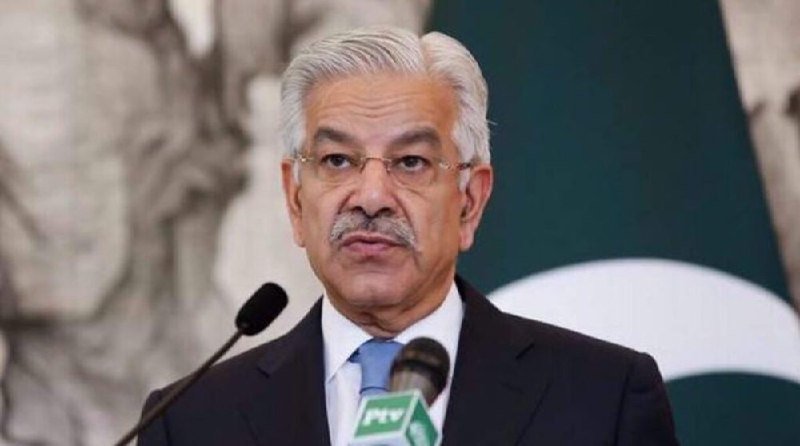
At 16:28 UTC on 15 June 2026, Donald Trump stepped in front of cameras and declared, in the same breath, that a deal with Iran had been "fully signed" and that the Strait of Hormuz was "open." Within minutes, two Telegram channels tracking the US–Iran track — BellumActaNews and WarMonitors — had the clip circulating, along with a second tranche in which the President said the waterway would be "completely open by Friday" and that the United States and Iran "get along really well." Oil, he added, was "plummeting down." The market had not yet fully priced the claim, but the choreography was unmistakable: a bilateral fait accompli, delivered from a podium, with the price of energy as its subtext. (BellumActaNews, 15 June 2026, 16:29 UTC)
The fact that matters is not whether the deal holds. The fact that matters is who was in the room. And on the European side, the answer, as of the afternoon of 15 June 2026, appears to be: no one.
The European absence
In a separate remark relayed by the same channel at 16:31 UTC, Trump recounted a phone call with Emmanuel Macron. The French president, he said, would ring periodically and urge him to act on Hormuz, to bring prices down to US levels. The characterisation, even allowing for the President's well-known taste for anecdote, is consistent with what European officials have been signalling in private for months: that they want the strait defended, but that they have no operational lever to defend it themselves. (BellumActaNews, 15 June 2026, 16:31 UTC)
What is conspicuously absent is a European readout. There is no joint statement from the European External Action Service, no line from the Commission's energy commissioner, no British or French co-signatory on the framework Trump described. The deal — to the extent that one exists — is bilateral: Washington and Tehran, with a French leader cast in the role of supplicant, not signatory. For a continent that imports the bulk of its crude and gas through, or adjacent to, that chokepoint, the optics are not just undignified. They are structural.
Why the framing is more interesting than the deal
It is tempting to read Trump's announcement as a straight transactional win: US pressure on Iran, an opening of the strait, lower prices, a press conference. That is the story his remarks tell. It is also, in 2026, an incomplete story.
The reason is that energy security in Europe is no longer a national question handled in foreign ministries. It is a question of whether the European Union's industrial policy — its electric-vehicle build-out, its electrification of heating, its just-transition fund commitments — can survive in a world where the price of oil is set, increasingly, by a single bilateral negotiation conducted outside EU institutions. The US–Iran track, in other words, is now also a track on European competitiveness. The Commission has, to date, no instruments to manage that. It has a sanctions regime, a competition directorate, and a fondness for joint communiqués. It does not have a Hormuz policy.
What this publication finds
Monexus finds that the more honest read of the afternoon's claims is that the US has chosen to convert a security good — freedom of navigation through Hormuz — into a pricing good, and that the conversion is being made on Washington's terms. The Trump framing is that this is generosity: he intervened, the price fell, Europe should be grateful. The structural reading is colder. When the guarantor of a public good is also the broker of the price, the public good gets priced. Europe is now downstream of that pricing.
The secondary point is that Macron, in the anecdote Trump chose to tell, is doing what European leaders have done for the better part of two years: calling Washington, asking for relief, and receiving an audience rather than a coalition. That is not alliance in any meaningful sense. It is patronage dressed in the language of partnership.
What remains uncertain
The sources available as of publication do not specify the legal text of the arrangement Trump referenced, the verification mechanism for any Iranian concession, or whether the price movement in oil futures is being driven by the announcement itself or by a separate, unverified component of the deal. WarMonitors reported Trump's claim of a "fully signed" deal at 16:28 UTC, but the channel carries no Iranian-side confirmation; the two Telegram inputs at hand are US-side, presidential, and short on detail. (WarMonitors, 15 June 2026, 16:28 UTC) Whether the Iranian Foreign Ministry or the office of the Supreme National Security Council will echo the language is the next test, and it is a test this article cannot pre-empt.
The European position, similarly, is more silence than statement. Until Brussels, Paris, and Berlin publish something firmer than anodyne press lines, the absence of a European seat at the table should be read as the story — not as an oversight to be corrected in a follow-up communique.
Stakes
If the bilateral US–Iran arrangement holds, two things follow. First, Europe pays — at the pump, in industrial electricity costs, in the slow drift of energy-intensive manufacturing out of the continent. Second, the precedent normalises a world in which the chokepoints of the global economy are policed and priced by one capital, and the rest of the industrialised world learns to dial in. That is the world Trump described this afternoon. It is also the world European leaders have spent the better part of a decade saying they do not want.
Desk note: The wire pushed Trump's remarks on Iran and Hormuz largely as a US-domestic political story. Monexus reads it as a European story — a continent discovering, in real time, that its energy and industrial policy has been outsourced to a phone call it is not on.
Wire provenance
This editorial synthesis draws on the following public wire/social posts:
- https://t.me/BellumActaNews
- https://t.me/BellumActaNews
- https://t.me/BellumActaNews
- https://t.me/WarMonitors