The Hormuz headline and the missing text: reading Trump's 'all signed' Iran deal
Trump told reporters at Versailles the Iran memorandum was signed. The deal has been announced, the Strait of Hormuz is reopening, and the document itself is still nowhere on the record.
President Donald Trump told reporters on the steps of the Palace of Versailles on Thursday morning that the Iran memorandum was signed, ending a stretch of days in which the document's status lurched from "propaganda" to policy of the United States. The American president, speaking after a dinner with French President Emmanuel Macron, said a memorandum of understanding between Washington and Tehran was in effect, with a physical copy of his signature scrawled at Versailles and a digital copy transmitted to the Iranian side. The Strait of Hormuz, the narrow chokepoint through which a large share of seaborne oil moves, is to begin reopening under the arrangement, according to U.S. officials cited by Axios.
The text of the deal, however, is not yet public. What the world has so far is a list of bullet-pointed commitments announced by Iranian state media and confirmed, in shape if not in every clause, by the White House. The mismatch between the volume of triumphant claims on one side and the near-silence of the published document on the other is the story. A memorandum this consequential was being argued over in capitals and trading floors before its sentences could be read.
The deal that announced itself
The choreography of the signing tells you almost everything about the politics of it. Iran's President Masoud Pezeshkian and Trump signed the memorandum electronically and remotely, according to Iran's Foreign Ministry spokesperson Esmail Baghaei, with no ceremony in Geneva and no joint appearance. The mediator, Pakistani Prime Minister Shehbaz Sharif, announced the result himself, naming the document the "Islamabad Memorandum of Understanding." Trump then added a physical signature at Versailles, a photo of which was sent to Tehran and to the mediators, per Axios. Two senior U.S. officials told journalist Barak Ravid that the MOU was remotely signed on Wednesday and is now in effect.
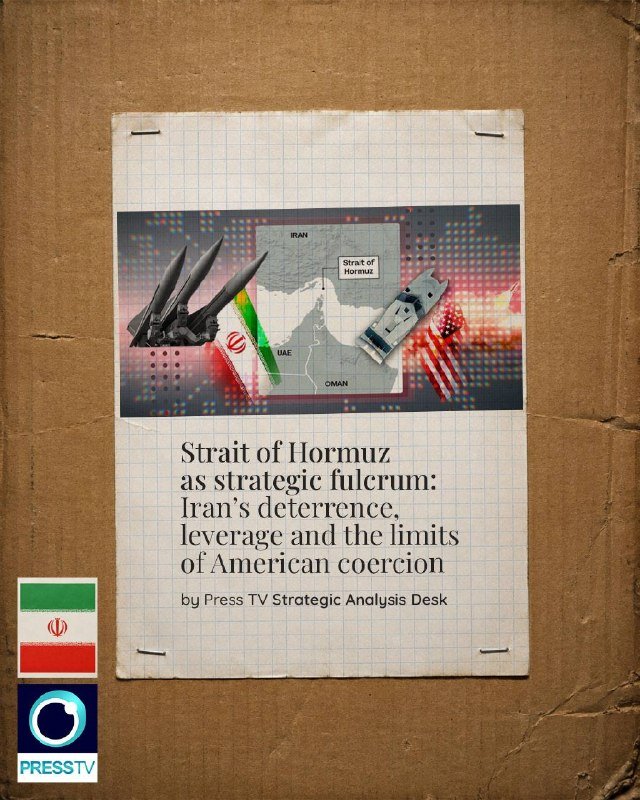
For Tehran, the announcement was a chance to define the terms in public before any negotiator could revise them. Press TV, the Iranian state broadcaster, listed the core commitments: Iran's defensive capabilities will not be discussed in any process or with any party; Iran will receive payment for services provided in the Strait of Hormuz; a framework is being developed to manage the Strait. Fars News reported that Massoud Bizikian, the Iranian signatory, signed the memorandum in Islamabad alongside the text ending what Iranian media called the war "imposed by the US-Zionist regime." France 24 reported that the deal commits Tehran to dilute its enriched uranium in return for large-scale economic relief.
The four-week claim
Trump told reporters that global oil reserves had been roughly four weeks from exhaustion, a remark that recasts the entire negotiation as a forced landing rather than a strategic masterstroke. The U.S. entered the war with maximalist aims and exited it with a pragmatic decision to end the conflict despite political cost, according to a Deutsche Welle analysis. Whether the four-week figure is accurate or aspirational, it does the same political work in Washington: it gives the White House a reason to have settled rather than won.
For markets, the number matters more than the framing. The Strait of Hormuz reopening begins immediately under the MOU's terms, which Deutsche Welle characterised as a 60-day ceasefire extension paired with the reopening. The price of crude, the cost of container shipping through the Gulf, and the insurance rates that had been quietly repricing the risk of a multi-week closure all reset on the announcement, in some cases before the text arrived.
What Republicans won't say out loud
The blowback inside the U.S. right has been sharp and unusually public. Senator Bill Cassidy declared that "Reagan is rolling over in his grave," calling the deal the "worst foreign policy blunder in decades," and a handful of Senate Republicans have joined him in questioning the terms. Vice President JD Vance, who earlier in the week had dismissed the details of the Iran MOU as fake and "IRGC propaganda," watched the White House unveil a document that confirmed precisely those details. Republican members of Congress told NewsNation's Kellie Meyer that Vance was to blame for the U.S.-Iran deal, according to Telegram channel OSINTdefender. The political wound here is not principally about Iran policy; it is about who lost the argument inside the administration.
That kind of intra-party crack tends to harden rather than heal once the document itself is read. Senators who attacked the deal in the abstract have a strong incentive to keep attacking it once specifics arrive, because the specifics will be uglier than the bullet points. The MOU reportedly leaves Iran's defensive capabilities off the table and pays Iran for Strait services, two concessions that will read differently to a Republican caucus than a headline about "ending the war."
The missing text
Every actor in this story has an interest in the memorandum being read in a particular way, and almost none of them has an interest in letting you read it. Iran's state outlets published their preferred version first. The White House confirmed the signing without, as of this writing, publishing the full text. The Pakistani mediator announced the headline. The French presidency hosted the pageantry without a readout of its own.
The Strait will reopen on the schedule described by U.S. officials. Oil will move, or it will not. What hangs in the balance is whether the document that supposedly produces those outcomes is the same one each side claims to have signed. Until the text is public, the headline is doing the work of the agreement, and that is rarely a stable arrangement. The next test is mechanical: a ship, a price print, a port call through Hormuz. The test after that is textual, and it will arrive on the day the memorandum is finally released.