The Hormuz Settlement: What a US-Iran Memorandum Actually Says, and What It Doesn't
A signed memorandum, a reopened strait, and a great many unresolved questions about what was actually traded.
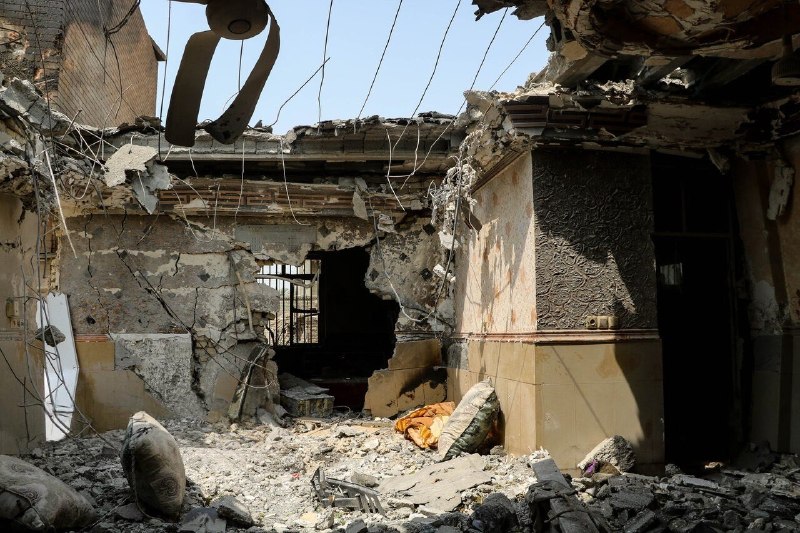
At 15:53 UTC on 15 June 2026, Mohammad Baqer Ghalibaf, Speaker of the Iranian Parliament, addressed the Iranian public with a message that mixed celebration and defiance. The previous two days of missile exchanges, he said, had been answered by "historic resistance" and the "bravery of the armed forces." Within minutes, two contradictory framings of what had just happened were already travelling at wire speed: a US president claiming a fully signed deal and a toll-free Strait of Hormuz, and an Iranian parliamentary leadership describing a settlement reached from a position of strength. Both versions agree on the central fact. On the substance, they diverge sharply, and the divergence is itself the story.
What is confirmed, as of the afternoon of 15 June 2026, is narrow. A memorandum of understanding between the United States and the Islamic Republic of Iran has been signed electronically, with President Donald Trump and Vice President JD Vance signing for the US side and Speaker Ghalibaf signing for Iran. Trump told reporters that "the deal with Iran is fully signed, the strait is open" and that the waterway would operate without transit tolls. A senior US official, briefing reporters shortly before 16:00 UTC, described the document as a memorandum rather than a final agreement. Beyond those bare facts, the public record consists of partial statements from two governments that do not entirely agree on what they have agreed to, broadcast through a network of Telegram channels whose own editorial priors range from pro-Iranian state media to Western open-source-intelligence feeds. The most cautious reading of the available evidence is also the most accurate: a crisis has been paused, the strait's traffic has resumed, and a great many consequential details remain undisclosed.
What was actually signed
The document, as described by both sides, is a memorandum of understanding, not a comprehensive treaty. The distinction matters. A memorandum typically records a shared understanding, often non-binding in its provisions and usually a stepping stone to a fuller agreement; it is the kind of document governments sign when they want to claim a deal without committing to the legal architecture that would make it enforceable. A senior US official told reporters on 15 June that the MoU had been "electronically signed" and that both Trump and Vice President Vance had signed on the American side, with Ghalibaf signing for Iran. The same official, cited by Reuters reporting aggregated through the WarMonitors and wfwitness channels at 15:56 UTC, indicated that Vice President Vance was a signatory alongside the president — an unusual configuration that elevates the political weight of the document inside the US system.
The Iranian framing of the same event, distributed through Tasnim News Agency and aggregated by JahanTasnim at 16:09 UTC, is more pointed. The Tasnim text refers to "the terrorist state of America" and to Trump as its president — language that is not boilerplate diplomatic boilerplate but a deliberate signalling choice. Tasnim, a news agency tied to the Islamic Revolutionary Guard Corps, does not use such language lightly. The framing places the agreement inside a narrative of Iranian victory: a country that absorbed strikes and refused to capitulate, extracting a deal under duress. The Tasnim text also asserts that "we have signed a memorandum" rather than a treaty — a small but pointed refusal to grant the document more weight than its signatories themselves may intend.
The choice of Ghalibaf as signatory is itself significant. The speaker of Iran's parliament is not the head of state; under the Islamic Republic's constitution, the Supreme National Security Council and ultimately the Supreme Leader set the strategic direction of foreign policy. A parliamentary speaker can be sent to sign a document precisely because the document does not bind the state's deeper commitments. He is senior enough to convey authority, junior enough to be expendable if the agreement collapses. The selection is a tell: both sides wanted a deal that can be claimed without being fully owned.
The Hormuz question
Trump's statement that the strait would be "toll-free" is the most concrete and most consequential element of the announcement. Roughly a fifth of the world's seaborne oil transits the Strait of Hormuz, and any disruption to that traffic has an immediate effect on crude benchmarks, shipping-insurance premia, and the political economy of every Gulf producer. Trump's own characterisation — "we had a little argument about that" — is a transparent attempt to convert a substantive concession into a casual aside, but the underlying issue had been live for weeks. Iranian officials and parliamentary factions had at various points floated the idea of transit levies on commercial shipping, framed as a sovereign right and as a counterweight to the sanctions architecture.
If the "toll-free" language reflects the actual content of the MoU, it represents a walk-back of an Iranian revenue-raising threat, in exchange for something the Iranian side considered equally valuable: the political fact of a signed document with the United States and an end to the immediate cycle of escalation. The trade — de facto acceptance of free transit for a piece of paper — is not as one-sided as the Tasnim framing implies. It is also not as triumphant as Trump's announcement suggests. A memorandum of understanding on the question of Hormuz transit is a deferral, not a settlement. Whoever controls the next crisis will set the next terms, and the document just signed does not, on the public evidence, foreclose a future Iranian government from raising the toll question again.
The strategic stake for the United States is not only the price of oil. The strait is a chokepoint on the maritime corridor that connects the Gulf producers to Asian markets — China, India, Japan, South Korea. Any arrangement that secures free transit through Hormuz is, in effect, an arrangement that secures the operating environment of the Asian energy market on terms favourable to continued dollar-denominated settlement. The structural frame here is older than this particular crisis: the underwriting of the global oil trade in petrodollars is a longstanding pillar of American financial leverage, and the question of who controls the chokepoints is inseparable from the question of who controls the price. A toll-free Hormuz preserves that arrangement. A tolled one would not necessarily have ended it, but it would have begun the long process of building an alternative.
What the sources disagree about
The most disciplined reading of the public record distinguishes three layers of disagreement. The first is the question of what was signed. Both sides agree that a memorandum of understanding now exists, signed electronically, with Trump, Vance and Ghalibaf as the named signatories. The second is the question of what it covers. Trump described the deal as fully concluded and the strait as open; the senior US official's briefing used the more cautious language of "memorandum" and pointed reporters toward further details that, as of the publication of this article, had not been released. Iranian state-adjacent messaging, meanwhile, framed the document as a recognition of Iranian strength. The third layer — and the one with the most consequence — is the question of what happens next. Trump's language implies a closed episode. The Iranian framing, with its emphasis on resistance and on not surrendering, implies a pause that can be renewed or revoked.
The Telegram-channel ecosystem through which most of this reporting is currently travelling is not a neutral venue. Channels like Tasnim, wfwitness, WarMonitors, Clash Report, GeoPolitical Watch and Bellum Acta News are editorial operations with prior commitments; their selection and emphasis of the same underlying facts reflect those priors. WarMonitors and Clash Report, for example, are open-source-intelligence aggregators that have built followings on real-time event reporting but that also compress and rephrase wire copy in ways that introduce their own choices. The Iranian state-aligned channels are openly partisan. Even Reuters' reporting, which is the most reliable wire in the available record, is being filtered through these channels in truncated form. A reader looking for the document itself will not find it; the MoU has not been published.
The structural frame
The agreement just announced is best understood as a crisis-management instrument, not a settlement of the underlying dispute. The underlying dispute is whether Iran can be reintegrated into the global energy and financial architecture on terms that preserve its revolutionary state structure, or whether the existing sanctions regime — the architecture built up over four decades around the US dollar and the SWIFT system — is so deeply woven into the operating environment of global finance that re-entry would require the Islamic Republic to transform itself first. No memorandum, however elegantly phrased, resolves that question. What it can do is buy time: a pause in which both governments can claim a win, in which oil can flow, in which the political pressure on each side from its own base can be temporarily relieved.
The pattern is familiar. Previous rounds of US-Iran tension — the 2015 Joint Comprehensive Plan of Action and its 2018 unraveling, the 2020 Soleimani killing, the 2024–25 shadow war through proxies — have each ended not in resolution but in deferred confrontation. The memoranda signed along the way have a poor record of outlasting the political coalition that produced them. This document's specific feature is the unusual configuration of signatories: a sitting US vice president attaching his name to a memorandum of understanding with a parliamentary speaker of the Islamic Republic is not a configuration either side's legal establishment would choose for a binding accord. It is a configuration for a deal that can be repudiated without personal cost.
Stakes, and what remains unknown
If the terms just announced hold, the immediate beneficiaries are clear. Oil markets get a strait that ships can transit without a surcharge; Asian importers get the supply security their planning depends on; the US administration gets a foreign-policy deliverable to claim in a year when domestic political demands are intense; the Iranian government gets a public exit from an escalation cycle that, as the previous 48 hours of missile exchanges made visible, can produce real costs. The Iranian leadership also gets something harder to quantify: a documented moment in which the United States signed alongside the Islamic Republic at a senior political level, a thing that has been rare enough over the past four decades to have a propaganda value of its own.
The losers, on the evidence so far, are the more maximalist factions on both sides. Iranian hardliners who wanted a toll regime get the principle conceded in language but not in cash. American hawks who wanted the sanctions architecture left untouched get a document that, even if narrow, signals the possibility of future arrangements. Israeli and Gulf Arab anxieties about a US-Iran thaw are not addressed by anything in the public reporting so far; the agreement appears, on its face, to be a bilateral exercise with no third-party guarantees.
What remains genuinely unknown, and what the sources do not yet support a confident claim about, includes: the duration of the arrangement; whether any sanctions relief accompanies the MoU or is sequenced to follow; the role, if any, of regional intermediaries such as Oman, Qatar or Switzerland, whose involvement has been rumoured in previous rounds; whether the Iranian missile and proxy infrastructure is itself touched by the document or held aside for a later phase; and the actual text of the memorandum, which as of 15:00 UTC on 15 June 2026 had not been released by either government. Until those details are public, the deal should be treated as a postponement — a useful one, given the alternative that was on the table two days ago, but a postponement nonetheless. The Strait of Hormuz is open. The question it answers is smaller than the question it leaves open.
Desk note: Monexus has treated Telegram-channel reporting on the US-Iran memorandum as wire material with explicit provenance rather than as primary sourcing. The published reporting above draws on Reuters-attributed text carried by WarMonitors and wfwitness, on Tasnim framing carried by JahanTasnim, and on Ghalibaf's own statement carried by WarMonitors. The document itself is not yet public, and the article is written under that constraint.
Wire provenance
This editorial synthesis draws on the following public wire/social posts:
- https://t.me/BellumActaNews
- https://t.me/WarMonitors
- https://t.me/WarMonitors
- https://t.me/JahanTasnim
- https://t.me/wfwitness
- https://t.me/ClashReport
- https://t.me/GeoPWatch
- https://t.me/WarMonitors