Hormuz reopens on Trump's word — the markets aren't buying it
The US naval blockade is lifted and oil tankers are moving. Predictably, traders have put the odds of 'normal' Hormuz traffic by month-end at just 29% — a market that reads the announcement as spin rather than settlement.
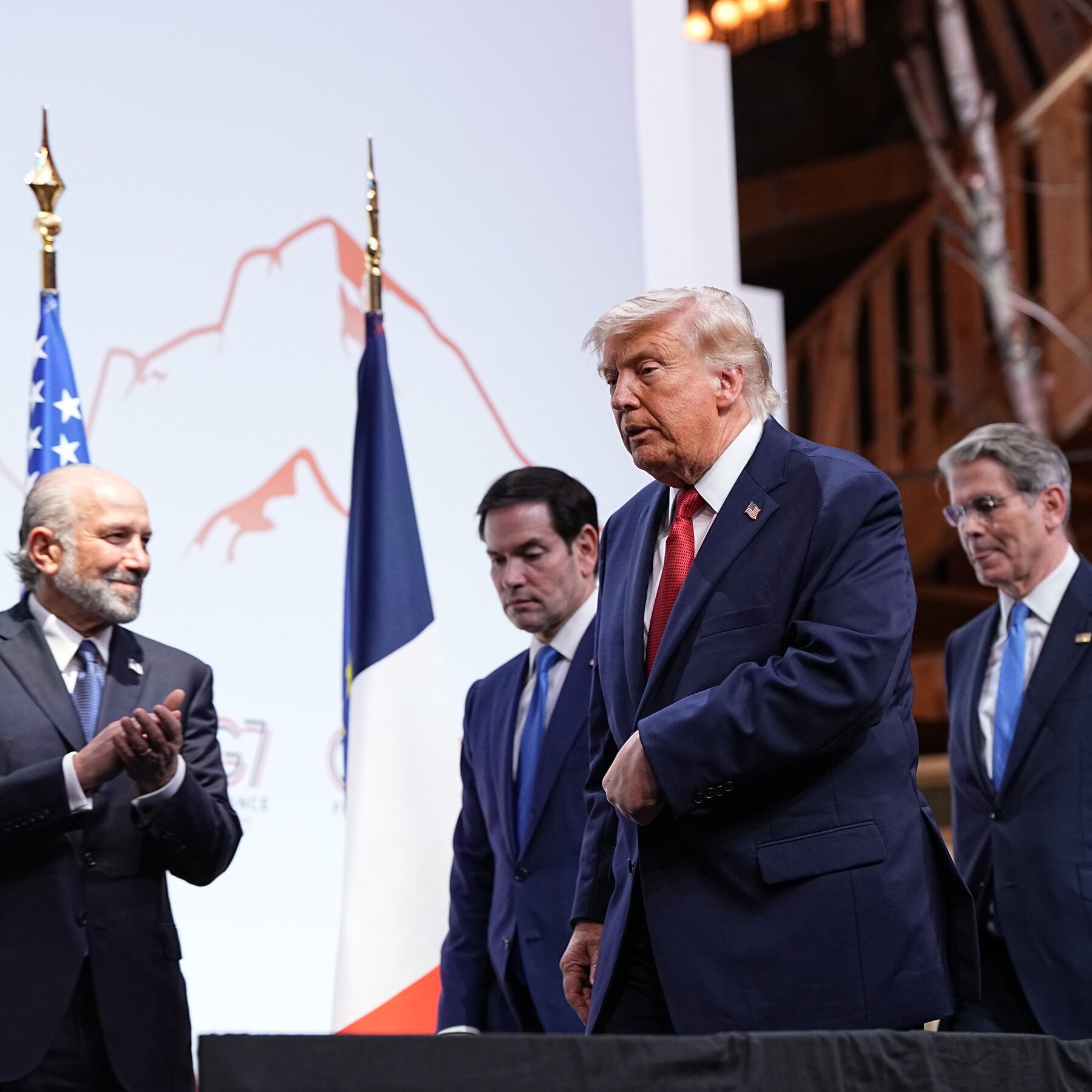
At 21:40 UTC on 14 June 2026, Donald Trump announced he was lifting the US naval blockade of the Strait of Hormuz and authorising the toll-free reopening of the waterway. Twelve hours later, in a flurry of posts monitored between 13:10 and 13:48 UTC on 15 June, the same account was briefing reporters that ships carrying oil were already moving, in one version along a route he described as "totally safe, secure, and pristine." France and Britain, separately, were reported to be preparing a multinational naval mission to safeguard shipping through the strait. The market's verdict arrived with the same speed: on Polymarket, traders put the probability of Hormuz traffic returning to normal by the end of June at 29%.
The gap between presidential announcement and trading-floor belief is the story. Hormuz is a chokepoint that handles a substantial share of seaborne crude flows, and reopens of this kind tend to be priced in, not proclaimed. The 29% figure is the closest thing on offer to a public verdict on whether the lifting of the blockade is a settlement or a posture.
A blockade that ended without a war
The remarkable feature of the sequence is how little is being said about the cause of the disruption. Coverage so far treats the blockade as a fact of recent weeks, lifted by executive choice. Middle East Eye's live blog captured the announcement in real time on 15 June, relaying Trump's claim that ships were moving through the strait. The framing — blockade first, then opening — implies a discrete military operation that the United States began, controlled, and chose to end.
That is a generous read of the available record. No source item in the thread provides a date for the start of the blockade, an adversary vessel interdicted, or an incident at sea that would have justified it. The reopening is therefore less a triumph of US maritime power than a quiet admission that whatever closure existed has been deemed too costly to maintain — for the US, for the Gulf monarchies that depend on shipping, and for the global oil price.
The multinational piece
What makes the moment harder to dismiss as pure spin is the parallel French-British activity. A separate post on Polymarket at 13:10 UTC on 15 June reported that Paris and London were preparing a multinational naval mission to safeguard Hormuz shipping. If true, this is the operative architecture: the US takes the political credit for the opening, while European navies underwrite the actual risk.
This is a familiar division of labour. The US announcement provides the headline, the European task force provides the hulls, and the Gulf states provide the geography. The arrangement suits everyone involved — except the trading desks that have to price insurance, freight, and oil benchmarks against a security guarantee that is being assembled in public, in real time, in 280-character increments.
Why the market is unimpressed
A 29% probability of normal traffic by 30 June is, in market language, a serious discount. It implies the dominant view among Polymarket bettors that "normal" — meaning traffic volumes, insurance rates, and routing choices broadly consistent with pre-blockade patterns — will not be restored inside the fortnight. Either the blockade was not the binding constraint on shipping, or the security environment that produced it has not actually been resolved.
The most plausible read of both signals is that the blockade's lifting is real but partial. Tankers may be transiting because insurance underwriters, shipowners, and Gulf port authorities have collectively decided the immediate crisis is manageable, not because a multilateral security architecture has been agreed. The multinational mission being mooted by France and Britain is the architecture. Until it is stood up, traffic is moving on confidence, not on contract.
What the sources do not tell us
Several load-bearing facts are missing. The thread context does not specify when the blockade was imposed, what triggered it, or which actors — Iranian naval units, Houthi shore-based capability, or a generalised risk premium — were the proximate cause. It does not name the shipping insurance market's current war-risk premium for Hormuz, nor the price differential between Brent and the equivalent Middle Eastern benchmark, which would be the cleanest real-time signal of how "open" the strait actually is. It also does not record an official Iranian response to the US announcement, which is a notable silence given the history of rhetorical exchanges over the waterway.
What we can say with confidence is narrower. As of 15 June 2026, the US has formally ended a naval blockade of the Strait of Hormuz. The US president is publicly claiming oil tankers are moving. France and Britain are reported to be organising a multinational escort mission. And the prediction market, which is the only quantitative signal on offer, puts the odds of a return to normal traffic by month-end at less than one in three. The blockade is over. The crisis, by every other measure, is not.
— This article leaned on Polymarket, Middle East Eye, and on-platform wire reporting rather than traditional wire confirmation, because the disruption and the lifting of the blockade arrived through social channels before they reached the major newswires. The 29% figure is presented as a market sentiment proxy, not as a forecast.