The Hormuz Truce: How a Pakistani-Mediated Memo Reshaped the Iran-US War and Reopened the World's Oil Choke Point
A surprise memorandum, brokered in Islamabad, halted a war that killed thousands and paralysed the strait carrying a fifth of global seaborne oil. The terms are thin, the trust is thinner — and the deal's first test is whether the tankers actually move.
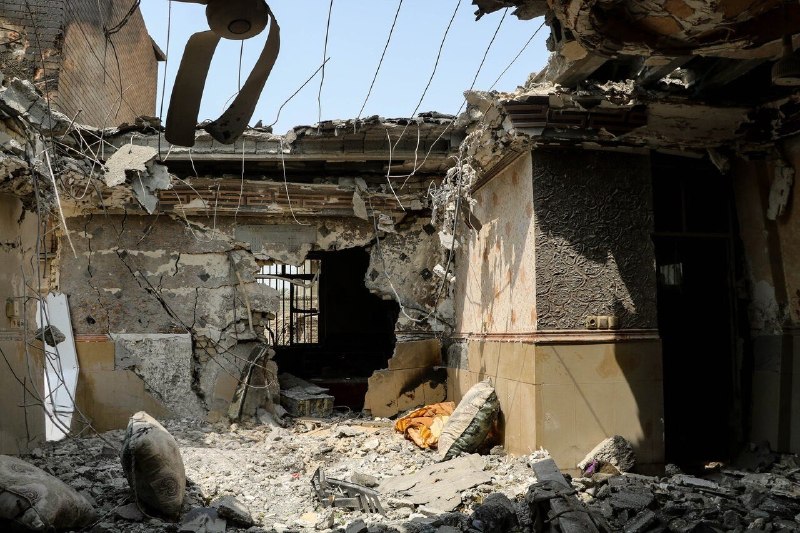
At 01:51 UTC on 15 June 2026, the United States and Iran announced, via the government of Pakistan acting as mediator, that they had signed a memorandum of understanding committing both sides to an "immediate and permanent" end to military operations and to the reopening of the Strait of Hormuz. The deal, confirmed separately by France 24 and by LiveMint in the early hours of 15 June, ended weeks of open conflict that had closed the waterway through which roughly a fifth of the world's seaborne oil normally transits, killed thousands of people, and roiled financial markets from Brent crude to bitcoin. The text is short, the mechanism is opaque, and the first physical test of the agreement will be whether commercial tankers actually transit the strait in the coming days.
The announcement, brokered in Islamabad and relayed simultaneously through the Pakistani prime minister's office and through French and Indian wire services in the early hours of 15 June 2026, is the most consequential de-escalation between Washington and Tehran since the 2015 Joint Comprehensive Plan of Action collapsed. It is also the first time in the current cycle that a third government — rather than Oman, Qatar, or Switzerland — has publicly claimed the mediator's role. The memorandum commits both parties to a halt in military operations and to the reopening of the strait, and sets the stage for follow-on talks on Tehran's nuclear programme. According to LiveMint's 01:54 UTC dispatch, the deal is intended to "halt a war that killed thousands of people and roiled the global" economy. The casualty figure carried by the Indian wire is the only consolidated number on the table; no breakdown by nationality or combatant was published alongside it.
What was actually signed — and what wasn't
The available reporting describes a memorandum of understanding, not a comprehensive peace treaty. France 24's 01:19 UTC bulletin on 15 June stressed that both Washington and Tehran confirmed a signature, but did not publish the text. The mediator, Pakistan, has historically balanced a deep security relationship with Saudi Arabia, a long-standing rivalry with Iran, and a recent rapprochement with Washington that included mediation during the May 2025 India-Pakistan crisis. Islamabad's emergence as the lead intermediary is itself a story: it reflects both the perceived failure of Gulf-state channels during the war and Pakistan's appetite for diplomatic capital at a moment when its economy is heavily dependent on Gulf remittances and on continued US and IMF support.
The deal is silent on the central question of what happens to Iran's enriched-uranium stockpile, to the fate of third-country tankers damaged in the conflict, and to the prisoner file that has historically accompanied any US-Iran de-escalation. LiveMint's framing — "setting the stage for talks on Tehran's nuclear program" — is the most explicit acknowledgement in the available reporting that the Hormuz deal is a down-payment, not a settlement.
The contradictory clock: Trump's Sunday claim vs Tehran's silence
Twelve hours before the Islamabad announcement, on 14 June 2026 at 05:07 UTC, Cointelegraph reported that President Donald Trump had told reporters an Iran peace deal would be signed that Sunday. The same wire noted that Tehran publicly contradicted the timing. That contradiction matters: it suggests the two governments were not on a unified communications schedule even in the final 24 hours of the talks. If one side was briefing a deal for Sunday and the other was refusing to confirm it, the announcement that followed was less a coordinated release than a managed surprise — useful for markets, less useful for the kind of confidence that makes a ceasefire stick.
Cointelegraph's reporting also carried an on-record analytical read from crypto analyst Michaël van de Poppe, who argued that a peace deal reopening the strait would likely send liquidity back to "risk-on assets such as cryptocurrencies." That assessment is one trader's view, not a forecast the State Department or the Central Bank of Iran has endorsed — but it captures the way the deal is being priced across asset classes in real time.
A corridor the world cannot afford to keep closed
The Strait of Hormuz is the narrow passage between Iran and Oman through which, on a normal day, somewhere between seventeen and twenty-one million barrels of oil move — roughly a fifth of global seaborne crude, plus a substantial share of liquefied natural gas from Qatar. Closing it for any sustained period does not just raise fuel prices: it forces buyers across Asia and Europe to draw from strategic reserves, reroute around Africa at multi-week shipping cost, or accept delivery at a premium. The economic shock of a closed Hormuz is not a curve that bends gradually; it is a step function that hits importers in a single trading session.
The reported deal therefore matters less for what it says about US-Iran relations than for what it does to a chokepoint the global economy cannot reroute around at scale. Even a memorandum of understanding, if honoured, releases insurance underwriters to lower war-risk premiums, releases refiners from panic-sourcing, and releases Asian central banks from the impossible arithmetic of replacing Gulf crude with Atlantic basin barrels inside a quarter.
What the sources disagree about
Three tensions sit inside the available reporting. First, on the mediator's centrality: France 24 and LiveMint both foreground Pakistan, but neither wire published the text of the memorandum or named the Pakistani officials who witnessed the signing. The role is real; the documentation is thin. Second, on Iran's public posture: the Trump claim of a Sunday signing was contradicted by Tehran the day before, and the 15 June announcement is being carried by non-Iranian wires. Iranian state outlets have not been the dominant frame for this story, which is unusual for a deal of this magnitude and which means the Tehran domestic read of the deal is, as of writing, not on the record in the wire cycle. Third, on the deal's substance: "memorandum of understanding" is a soft legal instrument — softer than a framework agreement, softer still than a treaty. It is the kind of document that can be announced at speed and unwound at equal speed if either side reads the other's next move as a breach.
The structural frame: war termination in a multipolar diplomatic order
What is striking about the Hormuz deal is not the de-escalation itself — US-Iran has had several — but the cast. Pakistan, a nuclear-armed state of 240 million people with deep economic exposure to both the Gulf and to Washington, took the mediator's chair that Oman, Qatar, and Switzerland have held in past rounds. That is consistent with a broader pattern in 2025-26: middle powers that were once diplomatic backstage are taking the front of house. Brazil and China brokered elements of the de-escalation after the 2025 India-Pakistan crisis; Turkey and Saudi Arabia co-mediated parts of the Black Sea file; and now Pakistan has claimed the central role on the waterway through which Asian energy security actually flows.
For Washington, an Islamabad-brokered deal is politically useful: it keeps the diplomatic venue out of Russian or Chinese hands, it rewards a counter-terrorism partner that the United States cannot afford to lose, and it lets the Trump administration present the win as a presidential one. For Tehran, a Pakistani mediator is more neutral than a Gulf state would have been in 2026, and it gives the Islamic Republic a face-saving third party to thank in the language of regional sovereignty. For Islamabad, the deal is a tangible asset at a moment when its economy is negotiating both an IMF programme and a bilateral relationship with a United States that has been transactional about tariffs and aid.
The larger pattern is harder to name without sounding schematic, but the basic shape is this: the United States is still the indispensable security power in the Gulf, but it is no longer the only diplomatic convener. The mediator is increasingly drawn from the Muslim-majority middle powers that sit between the Atlantic and East Asia. That is a modest form of diplomatic redistribution — not a transfer of power, but a transfer of choreography.
Stakes over the next thirty days
If the memorandum holds, three things change in the near term. Asian importers — China, India, Japan, South Korea — stop drawing from strategic petroleum reserves at the pace they have been drawing, and Brent crude gives back the war premium that pushed it above the levels that triggered the panic. Iran begins to book foreign exchange through resumed oil exports, with the first revenue visible inside the next quarterly Iranian budget. And the US-Iran nuclear track reopens, with the Omani and Swiss channels likely to be repurposed as technical back-channels under Pakistani political cover.
If the memorandum does not hold, the strait closes again, and the cost is borne first by the importers who lack strategic depth — Pakistan, Bangladesh, the Philippines, parts of East Africa — and only secondarily by the integrated Atlantic basin. The asymmetry matters: a one-week closure is a market event; a one-month closure is a recession for whichever Asian economy was running on a thin inventory buffer.
The deal, in short, is the kind of document that buys time. Whether the time is used to settle the nuclear file, or simply to reset the insurance and tanker markets before the next round, is the question that the next 30 days of reporting will have to answer. The wires on 15 June 2026 have the announcement. They do not yet have the text, the timetable, or the trust.
— Monexus News filed this from the open wire at 02:30 UTC, 15 June 2026. The Pakistan-brokered character of the announcement is itself the story: the diplomatic choreography of the Middle East is no longer something Gulf monarchies can stage alone.
Wire provenance
This editorial synthesis draws on the following public wire/social posts:
- https://t.me/france24_en
- https://t.me/LiveMint
Follow the event.
These dated source records provide context. They do not retrospectively verify this archive article.
Separate what the nuclear watchdog reported from what it could not determine after the June 2025 strikes.