Iran's Foreign Ministry Tells the World: Sixty Days, No More Mistrust
Spokesman Esmail Baqaei set a 60-day clock on nuclear talks and sanctions relief, while preparing a state funeral for a slain leader. The dual signalling is a feature, not a bug.
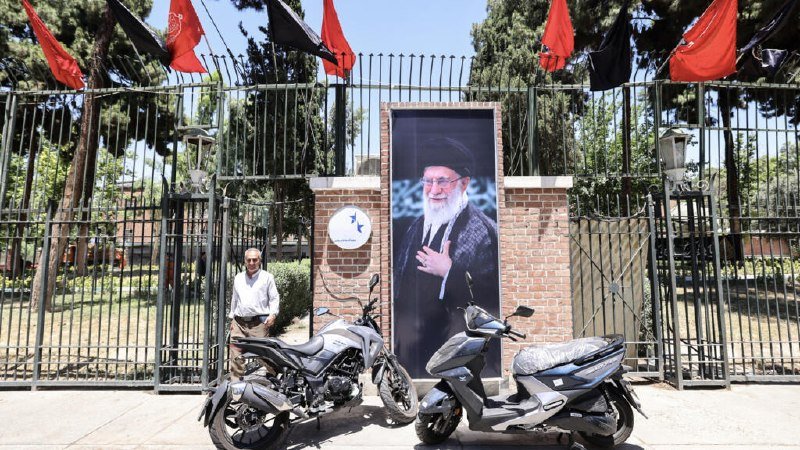
At 12:27 UTC on 15 June 2026, Iran's Foreign Ministry spokesman Esmail Baqaei put a number on the table that Western negotiators will have to sit with: sixty days. Nuclear talks and sanctions relief, he said, will begin within that window. The deadline, delivered in a Tasnim News briefing reviewed by Monexus, was wrapped in two framing lines that Tehran has been rehearsing for months — Washington's "historical misdeeds" as the root of mistrust, and the proposition that pressure on Iran produces only "defeat for the enemies of Neda."
The 60-day clock, and what it is doing
Sixty days is a sentence. It says: this is not an open-ended negotiation, this is a window, and when the window closes the file is not "extended" — it is judged. By whom, and on what evidence, Baqaei did not specify. But the choice of the number itself is the message. It gives Iranian state media a recurring headline template ("Day 37 of the 60-day window") and gives Western capitals a metronome they cannot ignore without being seen to have walked away. The threats often carry their own diagnostic — they tell you what the speaker most fears, because the cost of bluffing is on display. Baqaei is signalling that the most-favoured outcome in Tehran is a face-saving mechanism for sanctions relief that does not require Iran to publicly concede the principle of its enrichment programme. The spokesperson's insistence that Iran's legal positions on enrichment are rooted in the Non-Proliferation Treaty, also reported by Tasnim, is a tell: the diplomatic terrain Tehran is fighting on is legal-legibility, not nuclear hardware, even though the latter dominates Western cable traffic.
The funeral, and the choreography of grief
Alongside the sanctions clock, the Foreign Ministry is preparing a state funeral for a "martyred leader" whose identity the source materials do not name. Baqaei told reporters, again on 15 June, that the ceremony is "a historical event," and routed foreign attendees through the consular department for visas. The dual track is not a coincidence. Funerary politics in the Islamic Republic are policy: they are how the system converts a death into institutional capital, and how it gives foreign dignitaries a reason to be in Tehran that does not require them to defend the visit in their own parliaments. The line on "national cohesion" providing "the support for diplomacy," carried by Tasnim's English service on 15 June, ties both tracks together. Grief is presented as diplomatic infrastructure. Mistrust is presented as the principal obstacle; cohesion is presented as the solvent.
What the framing reveals
Read the briefing set together and a coherent diplomatic posture emerges. Tehran is doing three things at once. It is (a) setting a deadline, (b) reclassifying the dispute as legal-technical rather than security-existential, and (c) manufacturing a domestic-political event large enough to anchor the negotiating position against any compromise that the foreign minister might later announce. Each line of the briefing serves at least two of those purposes. The "60 days" line serves all three. The Western reflex will be to focus on the clock. The Iranian bet appears to be that the clock buys time for the funeral to do its work, after which the negotiating position is harder, not softer, to move. This is a structural fact about negotiating under sanctions that the standard Western reporting cadence — "Iran sets deadline" — tends to flatten.
The counter-reading, and what is uncertain
There is a plausible alternative read: the 60-day line is a domestic-audience line, not a negotiating position. Iranian officials make aggressive statements for the bazaar and the parliament; the actual diplomacy happens in quieter channels. The funeral, on this reading, is a separate event being prepared in parallel, and the two tracks are not as integrated as the briefing set suggests. The weakness of the counter-reading is that Baqaei is the foreign ministry's principal on-the-record voice, not a parliamentarian. His lines are, by institutional design, what the government wants external audiences to hear. The honest reportorial answer is that we do not yet know which reading holds. What we know is that the spokesperson chose to say these things, in this order, on 15 June, and that the choice itself is data. The remaining uncertainties are substantial: who the martyred leader is; which foreign delegations have accepted the consular invitations; what "nuclear negotiations and the lifting of sanctions" will begin within 60 days actually means in substance — talks, drafts, or a public ceremony of reopening; and whether the United States and its Gulf partners treat the clock as a deadline or as a posture. The source materials do not specify these, and Monexus will not.
Desk note: Tasnim News is an Iranian state-affiliated outlet. Where this piece quotes it, the framing reflects Tehran's official position; the structural analysis is Monexus's own.
Wire provenance
This editorial synthesis draws on the following public wire/social posts:
- https://t.me/JahanTasnim
- https://t.me/tasnimnews_en
- https://t.me/JahanTasnim
- https://t.me/JahanTasnim
- https://t.me/tasnimnews_en
Follow the event.
These dated source records provide context. They do not retrospectively verify this archive article.
Separate what the nuclear watchdog reported from what it could not determine after the June 2025 strikes.