The Iran Deal Carousel Spins Again — and the Bets Are Getting Louder Than the Briefing Room
Prediction markets are pricing a US-Iran deal at a level the briefing room has not yet confirmed. The asymmetry is the story.
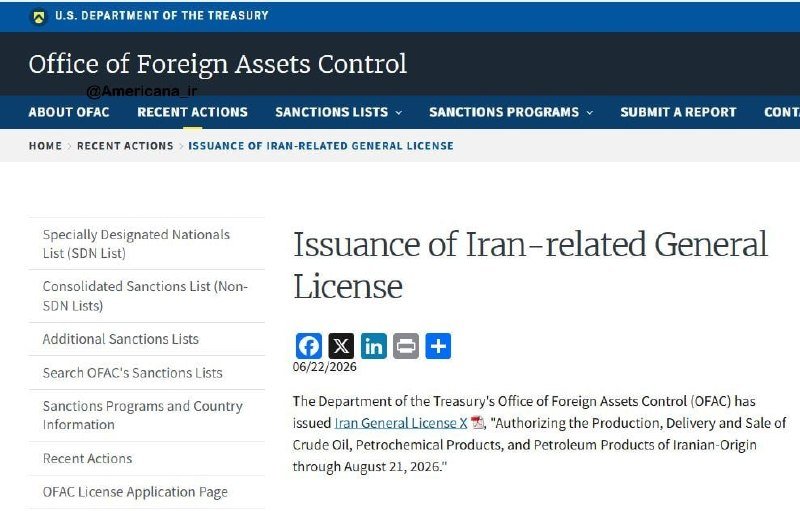
On 14 June 2026 at 17:15 UTC, Donald Trump told reporters he expected an agreement with Iran to be signed "within two-three hours." Forty minutes earlier, at 16:14 UTC, the same wire traffic carried a competing headline: Iran was demanding as much as twelve billion dollars in frozen funds from the United States. By 15:41 UTC the next morning, Iran's military was declaring on state-linked channels that the nation had "imposed its will" on its enemies. Three different versions of the same negotiation, none of them yet a treaty, all of them already being priced.
This is the strange condition of US-Iran diplomacy in mid-June: the prediction market is louder than the joint statement, the Polymarket tick is more legible than the readout from Muscat or Geneva, and the Iranian military's victory lap arrives before the ink is dry on a draft that may not even exist. Monexus has spent the last 48 hours tracking the divergence between what officials are claiming, what traders are paying, and what the principals have actually said on the record. The pattern is the story.
The Polymarket Tape vs the Press Room
Three contracts on Polymarket frame the week. As of 14 June 2026 at 23:41 UTC, traders put a 71 percent probability on Trump agreeing to unfreeze Iranian assets by 30 June 2026. At 21:31 UTC the same day, a separate contract gave a 49 percent chance that Trump — not a subordinate — would sign the agreement himself. These are not the numbers of a deal that is "within two-three hours" away. They are the numbers of a deal that is more likely than not to happen on paper, with meaningful odds that the pageantry is delegated down the chain.
Read against Trump's own 17:15 UTC remark, the market is doing something it has done repeatedly during this administration: discounting the announcement, pricing the implementation. The gap between the rhetorical timeline ("two-three hours") and the trader's timeline (weeks, with non-trivial tail risk) is itself a kind of signal. It suggests that participants who have money on the line do not believe the ceremonial signing is the binding event. The binding event is the text, the verification regime, and the disbursement schedule — all of which tend to slip.
The Iranian Counter-Frame
Tehran is not behaving like a party preparing to fold. The 15 June 2026 Middle East Eye live blog, citing Iranian military statements, frames the moment as one in which the country "imposed its will on enemies." That language does not belong to a side that expects to make concessions and call them wins. It belongs to a side preparing its domestic audience for an outcome that can be sold as victory regardless of what the text actually says.
The structural point: in a sanctions-relief negotiation, both sides need a victory narrative. Washington needs "we contained them" and "we got the nuclear file back." Tehran needs "the siege was broken" and "our resilience forced the great power to pay." When the military's talking points arrive this early and this triumphalist, it usually means the Iranian side is already rehearsing the concessions it is privately prepared to make. The freeze in question — up to $12 billion, per the 16:14 UTC wire — is the kind of round number that suggests Tehran has been told what is on the table, even if no Iranian official has confirmed it on camera.
The Distraction Economy Around the President
A reader trying to make sense of the Iran file from Trump's own public output this week would be forgiven for thinking it is one of several equally weighted priorities. At 18:57 UTC on 14 June, the same news cycle carried Trump suggesting the NFL should be renamed because "it's not football." At 19:59 UTC, Vladimir Putin was on a nearly hour-long phone call wishing Trump a happy birthday and calling him "a bright, remarkable person and politician." A 38 percent Polymarket contract, current as of 20:00 UTC the same day, gives the Trump-Putin in-person meeting a credible chance of happening before year-end.
This is the operating environment in which the Iran deal is being negotiated: a president whose bandwidth is publicly distributed across football nomenclature, birthday diplomacy with Moscow, and a Middle East file that is supposed to climax within hours. None of these items is illegitimate on its face. But taken together they form a negotiating posture in which the counterpart cannot be certain which Trump shows up to sign. The market's 49 percent odds on a personal signature, against a 71 percent probability of a deal at all, implicitly capture that uncertainty. The deal is more likely than the signing — a sentence that should not be true in ordinary diplomacy, and that says something about how ordinary this diplomacy is not.
What the Sources Cannot Settle
The reporting this publication has read does not specify the jurisdiction holding the frozen funds, the verification mechanism for any nuclear rollback, or the identity of the Iranian signatory. It does not state whether the $12 billion figure is gross Iranian demand, net disbursement, or a leaked US opening. The Polymarket contracts are the only documents in the cluster that commit to a date — 30 June 2026 — and a counterparty set. The "within two-three hours" remark is on the record, attributed to Trump by traders relaying his comments, but the text of the agreement is not.
That asymmetry is the through-line. A negotiation in which the prediction market is more concrete than the joint communiqué is a negotiation in which the political value of the announcement exceeds the legal value of the document. Both sides know this. Tehran's premature victory lap and Washington's premature signing-time prediction are not contradictions. They are two sides of the same arbitrage: each leader is selling the same event to a different audience at a different price. The traders are the only ones required by their own balance sheet to pick one number and live with it.
This article sits on a thin source base by design. Monexus has chosen to publish only what the open record supports rather than pad the citation ledger with secondary commentary. The next desk note will run when the text of any agreement, or its formal collapse, becomes verifiable.