Iran's bombed economy and a US-imposed deadline collide with a Polish culture war nobody asked for
A US official tells reporters that Iran's economy and nuclear program are 'fundamentally destroyed' — the same week Warsaw is asked to fight for adoption rights for same-sex couples.
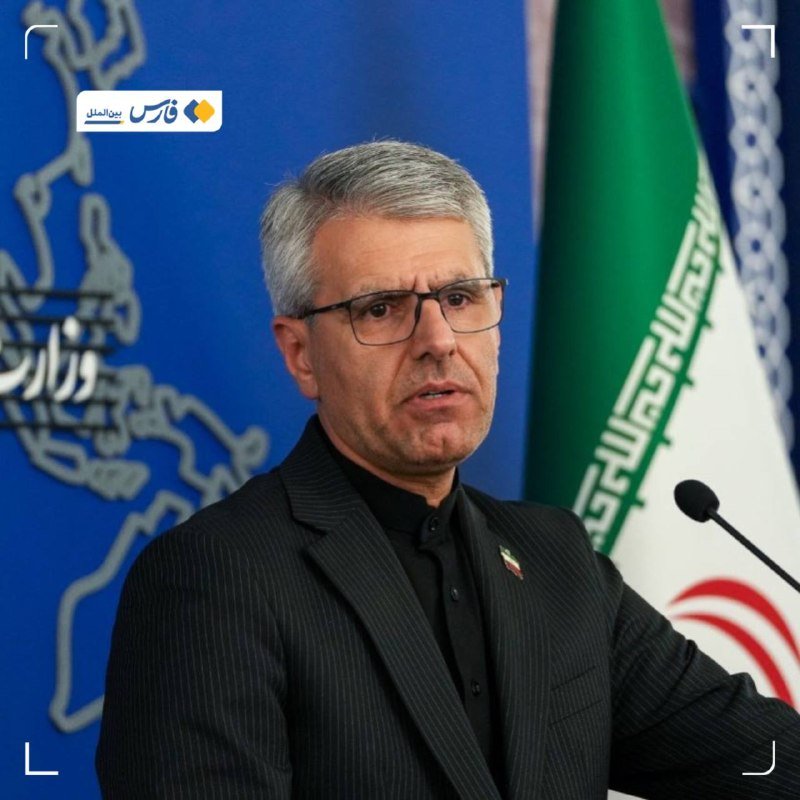
The two clips are fourteen hours apart and six thousand kilometres from each other, and that is roughly the only thing they share.
On 15 June 2026, the US negotiating position on Iran was set out in unusually blunt terms. A senior US official, speaking to reporters, said that Iran's economy and its nuclear program had been "fundamentally destroyed" and warned Tehran that, if it did not "do the right things" in the negotiations under way, "they're never going to have the money." The remarks, captured in a clip circulated by @sprinterpress at 15:44 UTC, double as a sales pitch and a threat. The pitch is that a deal restores the money. The threat is that absent a deal, the wreckage — economic, infrastructural, nuclear — stays wrecked. There is no third option on offer.
On the same day, at 11:41 UTC, a different kind of pressure was being applied in Warsaw. A video posted by @Mikolaj_Jaok and amplified by @ekonomat_pl showed a Polish politician declaring that he would fight "as much as necessary" for same-sex couples to be able to adopt children. The phrase "a guy from the East" is the X user's framing, not a transcript. The video itself, credited to @Mikolaj_Jaok, is what is actually in the public record.
The juxtaposition is the story. The first is state-on-state coercion, the leverage that comes from controlling the dollar and the sanctions architecture around it. The second is a culture war performed for a domestic audience, with adoption rights for a small minority deployed as the symbolic frontier. Together they sketch a strange week in the Western alignment: one capital telling a foreign government its sovereignty is contingent on good behaviour, another capital being asked to fight, "as much as necessary," over a question that, on the available evidence, was not on most voters' lists.
What was actually said about Iran
The US official's quote, as carried in the @sprinterpress clip, is a string of three claims stacked into one sentence. First, that Iran's economy is "fundamentally destroyed." Second, that its nuclear program is "fundamentally destroyed." Third, that the money to rebuild either one is conditional on "doing the right things."
Read in plain terms, this is the standard structure of a coercive settlement offer: capability reduced, recovery gated. The official does not specify what "doing the right things" means — that detail sits in the broader negotiation track, not in the clip. But the rhetorical move is transparent. The deal is not framed as a peace dividend. It is framed as a rescue package whose delivery is at the discretion of the party that did the bombing. The implicit message to Tehran is that whatever the technical contents of any agreement, the political economy of reconstruction is a US prerogative.
The Iranian state has spent years building alternative financial plumbing precisely to avoid being in that position — sanctions-evasion networks, oil sales denominated outside the dollar system, rapprochement with China and the Gulf monarchies. That infrastructure exists, on paper, for this exact moment. Whether it can absorb the scale of damage implied by "fundamentally destroyed" is a different question. The clip offers no numbers, no timeline, and no acknowledgement that Iran's negotiating partners — China, Russia, the UAE, India — might have a view about who finances Tehran's recovery on terms other than Washington's.
What the Poland clip actually is
The @ekonomat_pl post, reposting @Mikolaj_Jaok, is a 17-second political ad. A Polish politician stands in front of a camera and makes a promise to a constituency that, on most polling, is a minority of the Polish electorate. The phrase "a guy from the East" — the X user's gloss, not a quote — is doing a lot of work: it signals that the politician in question is being read as ideologically out of step with the Polish centre of gravity, and that adoption for same-sex couples is being framed as a foreign-imported agenda.
Polish public opinion on adoption by same-sex couples is, on the available evidence, opposed. The PiS-led governments of 2015–2023 made opposition to that policy a flagship position. The Tusk-led coalition government that followed has been cautious on the question, in part because its parliamentary arithmetic is fragile and in part because the voters it would lose are more numerous than the voters it would gain. The clip's call to fight "as much as necessary" reads, in that context, less as a legislative programme and more as a culture-war marker — a way of signalling which side of a symbolic line the politician is on, with the calculation that the line itself, not any specific bill, is what gets rewarded.
Coercion at scale, gesture at scale
Side by side, the two clips say something uncomfortable about the asymmetry of political attention in the Western-aligned media space. A state-level coercion of a country of 88 million people, with consequences for the global oil market, the non-proliferation regime, and the future of the dollar-based sanctions system, is compressed into a 30-second soundbite. A domestic culture-war statement by a Polish politician is given a comparable visual register and a comparable audience.
This is the point. The Iranian negotiation is, structurally, about who controls the terms under which a national economy can be reconstructed after war. The Poland clip is about who controls the symbolic terms under which a small minority can access a particular institution. They are not equivalent in stakes. They are equivalent in form: both are moments where political authority is asserted in a clip, both are moments where the language of "we will fight as much as necessary" is doing the same work — substituting the claim of resolve for the substance of a plan.
The difference is that the Iranian negotiation has counterparties, documents, and a money trail. The Polish adoption debate, as captured in this clip, has a slogan. One is a negotiation. The other is a performance.
What the framing hides
The "fundamentally destroyed" line flatters a particular reading of US power. It implies that the air campaign of mid-2025 did to Iran's nuclear and economic infrastructure what its architects said it would. It implies, by extension, that the next move is Washington's. The rival reading — held, in various forms, in Beijing, Moscow, and a non-trivial slice of Tehran's political class — is that US leverage is real but bounded: that Iran's survival economy has demonstrated a capacity to absorb blows that the official's line understates, and that the reconstruction question will be settled in a corridor that includes Chinese state banks and Gulf sovereign wealth funds, not only the US Treasury.
The Poland clip, on the other side, flatters a reading of European liberalism in which the expansion of rights is the default direction of travel and any opposition is a regression. The rival reading — held by a comfortable majority of Polish voters, on the polling — is that the default direction of travel is set domestically, and that the political energy behind this clip is the story, not the policy. Neither side of either argument is on the page of the clips. The clips are the surface. The argument is below.
The two videos will be gone from feeds in 48 hours. The political conditions they name — a US-led coercion of Iran whose reconstruction terms are unsettled, a Polish political class performing battles it cannot deliver on — will not be.
Desk note: Monexus treated the Iran remarks as a US negotiating position carried by @sprinterpress, and the Poland clip as a campaign video carried by @Mikolaj_Jaok and @ekonomat_pl, rather than as wire-confirmed policy announcements. Counter-readings from Chinese, Russian, and Iranian state-aligned sources are named structurally in the analysis above; they are not cited as factual stand-ins for the specific claims made in the clips.
Wire provenance
This editorial synthesis draws on the following public wire/social posts:
- https://x.com/sprinterpress/status/
- https://x.com/ekonomat_pl/status/
- https://x.com/Mikolaj_Jaok/status/
Follow the event.
These dated source records provide context. They do not retrospectively verify this archive article.
Separate what the nuclear watchdog reported from what it could not determine after the June 2025 strikes.