Iran's foreign ministry frames US deal as binding legal obligation, signals diplomatic offensive
Spokesman Esmaeil Baqaei uses a single press briefing to fuse legal pressure, historical grievance, and nationalist language — a posture that suggests Tehran is preparing the public case for whatever comes next with Washington.
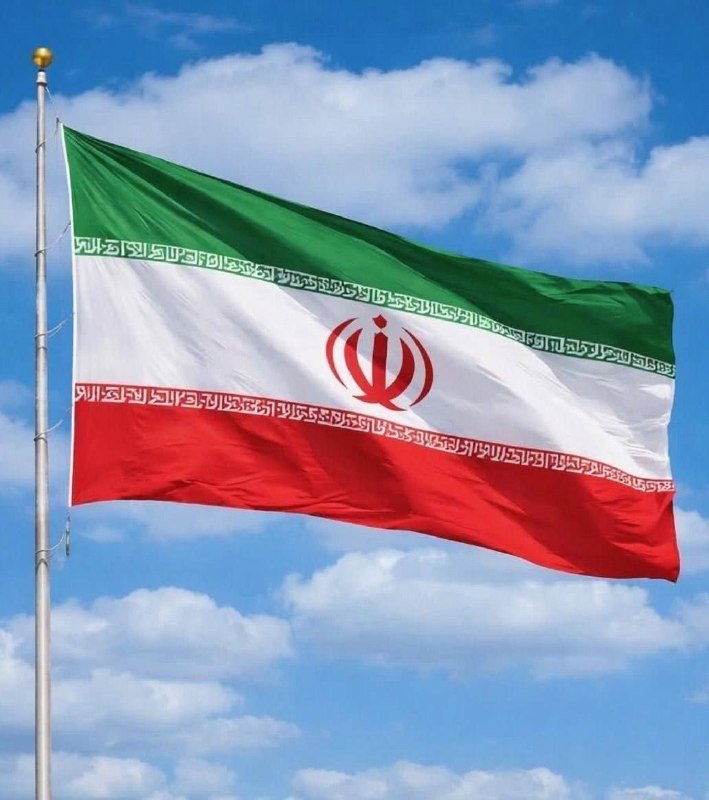
On 15 June 2026, Esmaeil Baqaei, the spokesperson of the Iranian foreign ministry, used a single press briefing to mount a multi-front argument: that a recent agreement with the United States obliges Washington to lift sanctions in full, that the unfreezing of Iranian assets abroad is a "legal and economic right," and that years of American conduct have left Tehran with no choice but to treat US promises as suspect. The remarks, carried simultaneously by Tasnim, Fars and other Iranian outlets, blended the technical language of treaty compliance with the historical register of grievance — a hybrid posture that, taken together, looks like the opening of a domestic information campaign rather than a routine briefing.
The signalling matters because the substantive content is thin. Baqaei did not name the agreement, identify the asset pool in question, or set a timeline. What he did was stake out a maximalist position on what Iran is owed and frame any deviation by Washington as a breach. That posture is consistent with a government preparing its public for a long negotiation, or for a collapse of the same.
A maximalist reading of the deal
The substantive claim at the centre of the briefing was that the recent US-Iran understanding commits Washington to "completely cancel the sanctions," and that the release of Iran's frozen funds is a "legal and economic right" — language Tasnim's English service published at 12:10 UTC on 15 June. The phrasing collapses two distinct asks into one: the lifting of measures imposed over the nuclear file and beyond, and the return of assets blocked in third-country accounts over the same period.
In sanctions diplomacy, those are usually negotiated as separable items. Lifting measures is a regulatory act under domestic US authorities; releasing specific frozen assets is a separate determination that depends on the legal character of the accounts, the jurisdiction holding them, and the conduct of the parties alleged to have placed them there. By presenting them as a single, indivisible obligation, Tehran is pre-empting the sequencing that Washington would normally prefer: a partial, conditional thaw, tied to verification steps, with assets released only after compliance is demonstrated.
The brief did not specify which sanctions regime Baqaei was referring to, nor did it identify a reciprocal Iranian commitment. The absence is itself a posture. It tells domestic audiences that Iran is owed, and that the question now is enforcement rather than negotiation.
National unity as diplomatic armour
Baqaei paired the legal claim with a nationalist frame. National cohesion, he said, "provides the support of diplomacy," and Iran's "defenders in the field of diplomacy are like the warriors of the hard defence field" — a formulation carried by the Jahan Tasnim channel at 12:11 UTC. The military register is deliberate: it positions the foreign ministry bench alongside the armed forces and treats external pressure as something absorbed collectively.
The framing serves two functions at once. It insulates negotiators against the accusation that engagement with Washington is capitulation — a charge that has historically felled Iranian reformists at moments of thawing relations. And it signals to Washington that the negotiating team's domestic position is consolidated, which raises the political cost of any walk-back in Tehran even as it complicates the kind of quiet, transactional moves that sanctions relief normally requires.
The second nationalist thread was historical. "The historical background of America's misdeeds," Baqaei said, "is the main reason for Iran's mistrust" — Jahan Tasnim, 12:09 UTC. The phrasing is standard Iranian diplomatic register, but its prominence in a deal-related briefing suggests the foreign ministry is preparing the public for the possibility that US implementation will fall short. A pre-positioned narrative of American bad faith gives Tehran the option to blame Washington for the failure of an agreement that, in the maximalist reading Baqaei has just set out, the United States was already obliged to honour.
A third, sharper line: legal follow-up
A second exchange from the same briefing, captured by Fars at 12:11 UTC, took a more concrete line. Asked about "the legal follow-up of the actions of the United States and the Zionist regime and the bloodlust of the martyred leader," Baqaei replied that the matter was being addressed. The phrasing invokes a victim-centred framing — a "martyred leader" whose killing is being treated as a predicate for legal action — and folds the United States and Israel into a single actor for the purposes of accountability.
Read alongside the deal language, the briefing produces a coherent, if assertive, two-track posture. On one track, Tehran is owed full sanctions relief and the release of frozen funds as a matter of obligation. On the other, the foreign ministry reserves the right to treat the wider confrontation — including targeted killings — as a legal matter to be pursued. Neither track necessarily contradicts the other; in the Iranian diplomatic repertoire, the two have coexisted for decades. But the simultaneity of the messaging is unusual for a public briefing, and suggests the ministry is calibrating for an audience that includes both negotiators and hardliners.
What the briefing does not say
The briefing leaves several material questions unanswered. It does not identify the agreement by name, date, or counterpart; it does not specify the dollar value or jurisdictional origin of the funds Iran is demanding; and it does not state what Iran has offered, or will offer, in return. The sources do not specify any of these details. The framing is therefore a posture, not a roadmap — useful for domestic signalling, less useful for the kind of technical exchanges that actually move sanctions files.
There is also no acknowledgment, in the reporting carried by the three Iranian outlets, of any US readout. That absence is partly an artefact of the sourcing window — the items available are Iranian-side, and the three channels all operate under the same editorial umbrella. A fuller picture would require a Western wire confirmation of which agreement, which assets, and which sequencing is actually on the table. Until that arrives, the verifiable content of 15 June 2026 is what Baqaei said in front of cameras and what his ministry's own outlets chose to publish.
The reading this publication finds most consistent with the evidence is that the foreign ministry is building the public case for a hard enforcement posture: obligations owed, trust lacking, and a national team standing together. Whether that posture is the prelude to a deal that holds, or to a deal that fails on Tehran's own terms, will depend on the document work that follows — and on whether the United States is willing to accept the sequencing Baqaei has implicitly rejected.
Desk note: Monexus has read this briefing against three Iranian state-aligned outlets, all carrying the same spokesperson at the same hour, and treated their framing as primary-source material from a state-actor press function. A Western-wire confirmation of the underlying agreement is the missing piece; the analysis above is what the verifiable Iranian-side record supports.
Wire provenance
This editorial synthesis draws on the following public wire/social posts:
- https://t.me/ tasnimnews_en
- https://t.me/ JahanTasnim
- https://t.me/ JahanTasnim
- https://t.me/ FarsNewsInt
Follow the event.
These dated source records provide context. They do not retrospectively verify this archive article.
Separate what the nuclear watchdog reported from what it could not determine after the June 2025 strikes.