Tehran's Friday Memorandum: Sanctions Relief, Oil Flows, and the Limits of Wartime Diplomacy
Iranian foreign ministry statements on 15 June frame a Friday memorandum as the trigger for full sanctions relief on oil exports — a claim that tests the boundaries of wartime economic pressure.
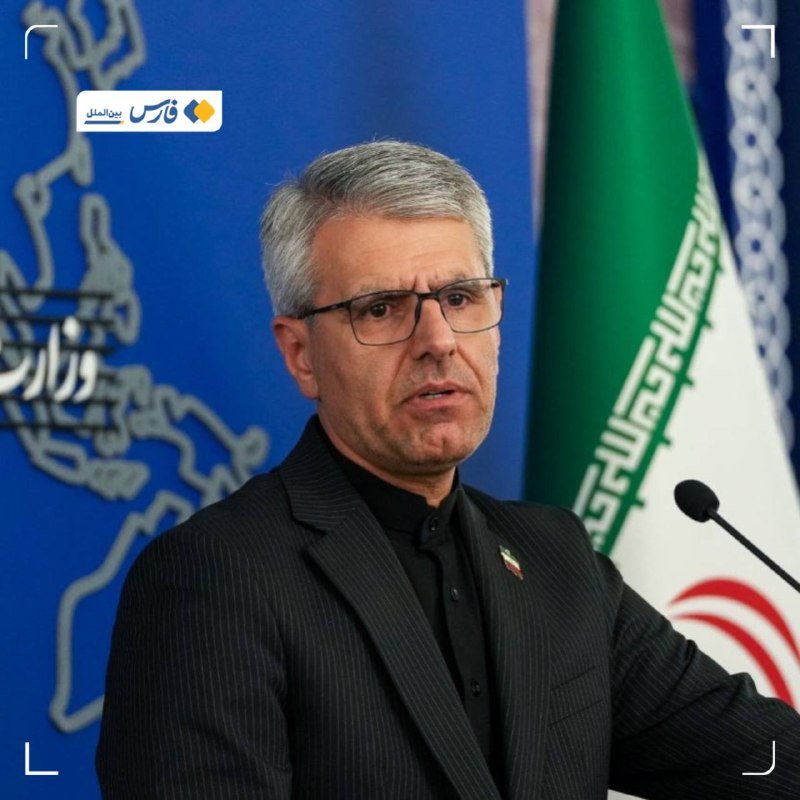
At 12:24 UTC on 15 June 2026, Iran's foreign ministry press attaché — as carried by the Lebanese satellite channel Al Alam's Arabic feed — declared that signing a memorandum of understanding scheduled for Friday would result in the immediate lifting of restrictions on the sale of Iranian crude, its derivatives, and petrochemical cargoes. The statement, attributed to spokesman Esmaeil Baghaei, sits inside a broader set of briefings issued in a single midday window and reads less as routine diplomacy than as a deliberate public rehearsal of expectations before a deal is inked.
The thread that matters here is not the memorandum itself, which the available reporting does not yet describe in any operational detail, but the bargaining frame Tehran is building around it. If Friday produces a signed document, Iran is signalling that oil flows — not nuclear concessions, not missile inventories, not regional posture — are the deliverable Tehran intends to claim. The framing is conspicuously transactional. It is also conspicuously optimistic.
What Baghaei actually said
Five separate Al Alam wire items, all timestamped within a twenty-four-minute window between 12:00 and 12:24 UTC, convey a coherent posture. The first asserts that Friday's signing "will lead to the immediate cancellation of all restrictions imposed on the sale of Iranian oil, its derivatives, and commercial" products — the message truncates mid-sentence in the wire, but the operative claim is unambiguous. The second frames Iran's access to frozen funds as "a legitimate legal right" and announces a continuing demand for compensation for damages caused by what the same wire calls "this illegal war." The third invokes national "pride and independence" and the willingness to make sacrifices to preserve them. The fourth draws a sharp line: any eventual diplomatic understanding, the statement insists, "will never mean condoning or forgetting the crimes of the other party against the Iranian people." The fifth — the earliest, at 12:00 UTC — commits Tehran to "carefully monitoring the strict implementation of international obligations by the counterparties."
Read together, the cluster is doing two things at once. It is asserting the substance of the deal — sanctions lifted, oil flowing, compensation owed — and it is constructing the political narrative in which that deal will be received domestically. The "illegal war" language, the insistence on remembrance, the framing of frozen funds as a right rather than a concession: these are not clauses in a draft text. They are the speech acts by which a government prepares its public to accept an agreement that its hardliners will inevitably denounce as surrender.
The structural argument
Sanctions architecture on Iranian energy exports has historically been enforced through three overlapping layers: US primary sanctions on buyers, secondary sanctions on intermediaries, and shipping and insurance chokepoints dominated by European and East Asian service providers. Any one of these can be loosened unilaterally; a full restoration of Iranian oil revenues to pre-2018 levels requires coordinated movement across all three. Statements from a foreign ministry press attaché do not move Lloyd's of London, nor do they reconfirm OFAC general licences. The structural gap between a Friday signing ceremony and "immediate" market access is therefore the central unresolved question.
This is the pattern that has played out in every previous Iran sanctions episode since 2012. A political commitment is announced; the bureaucratic and commercial plumbing required to honour it operates on a lag measured in weeks, not hours. Tehran's choice to telegraph the deal in maximalist terms — "immediate cancellation" — is best read as setting the floor for future recrimination if that lag stretches. The counterparties, whoever they are, will be measured against a standard the press attaché has now placed on the public record.
Counterpoint: why the framing may not hold
The Western wire and Western-aligned analytical line on Iran negotiations has consistently emphasised that "sanctions relief" in formal diplomatic language rarely means what it says. Compliance enforcement, snapback provisions, escrow arrangements, and the politics of any single sanctions-snapback vote in a third-country legislature all function as friction. The most plausible alternative read of the same Friday signing is that it produces a political communiqué with a defined list of intent items, not a binding market-opening instrument. Iranian crude could be nominally "unrestricted" while European insurers and Asian refiners continue to price in tail risk and decline to handle the cargoes — a soft blockade by compliance caution, with no signed order required.
The counterpoint cuts both ways. Tehran's own statement, in its fifth item, commits to "carefully monitoring the strict implementation of international obligations by the counterparties." That language presupposes an Iran sceptical of counterpart sincerity. The reading this publication finds most consistent with the available material is that both sides are signing a political document whose commercial effects will be felt only after a slow grind of compliance work, and that each side is also using the signing to define, in advance, who will bear the blame if the grind stalls.
Stakes and the honest uncertainty
For the oil market, the operative question is volume. Iran's pre-sanctions baseline of roughly 2.5 million barrels per day of exports has been compressed to a fraction of that figure over the sanctions era. Even partial restoration would be a non-trivial supply addition into a market that has priced geopolitical risk in fits and starts since 2022. For the Iranian state, the stakes are fiscal: budget arithmetic under sustained sanctions pressure has been brutal, and any deal that does not move crude revenues is, in effect, no deal at all. For the counterparties — whose identity the wire does not yet specify — the calculation is whether the political dividend of a signing is worth the downstream cost of a Tehran that has now publicly committed itself to monitor and complain.
The honest uncertainty is unusually large for a story this close to a named event. The sources do not specify who the counterparty is, what the memorandum's operative clauses contain, or how "immediate" the oil-side effect would be. They do not state whether the agreement requires reciprocal Iranian action — verification steps, inventory disclosures, or similar — or whether it is a unilateral commitment by the other side. The wire fragments, all from a single source within a tight window, are best treated as a deliberate position statement rather than a complete picture. The next forty-eight hours will determine which of the readings above was the right one to bet on.
This piece set Iran's 15 June statements in a single clustered frame and flagged the operational gap between a signed political document and the compliance plumbing required to make sanctioned oil flow. The reporting rests on a single primary feed; the next reading will widen that base as the Friday document is made public.
Wire provenance
This editorial synthesis draws on the following public wire/social posts:
- https://t.me/alalamarabic/
- https://t.me/alalamarabic/
- https://t.me/alalamarabic/
- https://t.me/alalamarabic/
- https://t.me/alalamarabic/