The $12 Billion Question: What Tehran's Frozen-Funds Demand Really Tells Us
Tehran is reportedly asking Washington for up to $12 billion in released reserves as a condition of any deal. The figure is less important than what it reveals about leverage, trust, and the cost of a twelve-day war.
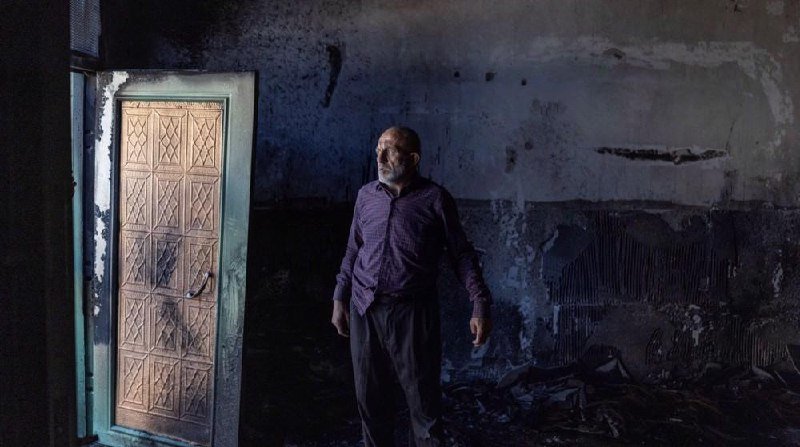
On 14 June 2026, two signals arrived from Tehran within ninety minutes of each other. First, reporting surfaced that Iran is demanding the release of up to $12 billion in frozen funds as a precondition for continued negotiations with the United States. Then, a second dispatch indicated that Tehran was itself threatening to walk away from the talks. By the following morning, the BBC was asking the question on every trader's lips: a deal is possible — but how quickly does anything in the Gulf actually return to normal?
The number is doing more work than the negotiators. Twelve billion dollars is not a settlement; it is a signal. It is the price Tehran has decided to put on the diplomatic damage inflicted by the most recent round of hostilities, and it is, just as importantly, the price Washington must be seen to refuse before it agrees.
What the $12 billion actually represents
Sanctions-era frozen Iranian funds sit in escrow accounts across the Gulf, in South Korea, and in a handful of European clearing houses. The balances have been a perennial bargaining chip since at least the Obama administration's early-2010s prisoner exchanges. The new demand, as reported on 14 June, is unusual in its scale and in its timing. The figure tracks closely with the working estimates of Iranian central-bank reserves immobilised in third-party jurisdictions — money Tehran argues is legally its own, blocked by US Treasury secondary sanctions rather than by any Iranian default.
A Monexus reading of the demand is that Tehran is not negotiating over a nuclear file in the abstract. It is itemising the cost of a war the Iranian public experienced directly: energy disruption, casualties, the visible humiliation of a sovereign infrastructure strike. The cash ask is, in effect, a down-payment on political survival at home.
The walk-away threat, decoded
A threat to pull out of talks is the oldest move in this particular playbook, and the least costly to make. By itself, it tells us very little. What it does tell us is that the Iranian negotiating team is preparing a domestic audience for either outcome — a deal that can be sold as restitution, or a collapse that can be sold as dignity preserved. The dual-track messaging is not confusion; it is choreography.
The harder question is whether the threat is being made to Washington, to the Iranian public, or to both at once. The reporting available on 14 June does not specify which senior Iranian official authorised the public framing, and the BBC's expert commentary on 15 June stressed that the war's economic aftershocks will outlast any deal by months, regardless of its terms.
The counter-narrative the Western wire is not telling
The dominant Western framing treats the $12 billion as an opening gambit that will be haggled down. There is a coherent counter-read: that the figure is, if anything, conservative. Iran's economy absorbed a structural shock measured in tens of billions during the conflict — lost hydrocarbon revenues, insurance premium spikes across the Straits, and the long-tail cost of rerouting trade through overland corridors. A negotiated settlement that returns less than the full quantum of the damage bill leaves Tehran weaker than it was before the war, and the regime knows it.
A more skeptical version of the same read goes further. If the demand is a marker of seriousness, the threat to walk is a marker of leverage. Tehran may calculate that the Trump administration's domestic political incentive to declare a victory is steepening with each week of Strait-of-Hormuz insurance premia. The trade press, including the BBC's own coverage on 15 June, is already framing the timeline in weeks, not months.
Why the wire sources diverge
The Anglophone coverage of the 14 June developments splits along a familiar fault line. Mainstream wires and outlets close to the US negotiating position treat the $12 billion as a maximalist anchor to be eroded in technical sessions. Analysts and reporters with longer exposure to the Iranian side treat the same figure as a minimal restitution for documented damage. Both readings are internally coherent. Both are unverifiable from outside the negotiating room.
What is verifiable, from the public reporting, is the sequence: a demand, a threat, and a question about how quickly the regional economy returns to baseline. The answer to that last question is that it does not — not on any horizon shorter than the political memory of the war itself. Energy markets had already priced in a multi-quarter premium before the latest round of talks. A signed deal would compress that premium; a collapsed deal would extend it.
The structural pattern
This is what dollar-hegemonic bargaining looks like in 2026. The negotiating table is not where the dispute is actually settled. The dispute is settled, or not, in the offshore clearing accounts, in the Lloyd's-listed war-risk underwriters, in the European treasuries that must decide whether to honour the next round of oil-denominated transactions. The $12 billion is the visible number. The invisible number is the spread on Iranian sovereign risk for the next twenty-four months.
For the Gulf monarchies, the calculation is even colder. Their exposure to Strait-of-Hormuz traffic is a structural feature of their economies, not a passing event. They will accept either outcome — a deal that restores confidence incrementally, or a collapse that justifies accelerated pipeline diversification. They will not, however, accept a deal that requires them to underwrite the political risk of US-Iranian reconciliation inside their own borders.
What remains uncertain
The sources available on 14 and 15 June do not specify the legal mechanism for any fund release, the sequencing relative to a possible nuclear concession, or the role of intermediaries such as Qatar or Oman in any transfer. They do not confirm whether the $12 billion is a one-time payment or a phased tranche. The reporting treats the demand as confirmed and the threat as live, but the underlying documents — if they exist outside the negotiating room — have not surfaced.
What is clear is that the price of doing business with Iran, in cash terms, has reset. The next round of talks will not return to the pre-war baseline even if both sides want it to. The leverage has moved, and the number the Iranian side has chosen to publicise is the clearest signal of where they believe it has moved to.
Desk note: Monexus has framed this story around the cash figure as a signal of negotiation rather than as a market-moving data point, in line with the editorial preference for structural analysis over deal-rumor reporting. Where wire coverage treats the $12 billion as a transactional fact, Monexus reads it as a political instrument — and flags the open question of how the regional economy returns to anything describable as normal.
Wire provenance
This editorial synthesis draws on the following public wire/social posts:
- https://x.com/polymarket/status/
- https://x.com/polymarket/status/
Follow the event.
These dated source records provide context. They do not retrospectively verify this archive article.
Separate what the nuclear watchdog reported from what it could not determine after the June 2025 strikes.