Tehran Reads the Strait as Sovereignty, Not Toll: What Baqaei's Hormuz Line Is Really About
On 15 June 2026 Iran's foreign ministry drew a sharp line around the Strait of Hormuz: not a toll, not a concession, but a sovereign service fee. The framing says more about Tehran's bargaining position than about shipping economics.
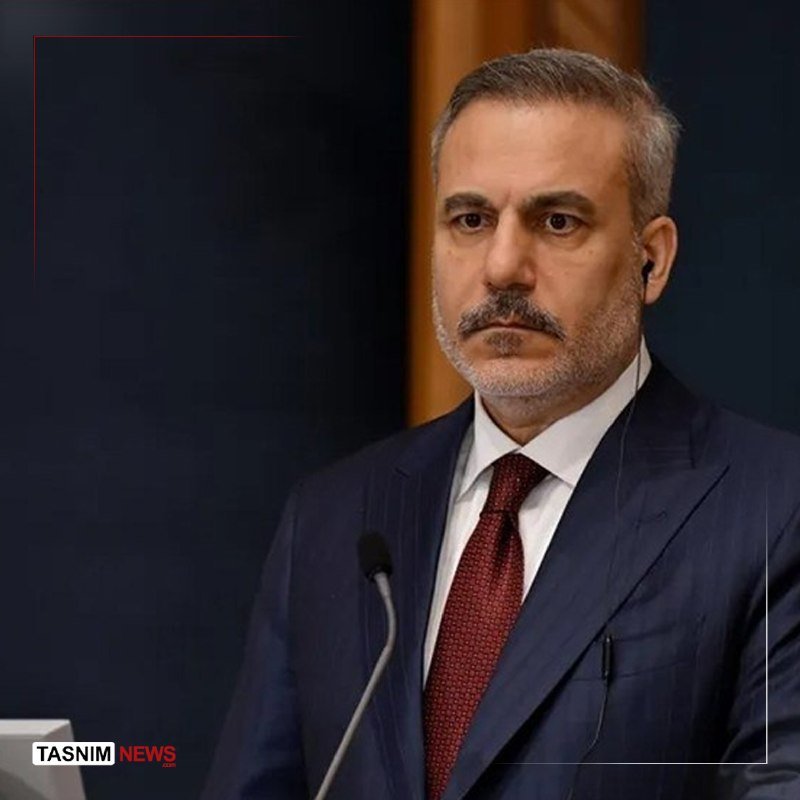
The argument arrived in the familiar vocabulary of maritime dispute, but the substance ran on a different track. At 12:20 UTC on 15 June 2026, Esmaeil Baqaei, spokesperson for Iran's Ministry of Foreign Affairs, told reporters that Tehran is "not seeking tolls" in the Strait of Hormuz — only "fees … for the services that are provided." The distinction, drawn alongside a parallel memorandum of understanding with Oman, was deliberately technical. It is also the most candid official statement yet about how the Islamic Republic intends to monetise one of the world's most consequential choke points without crossing the line that would, in its telling, turn it into a pirate state.
The semantic move matters more than the policy itself. A "toll" is a unilateral levy on passage — the kind of action that has, in the past, drawn naval task forces and UN Security Council resolutions. A "fee for services" reframes the relationship: the strait is a corridor Iran and Oman jointly administer, and any vessel using it consumes a service whose cost Iran is entitled to set. The language is the lever. Anyone trying to push back on the second framing has to argue, on the record, that Iran and Oman are not sovereign over the water between them — a position the United States is unlikely to want to defend in writing.
The MoU with Oman as a shield
Two minutes before the Hormuz line, Baqaei confirmed that the "details of the diplomatic aspects of the agreement will be published in the media soon" and that "the manner and mechanism of signing the memorandum of understanding will be decided today and tomorrow." The sequencing is the point. By the time any US or European capital drafts a complaint about Iranian behaviour in the strait, the response from Tehran will be: we are acting jointly with a Gulf neighbour, under a published bilateral instrument, in waters we have administered for centuries.
At 12:18 UTC, Baqaei added that "the future will see that the malice of the enemy did not disturb our focus on securing the highest interests of Iran and Lebanon" — a pointed reminder that the diplomatic package now under discussion is not narrow energy diplomacy but a wider regional architecture. Whether "the enemy" refers primarily to Washington, to Israel, or to both is left for the reader to decode; the effect is the same: the MoU is being sold domestically as a victory, and any Western attempt to roll it back will carry a domestic cost inside Iran that the Rouhani-era negotiators did not face.
A second front, opened on the nuclear file
The Hormuz language did not arrive in a vacuum. Twelve minutes after the MoU comments, Baqaei was on Tasnim addressing the American president directly. His reply, reported by al-Alam at 12:24 UTC, was terse: "They tried once and saw the result, they will do it again." The reference is to the 12-day US–Israeli operation against Iranian nuclear infrastructure in June 2025 — an attack that, in Tehran's telling, did not eliminate the country's enrichment capacity but did demonstrate that the programme's survival has a price Washington may not want to keep paying.
The connection between the two statements is structural. The MoU under negotiation obliges the United States to "completely cancel the sanctions," according to Baqaei's 12:12 UTC briefing to Tasnim, and the release of frozen Iranian assets is described as "Iran's legal and economic right." Tehran is therefore reading the diplomatic moment as transactional: sanctions relief in exchange for a verifiable cap on enrichment. The Hormuz fee language, on this reading, is leverage held in reserve. If the nuclear track delivers, the strait remains open on commercial terms. If it stalls, Iran retains a pressure instrument that does not require a single missile launch to deploy.
The sanctions line as floor, not ceiling
The framing matters because the US side has so far spoken in the vocabulary of exchange — sanctions for enrichment limits — while Tehran is increasingly speaking in the vocabulary of restoration. Baqaei's "completely cancel" formulation is not the language of suspension or phased relief. It is the language of an end-state, with the asset-release clause as an admission that the assets were wrongly frozen in the first place.
This is also where the Western wire line and the Iranian framing diverge most sharply. US reporting on the negotiations has tended to characterise any partial relief as a win; the Iranian messaging machine is now preparing the public for a result in which the deal is judged by whether the sanctions architecture itself comes down. The two are not the same deal. If Tehran walks away from a partial package, the Hormuz "service fee" becomes the headline that explains why.
What remains uncertain
The architecture of the MoU with Oman has not yet been published, and Baqaei's 12:18 UTC promise that "the details … will be published in the media soon" is the only confirmed timeline. It is also not yet clear which services Iran intends to bill for — pilotage, security, transit coordination — and whether the fee structure will apply uniformly or selectively. The Omani side has, in parallel coverage, not yet committed to a specific joint tariff regime, and any unilateral Iranian levy without Omani sign-off would weaken the "sovereignty, not toll" framing that the spokesperson is at pains to preserve. The phrase "we are not seeking tolls" is also a promise that constrains Iran's next move: any subsequent action that looks like a toll will be measured against Baqaei's own words.
The structural read is straightforward. The Islamic Republic is attempting to convert geography into bargaining power in a negotiation in which its conventional military position is weaker than it was a year ago. Whether that conversion succeeds depends less on the language of fees than on whether the MoU with Oman holds, whether the nuclear track delivers the sanctions relief Tehran has now publicly defined as the floor, and whether the United States is willing to litigate the sovereignty of the Strait of Hormuz in a forum where the historical and legal record is messier than its naval position suggests. On 15 June 2026, Tehran is signalling that it believes at least one of those three variables is moving in its direction.
This article reads the Iranian foreign-ministry briefing on its own terms, paired against the parallel Tasnim readout, rather than against any Western wire characterisation. The aim is to map the framing Tehran is deploying in real time, not to adjudicate the underlying legal question of sovereignty in the strait.
Wire provenance
This editorial synthesis draws on the following public wire/social posts:
- https://t.me/alalamfa
- https://t.me/JahanTasnim
- https://t.me/tasnimnews_en
Follow the event.
These dated source records provide context. They do not retrospectively verify this archive article.
Separate what the nuclear watchdog reported from what it could not determine after the June 2025 strikes.