Hormuz toll-free and frozen funds on the table: reading the Iran MOU the way Washington actually wrote it
A US-Iran memorandum of understanding, hinted at in briefings on 15 June 2026, ties sanctions relief to behaviour rather than signatures — and quietly shelves the Omani back-channel that preceded the war.
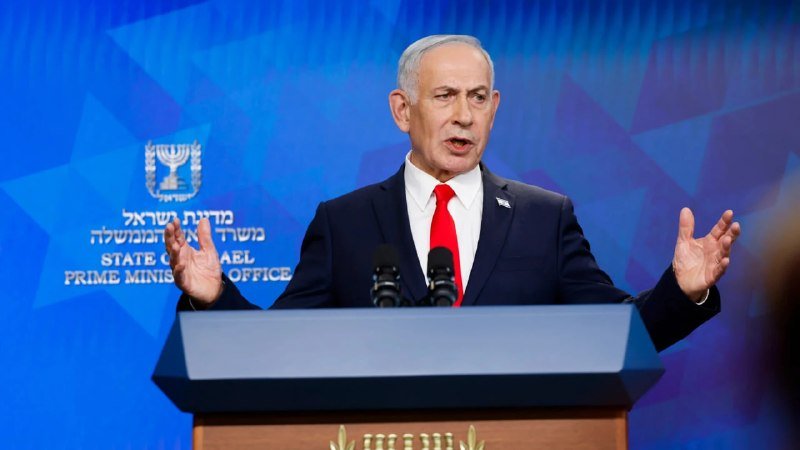
Lead. On the afternoon of 15 June 2026, the most concrete readout of any US-Iran understanding since the June war began arrived not from a podium but from a string of senior administration briefings carried by the open-source channel Open Source Intel. A senior US official confirmed that the Strait of Hormuz would operate toll-free for at least 60 days under the memorandum of understanding, that Washington was prepared to release frozen Iranian funds and relieve sanctions in stages, and — in a line likely to age quickly — that any relief would be "behavioural," triggered by compliance, not by the act of signing. The MOU's contents, the same official added, could be made public within 48 hours.
Nut graf. The shape of the deal now on the table is the opposite of the diplomacy Washington practised for the decade before the war. It is not built on a signed framework agreement, sequenced inspections and a long sanctions tail. It is built on a renewable commercial corridor, a conditional escrow of frozen assets, and a maritime passage the US Navy will effectively underwrite at zero tariff for Iranian crude. That design has a logic of its own — and a politics that will outlast it.
The package, as briefed
Four details from the 15 June readouts define what is actually on offer. First, the 60-day Hormuz toll holiday. A US official told reporters the prohibition on Iranian transit fees "could extend further," framing the window as a renewable test rather than a concession. Second, the unfreezing of Iranian funds held in third-country escrow, paired with sanctions relief calibrated to "small gestures at the outset" — the diplomatic phrasing for a phased release designed to be reversible. Third, the framing principle: in the same hour, the US side emphasised that relief is "behavioural. If they do what they're supposed to do, that starts taking effect" — language carried by Open Source Intel at 16:48 UTC, attributing the line to President Donald Trump. Fourth, the disclosure timeline: contents of the MOU may be made public within 48 hours, a senior US official said at 16:14 UTC — "I hope earlier."
The through-line is unusual. Relief is decoupled from a signed nuclear constraint document and re-coupled to observed conduct inside a defined commercial window. In plain terms: Iran gets the money and the shipping lane first, and the verifiable nuclear concessions later — and only if the observable behaviour holds.
Why the Omani channel is now a problem
A second briefing line is the one Gulf statecraft watchers will read most carefully. A senior US official told reporters, also at 16:14 UTC: "We were unhappy with the job the Omanis did during negotiations before war." Muscat, for two decades the indispensable neutral intermediary between Tehran and Washington, is being publicly downgraded in the same breath that the contents of the new understanding are teased. The signal is unmistakable. The pre-war back-channel is being retired in favour of a more transactional, military-adjacent format — one in which the Strait of Hormuz and the frozen-funds escrow do the mediating work that the Omani foreign ministry used to.
The reframing has a domestic audience too. A concession architecture that visibly sidelines a Gulf intermediary, ties relief to behaviour, and parks the nuclear file for later is easier to defend in a US election cycle than a grand bargain. It also raises the cost for Tehran of any visible return to the old channel: the next mediator, if there is one, will be paid in Hormuz tolls and escrow tranches, not in statements issued from Muscat.
What this is, structurally
Strip away the diplomatic vocabulary and this MOU is a commercial corridor with a sanctions sidecar. The mechanism — toll-free passage plus staged release of frozen assets — is closer to the architecture used in the 2023 Saudi-Iran rapprochement brokered in Beijing than to the 2015 Joint Plan of Action. It treats the nuclear file as a downstream compliance question, not the entry ticket. That inversion is the story.
A counter-reading is available. Critics in Washington and Tel Aviv will argue that decoupling relief from a signed constraint document is a gift to Tehran's enrichment programme, which has continued to advance throughout the war and is unlikely to be wound back by 60-day toll windows. Their case is not weak. The US side's answer, embedded in the briefing language, is that observable behaviour — maritime conduct, escrow drawdown, restraint from proxy escalation — is more verifiable in real time than any signed protocol. The empirical question is which set of metrics survives contact with the next incident in the Gulf.
The structural pattern here extends well beyond the Iran file. The same playbook — corridor-first, signature-later, behaviour-gated — has been visible in the late-2025 Black Sea arrangements around Ukrainian grain and in the ad-hoc Red Sea shipping corridors negotiated between Huthi interlocutors and Western insurers. The global architecture of the 2020s is being assembled from commercial transit windows before it is assembled from arms-control treaties. The Iran MOU is the most consequential instance of that approach so far.
Stakes, and what remains uncertain
The winners, if the arrangement holds, are predictable: Iranian crude reaches buyers in Asia at a lower effective premium; Gulf importers see a softer insurance market in the Strait; Washington secures a de-escalation it can claim without a politically toxic signing ceremony. The losers are the old architecture — the IAEA-led verification regime, the Omani intermediary class, and any party whose leverage depended on a longer, more legalistic process.
The uncertainties are sharper. The briefing stream does not specify the size of the frozen-funds tranche, the criteria for "behavioural" compliance, or the trigger for re-imposition if Iran tests the window. The 48-hour public-disclosure window will be the first real test. Until the text appears, the MOU is, in effect, a credible rumour being run by senior officials who want it to be a deal — which is a category of diplomatic fact worth naming distinctly from a deal itself.
Wire provenance
This editorial synthesis draws on the following public wire/social posts:
- https://t.me/s/osintlive
- https://t.me/s/osintlive
- https://t.me/s/osintlive
- https://t.me/s/osintlive
- https://t.me/s/osintlive
Follow the event.
These dated source records provide context. They do not retrospectively verify this archive article.
Separate what the nuclear watchdog reported from what it could not determine after the June 2025 strikes.