Tehran frames the Strait of Hormuz as a managed asset, not a flashpoint
Foreign Ministry spokesperson Esmaeil Baqaei has spent two press briefings turning the world's most sensitive chokepoint into a billing department — and a test of whether sanctions relief is really coming.
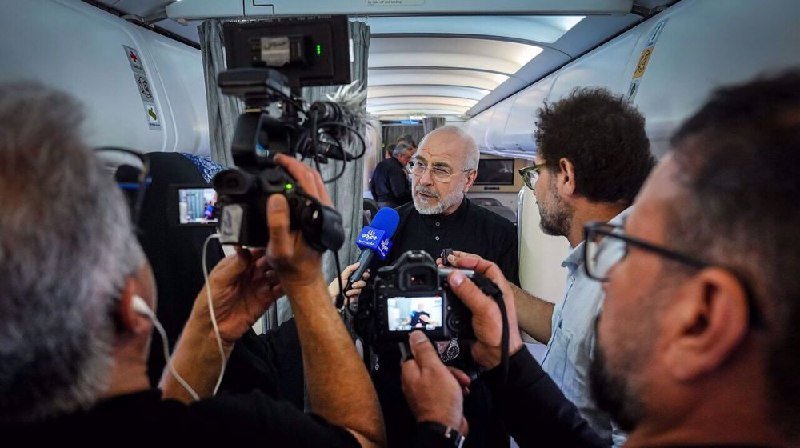
The line coming out of Tehran this week is a study in controlled ambiguity. At two separate briefings on 15 June 2026 — first to state-aligned outlets, then to the foreign press pool — Foreign Ministry spokesperson Esmaeil Baqaei insisted that Iran and Oman "ensure the security of traffic in the Strait of Hormuz," that the costs of navigation services and ship insurance are "designed and received," and that any recent agreement with Washington obliges the United States to "completely cancel the sanctions" and release frozen Iranian assets (Tasnim, 12:17 UTC; Tasnim, 12:12 UTC; Fars, 12:24 UTC). The Strait, in this telling, is no longer a hostage to be taken but a managed utility to be billed.
That reframing — chokepoint as service, leverage as ledger — is the real story. The Islamic Republic is offering the world a choice it did not offer a decade ago: a Hormuz that is safe in exchange for sanctions relief, freezing the security question and monetising it. Whether the deal is actually on the table, and whether Tehran will hold the line once the cameras leave, are the questions the next thirty days will answer.
A chokepoint with a price list
In the language the spokesperson used on Monday, Iran is no longer threatening to close the strait — it is invoicing the traffic. Baqaei told reporters that Iran and Oman jointly design and collect the costs of navigation services and insurance for vessels moving through the waterway (Tasnim, 12:17 UTC). That is a notable shift. Until recently, Iranian officials spoke of the strait principally as a deterrent — a card to be played in the event of war or a hard sanctions squeeze. The 15 June framing recasts the asset: Iran is the security provider, and the customer is everyone from Indian tanker operators to Chinese LNG buyers to Gulf petrostate shippers whose own crude transits the same narrow band of water.
The change is not just rhetorical. By absorbing Oman — a quiet, US- and Gulf-allied sultanate that has long mediated between Tehran and the West — into the formula, the spokesperson makes a regional case for Iranian stewardship that is harder to dismiss as rogue behaviour. Oman has commercial interests in keeping the lane open; Iran has the geography and the fast-boat and mine inventory to close it. Tehran is now arguing, in effect, that the only credible guarantor of the strait is the very country the United States has spent two decades trying to isolate.
The sanctions ledger as the real negotiation
Strip away the maritime packaging and the briefing is about money. Baqaei said the recent agreement "obliges the US to completely cancel the sanctions" and described the release of frozen Iranian property as a "legal and economic right" rather than a concession (Tasnim, 12:12 UTC). A separate Fars summary pushed back against domestic critics who worry the memorandum of understanding is being negotiated away issue by issue: the spokesperson replied that Iran "focuses on the strategic priorities of the MoU" and refuses to be drawn into marginal disputes, a signal that Tehran is willing to absorb some friction in order to keep the principal track alive (Tasnim, 12:16 UTC; Fars, 12:15 UTC).
The numbers are not in the public briefings, and that is itself the message. Iranian state media is presenting the agreement as a fait accompli on the sanctions axis; the real haggling, it seems, is over sequencing — which designations fall away first, which frozen accounts move, and which snapback triggers Iran is willing to tolerate. Until those questions are answered, the strait rhetoric is doing two things at once: signalling to Washington that the maritime card remains in play if sanctions relief stalls, and signalling to domestic audiences that the regime has converted years of maximum-pressure isolation into a concrete settlement.
Reading the frame: what the briefing does not say
The omissions are as informative as the statements. There is no Iranian acknowledgement that the agreement is provisional, no description of which US sanctions are covered, no schedule for the unfreezing of assets, and no mention of Iran's nuclear file — the issue the United States, Israel, and the European Union have consistently insisted is non-negotiable. The spokesperson also declined to detail "legal follow-up" against the United States and Israel over the assassination of Iranian leaders, instead calling the question "definitive" and moving on (Fars, 12:11 UTC). That is the language of an apparatus that is holding multiple files open while keeping the public posture disciplined.
The plausible alternative read is that the briefing is a holding pattern. Iran is buying time while technical talks proceed; the strait is being presented as a service rather than a threat because a threat posture would collapse the negotiating runway. The dominant framing — that Tehran is genuinely offering managed security in exchange for sanctions relief — holds only if the next round produces deliverable numbers. If it does not, the same language heard on Monday can be flipped inside a week, with the spokesperson insisting that "security of traffic" is conditional on Iranian terms being met.
Stakes: who wins if the deal holds, and who wins if it breaks
If the agreement lands, the immediate winners are predictable: Iran's central bank, which would see hard-currency access restored; Oman's ports and shipping registry, which would sit at the centre of any Iran-mediated corridor; and a rump of European and Asian buyers who would rather underwrite a stable transit fee than a war-risk premium. The United States would get a quieter Persian Gulf and a precedent for negotiated containment. The losers are the harder-line factions on all sides — Iranian hardliners who see any deal as surrender, and the political constituency in Washington and Tel Aviv that treats the existing sanctions architecture as leverage that should not be traded away for chokepoint insurance.
If the deal breaks, the strait returns to its older role: a tripwire, and a market. Oil benchmarks would price the risk within hours; insurance underwriters in London and Dubai would reassess war-risk premia; and Iran would be back to justifying fast-boat deployments and seizures of commercial tankers as defensive measures. The 15 June briefing is, in that sense, a pricing exercise. Tehran is asking the world — Washington in particular — what the strait is worth without a shot fired. The answer is the answer to the sanctions question, in dollars and in days.
How Monexus framed this: the wire coverage carried the Baqaei statements straight; this desk reads the same lines as a billing announcement, with the Strait of Hormuz recast from a deterrent into a service contract whose price is sanctions relief.
Wire provenance
This editorial synthesis draws on the following public wire/social posts:
- https://t.me/JahanTasnim
- https://t.me/JahanTasnim
- https://t.me/JahanTasnim
- https://t.me/FarsNewsInt
- https://t.me/FarsNewsInt
- https://t.me/FarsNewsInt