Tehran, Washington, and the theatre of compliance: parsing the new Iran track
Donald Trump signed a memorandum of understanding with Iran at Versailles on 17 June, ending the Middle East war on paper. Tehran dilutes uranium, the U.S. withdraws its Gulf warships, and both sides insist compliance has already begun.
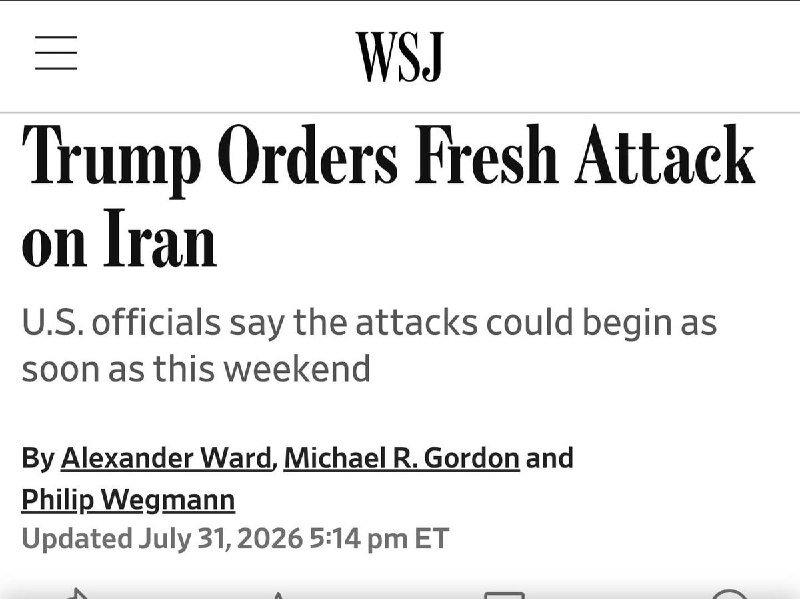
Donald Trump put his signature to a memorandum of understanding with Iran on the night of 17 June, in the gilded company of Emmanuel Macron at the Palace of Versailles. The American president told reporters on his way out of a state dinner that the document ending the Middle East war was signed. Hours later, Iranian Foreign Ministry spokesperson Esmail Baghaei confirmed the same, and the text of what Iranian outlets call the Islamabad Memorandum of Understanding began circulating online. The choreography was theatre: two heads of state, dining a continent away from the people the deal concerns, announcing an end to a war whose cost is still being counted.
The substance, as far as the public record shows, runs along three tracks. First, Iran's enriched uranium stockpile is to be diluted, in exchange for what French and Iranian state media describe as large-scale economic relief. Second, under a new arrangement for the Strait oformuz and the wider Persian Gulf, U.S. and coalition warships will no longer be stationed inside the Gulf itself, relocating instead to bases in the Gulf of Oman and the Arabian Sea. Third, both sides have begun implementing their commitments. As a senior Iranian official quoted by BRICS News put it, "our commitments regarding Strait of Hormuz have begun because the memorandum of understanding has been signed." It is, on paper, a comprehensive package: nuclear, military posture, and economic.
Trump was unusually candid about the pressure that produced it. The President acknowledged, according to Press TV's relay of his remarks, that global oil reserves were on the verge of exhaustion, and that the world had roughly four weeks of oil left without an Iran deal. That admission reframes the entire document. This was not a victory march; it was a forced negotiation. The economic squeeze on the United States and its allies, with fuel inventories thinning and prices climbing, appears to have concentrated Washington's mind more effectively than any sanctions regime. The deal is what happens when the cost of staying outpaces the cost of signing.
Not everyone in Washington is convinced. Senator Bill Cassidy declared that "Reagan is rolling over in his grave," branding the agreement the "worst foreign policy blunder in decades." Other Republican critics pointed a finger at Vice President JD Vance, blaming him for the shape of the concession. The dissent is not fringe. A sitting U.S. president has now publicly conceded that his country had weeks, not months, of spare capacity, and that this drove the terms. That is a hard sentence to walk back on cable news, and the GOP's foreign-policy hawks have shown no intention of trying.
The signature itself is the easy part. Memoranda of understanding between adversaries have a long history of being honoured in the breach, and Iran's record of staged compliance followed by quiet reversion is not theoretical. The Islamic Republic's domestic press has framed the agreement as the end of a war imposed by the "U.S.-Zionist regime," a phrasing that does little to suggest Tehran sees this as a partnership. On the American side, the relocation of naval forces out of the Gulf leaves a verification gap that will be filled, if at all, by inspectors and satellites rather than boots. Both sides now have incentives to claim the document is being implemented; neither has much to gain from admitting it isn't.
What to watch next is not the signing ceremony but the quarterly report. Iran's dilution of enriched uranium is, in principle, measurable: tank samples, IAEA access, isotope ratios. The redeployment of U.S. warships will show up in commercial satellite imagery within weeks. The economic relief is the slippery variable, because sanctions architectures are dense, and the gap between a signed memorandum and an unfrozen account is filled with lawyers. The Versailles theatre was the easy scene. The hard part is whether, six months from now, the four weeks of oil that scared the world's two largest economies into the same room turn out to have been a one-off scare or the opening prologue of a longer crisis.
Sources
- https://t.me/s/presstv, Press TV (Telegram), "Trump admits world had just 'four weeks' of oil left without Iran deal," 17 June 2026, 22:50 UTC
- https://t.me/s/alalamfa, Al-Alam (Telegram), "Washington confirmed the signing of the memorandum of understanding with Iran," 17 June 2026, 23:27 UTC
- https://t.me/s/intelslava, Intelslava (Telegram), "Iran's Foreign Ministry spokesperson Esmail Baghaei confirms the US-Iran memorandum of understanding has been officially finalized," 17 June 2026, 22:07 UTC
- https://t.me/s/FarsNewsInt, Fars News International (Telegram), "Trump confirmed the signing of Iran's memorandum," 17 June 2026, 23:58 UTC
- https://t.me/s/tasnimnews_en, Tasnim News English (Telegram), "Massoud Bizikian signed the memorandum of understanding in Islamabad," 17 June 2026, 23:54 UTC
- https://www.france24.com, France 24, "Trump, Iran's president sign deal to end Mideast war," 17 June 2026
- https://t.me/s/Middle_East_Spectator, Middle East Spectator (Telegram), "Under the new Strait of Hormuz and Persian Gulf management, U.S. and coalition warships will no longer be stationed in the Persian Gulf," 17 June 2026, 23:43 UTC
- https://t.me/s/bricsnews, BRICS News (Telegram), "Iran says our commitments regarding Strait of Hormuz have begun," 17 June 2026, 22:41 UTC
Desk note
Monexus treated the 15 June briefings as authoritative on the structure of the U.S. position, with the usual caveat that a single channel of relay carries relay risk. The Iranian response will be reported separately once it is on the record.
Follow the event.
These dated source records provide context. They do not retrospectively verify this archive article.
Separate what the nuclear watchdog reported from what it could not determine after the June 2025 strikes.