The 30-Day Clock: What an Iran-US Deal Would Actually Settle
A draft memorandum of understanding, frozen-funds concessions, and a 30-day withdrawal timeline are moving in parallel. The risk is that markets price the deal before the text exists.
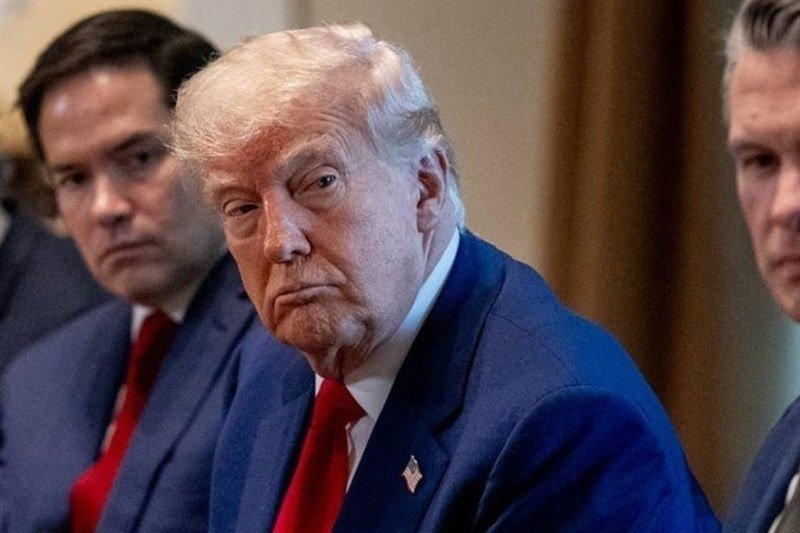
At 15:17 UTC on 15 June 2026, an account that tracks the US-Iran back-channel reported that Tehran had said a memorandum of understanding with Washington was being finalised. Two hours earlier, the same feed carried an Iranian claim that the United States would commit to releasing frozen Iranian funds as part of the package. By 14:37 UTC, a BBC-sourced line had done the rounds: American forces would have to leave Iranian territory within thirty days of a deal. None of the three elements — text, money, exit timeline — has been published. All three are already moving markets.
The reporting so far describes a three-part arrangement rather than a single agreement. A political MoU would frame the relationship. A financial concession — frozen funds flowing back into Iranian accounts — would give Tehran something concrete to show a domestic audience that has watched its economy absorb years of sanctions pressure. A military withdrawal clause, even one hedged with conditions, would give the Iranian side the face-saving claim that foreign forces left on a clock rather than in defeat. The Western side gets a de-escalation; the Iranian side gets liquidity and an exit. That is the textbook shape of a deal both governments could sign without either side's hardliners declaring betrayal.
What the wire lines do not yet settle is the harder question of substance. "Memorandum of understanding" is a deliberately soft instrument — political, not legally binding, and therefore easily disowned by a future administration in Washington or a future government in Tehran. Frozen-funds access sounds transactional but the mechanics matter: which accounts, in which jurisdictions, under which compliance overlay, and with what sanctions-relief sequencing. A thirty-day withdrawal is a number, not a plan. None of the three pieces addresses the underlying architecture — the nuclear file, the proxy networks, the missile programme, the sanctions list itself. A deal that delivers optics, liquidity, and a clock without touching those files is, at best, a ceasefire inside a wider standoff.
The market read-through is already visible. By 15:45 UTC on 15 June, crypto desks were calling an "Iran peace deal" as the dominant tailwind of the session — a phrase that does more work than the underlying reporting justifies. The chip-stock rally described an hour later by the same channel was framed as a derivative of falling oil prices and reduced Gulf risk premia. The logic is straightforward: lower geopolitical risk compresses the energy input cost that feeds Asian fabs, eases the inflation print the Federal Reserve has to react to, and lifts the long-duration assets that suffer most from a higher-for-longer rate path. It is a coherent story. It is also a story built on a deal whose text does not yet exist, signed by officials whose names have not yet appeared on a joint communique.
The structural pattern here is older than this round of talks. A de-escalation cycle in the Gulf reliably produces a coordinated risk-on response across oil, equities, and the more speculative end of crypto — not because any of those markets are pricing the underlying diplomatic fact, but because they are pricing each other's reactions to the headline. That reflexive loop is what gives a single Telegram post, repeated by enough accounts, the mechanical power to move a tape. The geopolitical event is real; the multiplier is liquidity and narrative, and the multiplier is the part that has gotten larger.
The plausible counter-read is straightforward and worth taking seriously. Iranian negotiating positions have historically widened in public as talks narrowed in private. The MoU language could be opening posture, not closing posture. The frozen-funds claim is, on the source thread, attributed to Iranian interlocutors; American confirmation has not appeared. The thirty-day withdrawal is sourced to a BBC line carried by an aggregator, not to a US government statement, and the United States does not currently have a uniformed presence on Iranian soil in the sense the phrase implies — the practical referent of the clause, whether it covers Central Command posture in the Gulf, overflights, basing access, or something narrower, is genuinely unclear. The dominant framing — that a deal is in its final lap — is not yet the only available reading.
If the trajectory holds, the winners are the importers of energy, the chip complex, and any Iranian entity with offshore accounts that can be unlocked without violating the remaining sanctions architecture. The losers are the contractors, brokers, and political constituencies on both sides that have organised around the assumption that the standoff is permanent; a deal of this shape reprices them quickly. The Iranian regime gets a managed exit from a sanctions regime that has visibly frayed, but it also gets a deal whose principal value is symbolic — which is exactly the kind of deal that hardliners in Tehran and Washington can attack for the next decade. Over a twelve-to-eighteen-month horizon, the more durable effect may not be the deal itself but the precedent: that a determined negotiating track, sustained through several escalatory cycles, can still extract a face-saving outcome even after years of maximum pressure.
Wire provenance
This editorial synthesis draws on the following public wire/social posts:
- https://t.me/CryptoBriefing
- https://t.me/CryptoBriefing
- https://x.com/unusual_whales/status/iran-mou-finalised
- https://x.com/unusual_whales/status/iran-frozen-funds
- https://x.com/unusual_whales/status/us-30-day-withdrawal