Ankara and Tokyo Welcome the Iran–US Memorandum: Reading the Diplomatic Cues from 14–15 June 2026
Within hours of a reported Iran–US memorandum, Turkey's Hakan Fidan and Japan's Sanae Takaichi offered carefully calibrated welcomes — and revealed how each capital is positioning for a settlement that, if it holds, would redraw the region's geometry.
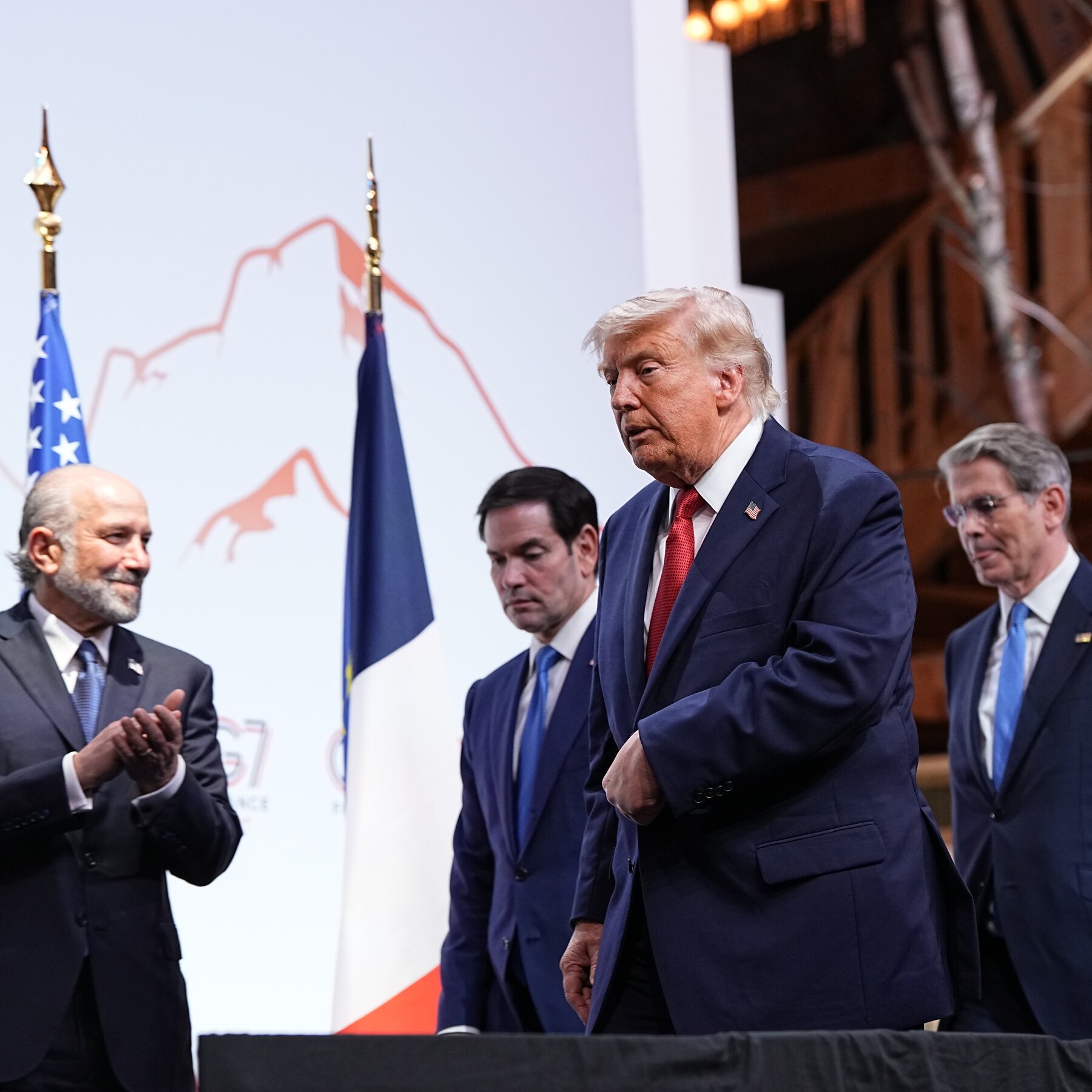
In the small hours of 15 June 2026, Turkish Foreign Minister Hakan Fidan told reporters that Ankara "welcome[s] the agreement reached for the purpose of ending the war between the United States and Iran" and described the arrangement as "an important milestone on the path" toward a durable settlement. His remarks, carried by Iran's Tasnim news agency at 00:09 UTC, landed within minutes of an almost identically worded statement from Japanese Prime Minister Sanae Takaichi, who said Tokyo "welcome[s] the memorandum of understanding between Iran and the United States" and framed it as a step that should be built on. The two capitals, separated by eight time zones and very different threat assessments, had arrived at the same public posture in the same news cycle — a synchronisation that is rarely accidental.
The diplomatic choreography matters more than the words themselves. Both Ankara and Tokyo are mid-sized allies of the United States with sizeable energy exposure and a strong preference for de-escalation in the Gulf. By publicly endorsing an Iran–US memorandum before the text is fully public, each is buying optionality: an early claim of credit if a deal holds, and a defensible record of restraint if it collapses. The fact that Iranian state media is carrying both statements — including a translation of Takaichi's remarks on its Jahan-Tasnim feed at 23:49 UTC on 14 June — is itself a signal of how Tehran wants the package framed to regional audiences.
What Ankara is signalling
Fidan's language is more specific than the boilerplate "we welcome" formula that ministries recycle at moments like this. The reference to "ending the war" is unusual. Ankara does not, as a rule, characterise the US–Iran confrontation as a war; Turkish officials have generally described it as a crisis, a tension, or a standoff, in part to preserve the country's role as a possible mediator and in part to avoid legal exposure under neutrality provisions. The shift to "war" suggests Ankara has been told, or has inferred, that the United States is no longer treating the confrontation as a managed rivalry below the threshold of armed conflict — and that the new framework is meant to close that chapter, not just pause it.
The second tell is timing. Fidan spoke at 00:09 UTC on 15 June, a window in which Washington is still at the end of its working day, Gulf states are deep into the night, and the Iranian working day has just begun. That is the moment at which a message to Tehran — and to the Iranian audience reading Tasnim — has maximum daylight. Ankara is talking past Washington and into the Iranian public sphere, with Washington as the addressee on the envelope.
What Tokyo's line tells us
Takaichi's statement, distributed by Jahan-Tasnim at 23:49 UTC on 14 June, is shorter and more conventional, but the country speaking is not. Japan is the largest single buyer of Iranian crude still operating under a US sanctions architecture, and its banks and insurers have spent the better part of a decade designing around secondary-sanctions risk. A Japanese prime minister publicly welcoming a US–Iran memorandum is, in effect, telling Japanese trading houses and shipowners that compliance planning can begin to shift in a more permissive direction. It is also a quiet vote of confidence in the durability of the deal — governments do not usually signal operational change to their private sector on the basis of a memorandum they expect to be repudiated within weeks.
The geopolitical subtext is harder to ignore. Tokyo has, in recent years, been rebuilding a Middle East policy that is less Gulf-only and more Iran-inclusive, partly because its energy import bill cannot afford to be hostage to a single supplier corridor. A settlement in which Iran re-enters legitimate commercial oil markets at scale reshapes Japanese strategic calculation toward the Strait of Hormuz and toward its long-running dialogue with Saudi Arabia and the UAE. Takaichi's welcome is therefore a forward indicator, not a courtesy.
The structural read
Three patterns sit underneath the day's headlines. First, the speed of recognition. Within roughly two hours of the memorandum becoming the lead item on Iranian state media, two non-aligned allied capitals had issued their own welcomes. That is the rhythm of a deal whose principal terms had been telegraphed in advance — there is no surprise, only a coordinated landing. Second, the geography of endorsement. Neither Fidan nor Takaichi is from the European trio (Britain, France, Germany) that has historically carried the diplomatic file on Iran. The welcome is coming from the middle powers with the most direct exposure to the consequences of failure. Third, the choice of channel. Iranian state media is the vehicle carrying the endorsements into the region, which is consistent with a sequence in which Tehran wants its own public to read the deal as regionally validated before the text is finalised in any Western capital.
The alternative reading is that this is, as yet, a memorandum and not a treaty — a procedural step that has historically been the most fragile phase of US–Iran diplomacy. The 2013 Joint Plan of Action and the 2015 framework in Lausanne both produced this kind of friendly-foreign-minister chorus within hours, and both eventually frayed. The dominant framing here — that the welcome from Ankara and Tokyo reflects real progress — holds, but only if the substance of the memorandum is allowed to mature into a verifiable political commitment. The sources circulated in the 14–15 June window do not yet disclose that substance; they disclose alignment of tone.
What is contested and what remains to be seen
Three things remain genuinely uncertain. The full text of the memorandum is not, on the evidence available, public. The Iranian and American principals have not, in the items reviewed, given a joint press appearance confirming the arrangement on the record. And the reaction from the Gulf Arab states — historically the most cautious audience for any US–Iran accommodation — has not yet been carried on the wires that surfaced overnight. Until those three gaps close, the careful welcomes from Ankara and Tokyo function as diplomatic down-payments, not as a confirmation that the architecture of the deal has held.
What this publication would watch next is the response from Washington and from the IAEA, and the first concrete commercial signal from Tokyo: a reflagging, a payment mechanism, or a refinery tender. Those are the tests by which a memorandum becomes a market, or by which it becomes another polite piece of paper.
Desk note: Monexus has framed the Ankara and Tokyo welcomes as measured diplomatic down-payments, not as confirmation of a deal. Where the wire overnight carried only Iranian state media translations, we have leaned on the original Tasnim and Jahan-Tasnim wording and avoided speculative substance that the source items do not support.
Wire provenance
This editorial synthesis draws on the following public wire/social posts:
- https://t.me/tasnimnews_en/
- https://t.me/JahanTasnim/
- https://t.me/tasnimnews_en/
- https://t.me/JahanTasnim/
- https://t.me/ClashReport/
Follow the event.
These dated source records provide context. They do not retrospectively verify this archive article.
Separate what the nuclear watchdog reported from what it could not determine after the June 2025 strikes.