Iran–US memorandum lands, but the Lebanon ceasefire is already fraying at the edges
A new Iran–US memorandum of understanding has Lebanese civilians streaming home, Hezbollah firing fresh rockets, and a US-brokered ceasefire visibly coming apart within hours of its announcement.
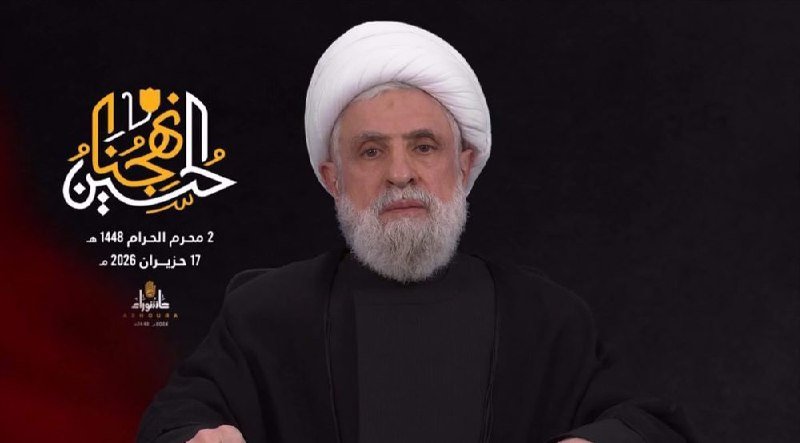
In the hours after a new memorandum of understanding between Iran and the United States was announced on 15 June 2026, two pictures came into focus at the same time. In Nabatieh and other towns across southern Lebanon, displaced residents streamed back down the motorways, honking horns and waving flags, according to footage carried by Press TV. Hours later, Hezbollah said its fighters had fired a fresh rocket barrage at Israeli troops pushing into a southern Lebanese locality, also per Press TV. By late afternoon UTC, the open-source monitor WarMonitor was reporting that the ceasefire meant to anchor the deal was "already beginning to fray," with each side accusing the other of crossing core conditions.
What this publication is watching is not one event but three stacked on top of each other: a diplomatic paper signed in some still-unnamed capital, a return-of-displaced narrative being staged in Lebanon's south, and a security reality on the ground that does not appear to be waiting for the diplomats. The gap between the memorandum and the rockets is the story.
The diplomatic layer: what was actually agreed
The thread of cables and channel reporting available on the afternoon of 15 June describes an Iran–US "memorandum of understanding" rather than a formally signed treaty. The text of the document has not been published in the materials reviewed; neither the venue, the full list of signatories, nor the precise duration of any commitment has been disclosed in the open record. What has been disclosed is the framing: Iran has publicly insisted that any lasting arrangement must guarantee Lebanon's sovereignty, and Hezbollah has described the new ceasefire framework as "the beginning of a broader process aimed at ending occupation," per Palestine Chronicle's coverage of the same window.
That language matters. "Sovereignty" in Iranian diplomatic usage is doing a lot of work — it covers, at minimum, the disarmament question in Lebanon, the status of Hezbollah's arsenal, and the question of who is recognised as the legitimate voice of Lebanese statehood. The phrase "ending occupation" in Hezbollah's framing is doing different work again: it gestures at the long-standing Iranian and Hezbollah position that Israeli operations inside Lebanon, even those described by Tel Aviv as limited and defensive, are the open wound that any durable arrangement must close. A reader who treats the memorandum as a clean ceasefire document is reading past what both signatories have said it actually is.
The lack of disclosed text is itself part of the story. Monexus reviewed the publicly available reporting and the announcements carried by Iranian state-aligned media; the operative specifics — a timeline, a verification mechanism, the fate of disputed frontline villages — were not present. Sources do not specify the venue or the parties in the room beyond the two principals.
The return-of-displaced narrative
Press TV carried footage of civilians returning to southern Lebanese cities, including Nabatieh, and described the return as a celebration in which residents "hailed Iran and Hezbollah." The framing is openly partisan and should be read as such — Press TV is an Iranian state broadcaster and its editorial line is consistent with Tehran's. But the on-the-ground fact it is documenting is the displacement and its reversal: large numbers of Lebanese civilians were uprooted from the south during the most recent escalation, and a meaningful share of them are now moving back.
That movement is the single most legible data point in the public record. A return of civilians is a real, countable, photographable event. It is also an event that can be staged, timed, and selectively filmed, and the editorial selection on Press TV will be tilted toward the most Hezbollah-affectionate frames. Independent verification of the scale and pace of returns is not yet available in the materials reviewed.
The security layer: the ceasefire is fraying on day one
By 16:46 UTC, the open-source monitor WarMonitor was reporting that the ceasefire was "already beginning to fray, with both sides making claims that would violate what the other considers a core condition of the agreement." A senior US official was described as briefing reporters that both parties were testing the line. The Iran-aligned channel Press TV carried, in the same window, a Hezbollah claim of a rocket barrage at Israeli troops moving into a southern Lebanese area — a claim that, if accurate, is a direct test of the framework whose announcement Hezbollah itself had publicly welcomed hours earlier.
The standard Western-wire read of this is that Iran and its allies are duplicitous: they sign, then probe. The standard Iranian state-media read, as expressed on Press TV, is that the Lebanese government failed to "take the right position when it came to defending Lebanon" — implying that whatever is happening on the ground is the result of Lebanese state weakness rather than Iranian or Hezbollah action. Both framings are partial. The more defensible reading is the boring one: ceasefires hold only at the points where each side's incentives align, and a memorandum announced without a published text, without disclosed verification, and without a defined frontline is a ceasefire on paper. Theon-ground contact has not yet stopped.
What the structure looks like underneath
A durable arrangement in Lebanon has rarely been about Lebanon. It has been about the relationship between Tehran and Washington, mediated through the question of whether Hezbollah's arsenal is treated as a sovereign Lebanese matter, a regional security problem, or an Israeli military target. The memorandum just announced slots into that pattern: a paper between the two principals, with the Lebanese state and the Israeli military in supporting roles.
Hezbollah's public response — welcoming the framework, describing it as a process rather than a settlement — is consistent with a long-standing position that any deal must leave the political question of armed resistance open, even if it pauses the kinetic one. Iran's insistence on "sovereignty" language does the same diplomatic work from a state-actor's chair. The US side, in the absence of disclosed text, appears to have accepted a vocabulary that allows Iran to claim a win in Beirut while buying Washington a quiet window in which Israeli operations slow. Whether the trade holds is the open question, and WarMonitor's reporting suggests the answer on day one is no.
Stakes, and what to watch next
If the memorandum holds past the first seventy-two hours, the practical consequences are immediate: a slower tempo of Israeli ground operations in the south, a quietening of the rocket-and-strike cycle, a measurable return of displaced civilians to towns like Nabatieh, and a diplomatic platform on which follow-on issues — prisoner files, the fate of disputed border points, the question of Hezbollah's long-term positioning — can be negotiated. The Lebanese state's leverage within that platform is the variable that the press materials do not address; the Lebanese government's own posture toward the deal has not been disclosed in the reviewed reporting.
If the memorandum does not hold, the more likely trajectory is a return to incremental escalation: probing barrages, Israeli counter-strikes, an open-source narrative managed by WarMonitor and others documenting the breakdown in real time, and a renewed argument inside Washington about whether the diplomatic track was a genuine opening or a delay tactic. The honest assessment from the public record is that both readings are live.
What remains genuinely uncertain, and what the sources do not resolve, is the text. Until the operative document is published — or until the on-the-ground contact stops, whichever comes first — readers should treat the memorandum as a framing device for a negotiation in progress rather than as a settlement of one.
Desk note: Monexus is reporting this story from the open-source and Iranian state-media record on the afternoon of 15 June 2026, before Western wires have published a consolidated read. The Iranian-aligned outlets are cited for what they claim and show; their framing is not endorsed. The structural argument — that ceasefires between principals in this theatre tend to hold only at the points where each side's incentives align — is the framing this desk is choosing pending corroboration.
Wire provenance
This editorial synthesis draws on the following public wire/social posts:
- https://t.me/presstv
- https://t.me/PalestineChronicle
- https://t.me/presstv
- https://t.me/presstv
- https://t.me/osintlive
Follow the event.
These dated source records provide context. They do not retrospectively verify this archive article.
Separate what the nuclear watchdog reported from what it could not determine after the June 2025 strikes.