Tehran sells the MOU as a victory — but the text hasn't been seen
Iran's foreign ministry is briefing the MOU as a binding lift of all sanctions categories, while critics call it spin over substance. The underlying document has not been published.
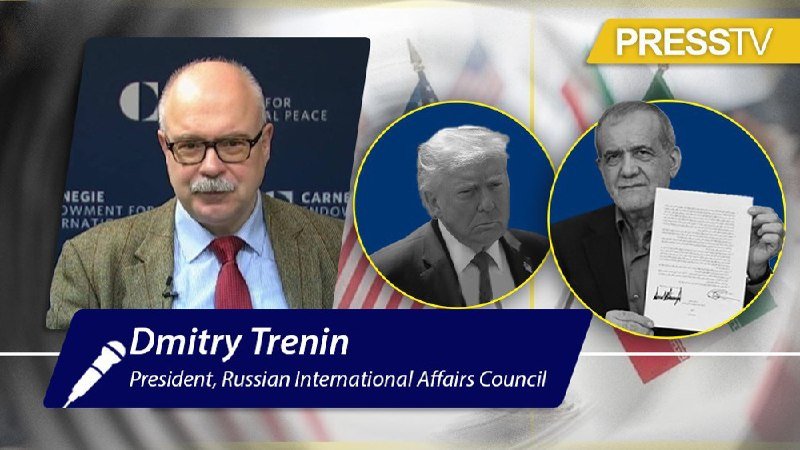
At a press briefing in Tehran on 15 June 2026, foreign ministry spokesman Esmail Baghaei framed the U.S.–Iran memorandum of understanding as a substantial, even historic, de-escalation. Asked about the substance of the deal, Baghaei said the document obligates Washington to lift "all sanctions — secondary, primary, UN Security Council sanctions, and relevant resolutions of the IAEA Board of Governors," in language circulated by Iranian outlets in the late afternoon UTC. Asked separately whether the understanding opens a new chapter in relations, he replied that it is "only one step" toward de-escalation, signalling that Tehran wants the modest framing for diplomatic purposes while selling the maximalist one to its domestic audience.
The harder question is the one Baghaei did not answer on the record: what is actually in the text. No party has published the memorandum. The American and Iranian claims being relayed to journalists are not the same document. The gap between the two readings is the story.
The Iranian read
The version that has been most aggressively promoted into Persian-language media holds that the MOU is, in effect, a complete unwinding of the sanctions architecture. The claim is comprehensive in scope: not just U.S. domestic sanctions, but the secondary regime that hits third-country firms, the UN Security Council measures tied to earlier nuclear files, and the discrete set of IAEA Board of Governors resolutions that have layered on top over the past decade. The framing is designed to be read by a domestic audience that has watched the currency collapse, the economy contract and the rial trade at punishing black-market rates through prolonged negotiations that produced little visible relief.
Baghaei used a separate answer, on the question of whether the deal constitutes a new friendship or phase, to manage expectations downward. "Only one step" is a careful diplomatic formulation: it concedes that nothing has structurally changed in the relationship while leaving the more expansive sanctions-language claim untouched. The combination is intended to give Tehran both a victory at home and room to negotiate further.
The counter-read from outside
The most pointed public challenge to the Iranian read came on 15 June from analysts in the Iranian opposition and diaspora ecosystem. A widely circulated thread by researcher and commentator @miadmaleki, relayed by the Open Source Intel feed, characterised the official messaging as "desperation messaging aimed at calming a radicalised base," arguing that Tehran is "spinning an MOU as if it were a final deal." The criticism is structural: the sanctions categories the spokesman invokes are not interchangeable. UN Security Council snapback, for instance, follows a specific procedural pathway that any unilateral Iranian claim of automatic suspension would have to traverse. A separate IAEA track has its own verification architecture. Lumping them together in a single sentence is rhetorically powerful but technically slippery.
The criticism does not require one to assume bad faith. A spokesman reading a binding text out loud for a domestic audience will naturally compress its categories. The question is whether the compression is doing the work of persuasion, or the work of fact.
What a real MOU would have to specify
The technical floor any binding nuclear-related sanctions-lift document has to clear is well established. A genuine unwind of the UN Security Council regime requires either a new Council resolution — which means Russian and Chinese agreement, not just American — or the lifting of the snapback restrictions under the procedure agreed in 2015. Primary U.S. sanctions are the easier half: an executive order from the Treasury Department's OFAC can move them, and any administration willing to sign an MOU has signalled its willingness. The hard half is the secondary regime, because the U.S. cannot order European, Chinese or Gulf banks to extend credit to Iranian counterparties on faith; it has to provide the licensing comfort those banks need.
IAEA Board of Governors resolutions are yet a third track, and a technically demanding one. A "lift of relevant resolutions" is a phrase that sounds clean in Persian-language reporting and considerably less clean in the IAEA's own documents. Without the text, there is no way to test whether the Iranian claim and the American one refer to the same set of resolutions. The U.S. side, in its public read, has been considerably more cautious than Tehran's. The disparity is the gap any future reporting will have to close.
Stakes, and the next ten days
If the Iranian read holds, Tehran wins a meaningful and overdue economic reprieve, the rial stabilises, and the negotiating track in the broader nuclear file regains political oxygen inside Iran. If the American read holds, the MOU is a procedural step — useful for showing progress, helpful for oil markets, but not the structural break the spokesman described, and the gap between the two publics becomes a fault line of its own. The most likely outcome, on the evidence available on 15 June, sits between the two: a partial, staged relief calibrated to verifiable Iranian steps, with the more expansive claims either delivered over time or quietly allowed to fade.
The next ten days will be the test. Watch for whether OFAC issues a general license; whether the IAEA publishes any technical document consistent with the Iranian claim; whether the Security Council schedules any procedural move; and whether Tehran, having briefed the MOU as a victory, allows that framing to soften in its own press as the implementation timetable becomes concrete. Until the text is public, the dispute is over the meaning of words that no one outside the negotiating rooms has read.
What the sources do and do not establish
What is corroborated: that Baghaei held a 15 June briefing; that he used the "only one step" formulation on the friendship question; that the sanctions-language claim has been distributed in the form quoted above; that a substantive critique of the framing has been published on the same day. What is not corroborated: the contents of the MOU, the identity of the U.S. signatory, the schedule of implementation, and whether the categories the spokesman invoked are technically interchangeable. Any reader who has seen the underlying text is in possession of information the public record does not yet reflect.
Desk note: Monexus has treated the Iranian press briefing as a primary source on Iranian intentions, the diaspora critique as a primary source on the technical objection, and has flagged the absence of the underlying text rather than papering over it.
Wire provenance
This editorial synthesis draws on the following public wire/social posts:
- https://t.me/wfwitness
- https://t.me/wfwitness
- https://t.me/osintlive