Iran's World Cup squad walks into a stadium it cannot control
Mehdi Taremi says the political moment 'undermines the joy of the World Cup.' Tehran's staff says the team is just here to play. Los Angeles is bracing for both.
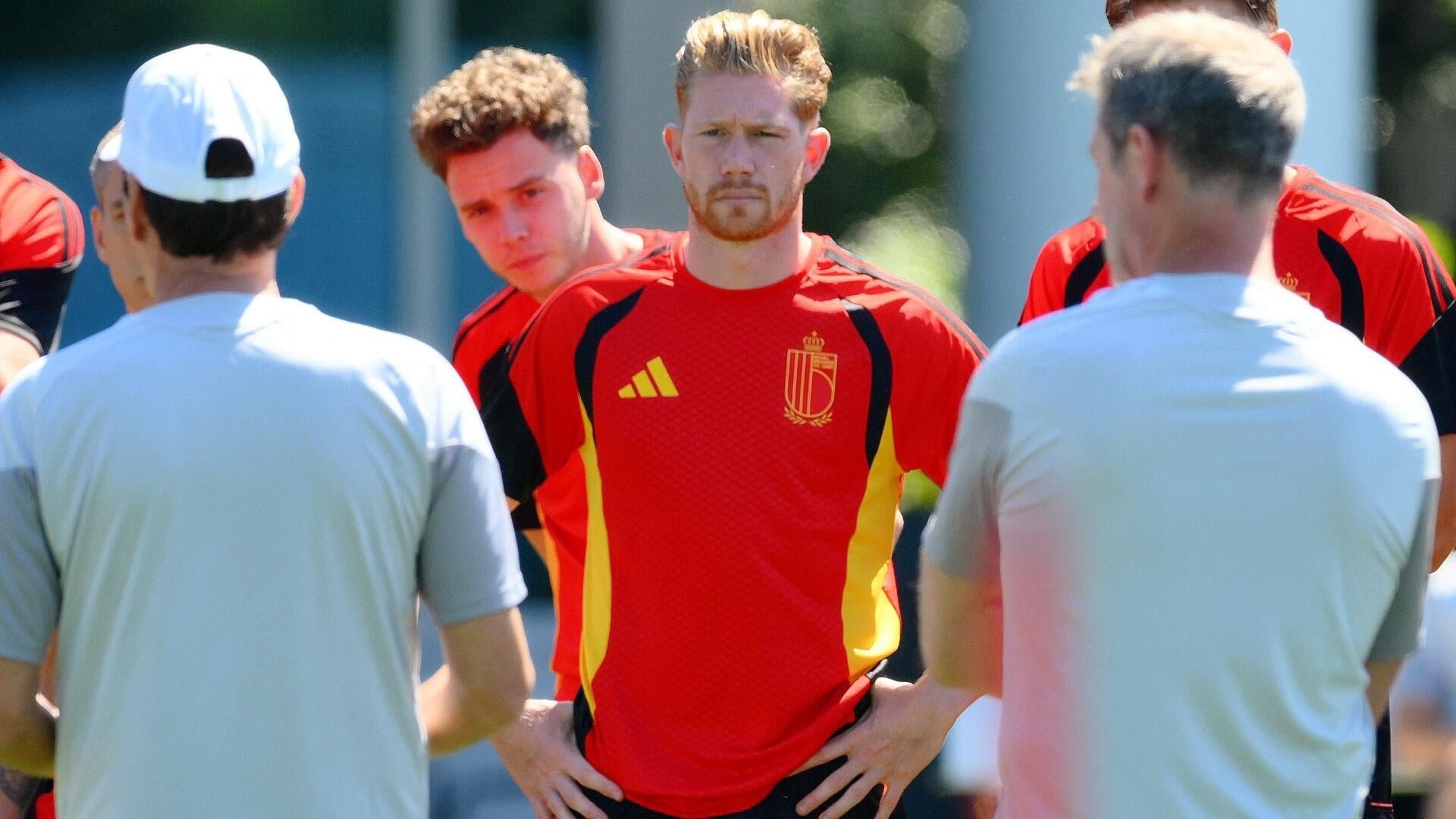
Iran's national team steps onto the pitch in Los Angeles on 15 June 2026 carrying something heavier than a kit bag. Striker Mehdi Taremi told BBC Sport on the morning of the fixture that the country's political predicament "undermines the joy of the World Cup" — a rare, on-the-record acknowledgment from a senior player that the tournament the squad spent two years qualifying for is also a diplomatic flashpoint. Iran's opening group match against New Zealand is being staged in a US host city where the diaspora is openly divided over whether to cheer, jeer or simply stay away, according to Al Jazeera English's reporting from Los Angeles on 15 June.
The squad arrives as the public face of a state its own players cannot fully speak for, in a tournament staged by a country that has spent four decades treating the team's matches abroad as a stage for opposition politics. The result is a contest the players say they want to play, the federation says it wants to host cleanly, and the diaspora says it cannot watch neutrally.
The team says: it's just football
Head coach Amir Ghalenoei and Taremi used their pre-match media window on 15 June to draw a hard line around the sporting brief. Per ESPN's reporting from the squad's base, Ghalenoei framed the campaign as one "for all Iranians," and Taremi — the veteran forward who plays his club football in Europe — echoed the message. The argument is straightforward: the players are professionals, the federation is responsible for security and logistics, and the politics of the street belongs outside the stadium. It is the same line the federation has used at every tournament since 2018, and it carries the same tension: a squad drawn almost entirely from the domestic league and the Iranian diaspora in Europe cannot plausibly be insulated from the politics of who selected them, who pays them, and who decides whether they sing the anthem.
That tension is the reason the federation's message lands awkwardly. National-team players at Iran World Cup fixtures have, in past tournaments, been visibly muted during the anthem, photographed in private moments of refusal, and pressed by reporters about which Iran they represent. The federation's instinct is to keep the squad's voice narrow; the diaspora's instinct is to widen it. Both impulses are operating in the same press conference.
The diaspora says: the stadium is a platform
Al Jazeera English's reporting from Los Angeles on 15 June describes a US host city bracing for protests near the stadium on match day, with the Iranian-American community in Southern California openly split between supporters, opponents of the government, and those who treat the fixture as a chance to wave the pre-1979 flag rather than the tricolour the federation has registered with FIFA. The piece documents organised protest movements and counter-mobilisations, both of which have spent the build-up to the match advertising their plans across Los Angeles–area diaspora networks.
The scale matters. Los Angeles is home to the largest Iranian-American population outside Tehran, and it is also one of the handful of US cities staging matches in the 2026 tournament. FIFA's own tournament footprint — 11 US host cities, three Mexican, two Canadian — was sold to host governments and to local diaspora communities as a celebration of the game's global reach. In Iran's case, the celebration comes pre-loaded with a protest calendar the federation cannot veto.
The structural read: a tournament built for soft power, then weaponised against it
There is a pattern here that goes beyond any single match. Mega-events — World Cups, the Olympics, continental championships — are designed as projection vehicles. Host cities spend billions on infrastructure, federations spend years on security planning, and broadcasters spend longer still on framing the host as open, modern, and welcoming. The format works best when the projection is uncontested. It works less well when the projected image collides with a diaspora that has spent the build-up organising counter-projections of its own.
What Iran is walking into in Los Angeles is the same dynamic that has played out around every Iranian fixture abroad since at least 1998, with the volume turned up by the platform. Two things make 2026 different. First, the match is on US soil, which puts the protest geometry — federal agents, state and local police, private stadium security, and three or four separate diaspora factions — into a single municipal jurisdiction. Second, the political backdrop Taremi referenced on 15 June is unusually live: Iran's domestic situation, including the public mood that has produced multiple protest cycles in recent years, gives the diaspora a narrative hook the federation cannot dilute by pointing at the football.
The federation's response — narrow the players' brief, widen the squad's travel schedule, and hope the result on the pitch dominates the front pages — is rational from a sports-management standpoint. It is also insufficient, because the result on the pitch is the only part of the day the federation actually controls.
Stakes, and what to watch
The near-term stakes are operational. If the match proceeds without serious incident, the federation's framing survives intact, the team can settle into a tournament it spent two years earning the right to play, and the protest movement has to settle for visibility rather than disruption. If the match is interrupted, the federation's framing collapses in real time and the political story drowns out the sporting one — which is the outcome both extremes in the diaspora are visibly organising for, in opposite directions.
The medium-term stakes are diplomatic. FIFA, the US host organising committee, and Iran's federation are all trying to keep the tournament's political surface area narrow. The contest in Los Angeles will set the template for Iran's remaining group fixtures in other US host cities, and for any other national team whose political profile is loud enough to attract organised diaspora opposition. The 2026 tournament has 48 teams and 104 matches; the federation's hope is that Iran's opener is treated as a special case. The diaspora's hope is that it is not.
What the sources do not specify is how many tickets have been sold to either side of the LA diaspora, what the stadium's protest-perimeter rules are, or whether the federation has asked FIFA for any protocol changes in light of the 15 June reports. Those are the open questions that will be answered on the day.
Desk note: The wire cycle on 15 June 2026 split sharply — BBC Sport carried Taremi's political quote, ESPN carried the federation's de-politicisation line, and Al Jazeera English carried the on-the-ground LA picture. Monexus reads all three as primary inputs and treats the federation's framing and the diaspora's framing as co-equal realities of the same fixture, rather than as one being truer than the other.