Israel's far-right cabinet opens a public crack over a US-brokered Iran deal
Two cabinet ministers publicly reject an agreement they do not name, while a third warns the IDF will not pull back from southern Lebanon, Syria, or Gaza. The dispute is now an open argument inside the Israeli government.
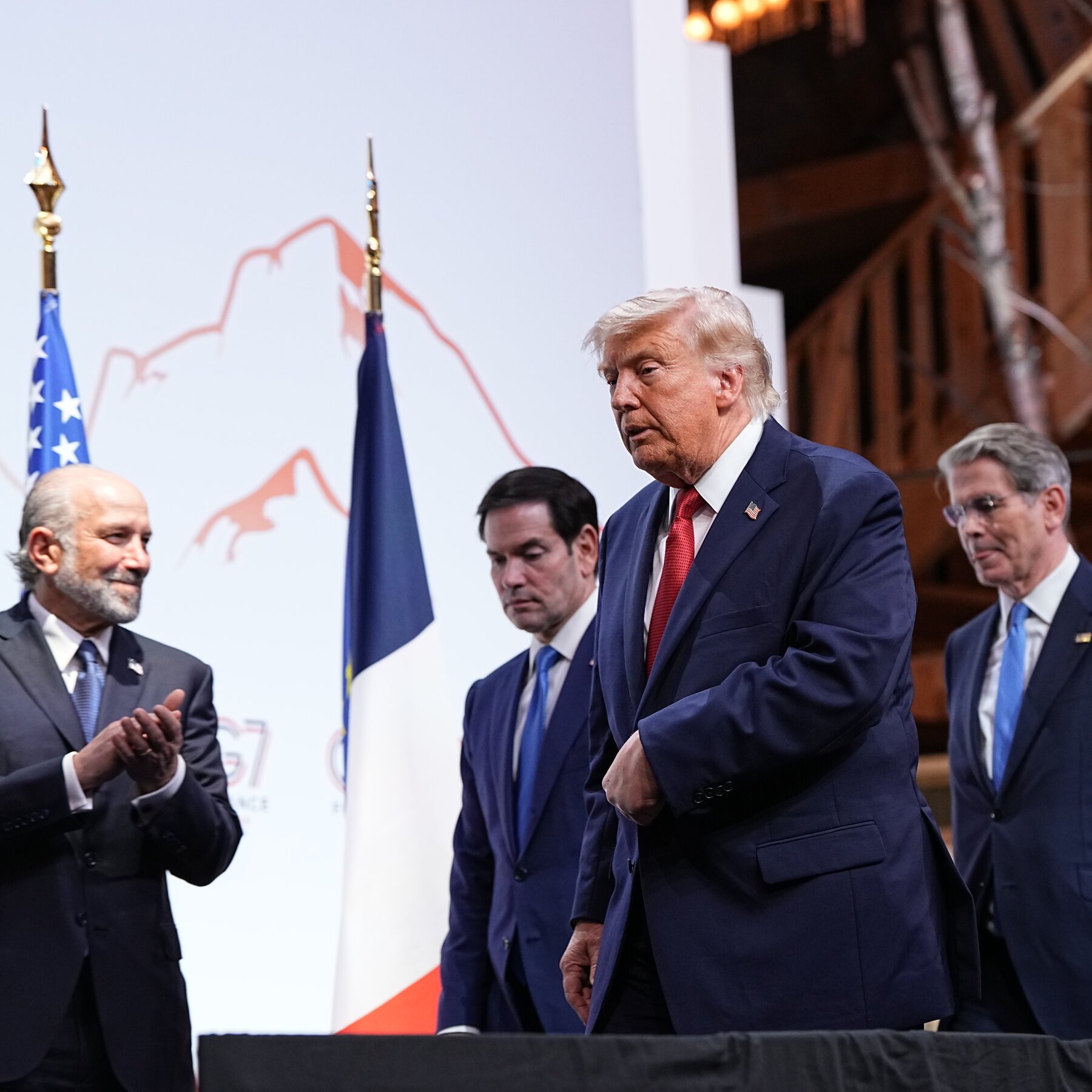
By 09:44 UTC on 15 June 2026, the argument inside Israel's cabinet about a United States-brokered agreement with Iran had broken through the usual choreography of discreet objection and was being broadcast, in English, on X. National Security Minister Itamar Ben-Gvir posted that "Trump's agreement does not bind us. Israel is not subject to the United States, and we are an independent and sovereign nation! We are not partners to thi" — a sentence that ran past the character limit and into the open. Within the same hour, the monitoring channels Visioner and GeoPolitics Watch were carrying the rebuttal from Finance Minister Bezalel Smotrich and a third intervention from Defense Minister Israel Katz. The picture they sketch, taken together, is a cabinet in which three senior ministers have chosen to distance themselves, in their own words, from a deal their own prime minister's government has not publicly disowned.
What makes the moment worth taking seriously is not the volume. Coalition politics produces defiance in volume. It is that the three interventions, read in sequence, point in three different directions. Ben-Gvir questions the legitimacy of any US-mediated framework. Smotrich calls the agreement bad for Israel and the "free world." Katz narrows the argument to the military: the IDF will not withdraw from security zones in southern Lebanon, Syria, or Gaza, notwithstanding the ceasefire arrangement Washington has been pushing. That is a policy statement, not a posture. It is a sitting defense minister drawing operational red lines that the agreement, as described, appears to cross.
What the ministers are actually objecting to
The public statements do not name a document. They name a mood. Smotrich's full post, as carried by GeoPolitics Watch, runs: "The agreement with Iran is bad for Israel and for the entire free world. Period. The joint campaign had many achievements in weakening Iran, and they will not" — again, truncated past the platform limit. There is no clause number, no reference to enrichment capacity, no specific sanctions waiver, no timeline. The Visioner channel, citing Israeli ministers by description rather than by name, frames the substance as "immense pressure" on Prime Minister Benjamin Netanyahu and his government from Washington. The interpretation, in other words, is leading the text. The text, such as it is, has not been published.
That gap matters. Without the text, the dispute cannot be adjudicated on its merits. What can be said is what the dispute isn't: it is not a procedural argument inside a parliamentary committee, and it is not a leak from a security cabinet meeting. It is a series of public posts, timed within a 47-minute window on a Monday morning, in which ministers who sit at the table are publicly marking themselves off from the table's likely product. The choreography is consistent with a government in which the prime minister has not yet decided whether to embrace, fight, or quietly absorb the deal, and is tolerating — perhaps orchestrating — a range of public reactions that leaves him maximum room to move.
The operational line that matters most
Katz's intervention is the most consequential in military terms and the least commented on. "The Israeli military will not withdraw from security zones in Lebanon, Syria, or Gaza," his post reads, "notwithstanding the ceasefire agreement between the United [States]" — truncated at the same seam. Read against the deal's reported scaffolding, the implication is that whatever Washington has agreed to on the diplomatic track will not be reflected on the ground in three of the four theatres in which the IDF has been operating. Southern Lebanon is held against Hezbollah. The Syrian buffer is held against a still-fluid post-Assad order and against Iranian logistics. Gaza is held against Hamas and against the hostage file. A US-Iran understanding that requires Israel to compress any of those postures immediately runs into a defense minister who has just said, on the record, that he will not compress them.
Two structural pressures sit underneath this. First, the Israeli defense and intelligence establishment has, across multiple rotations of government, treated the Syrian and Lebanese footholds as a forward defense line whose value lies in being held before a crisis, not negotiated away during one. Second, the Gaza security zone, whatever its precise geography, is also the principal lever in the hostage question. Any Israeli concession there is hostage politics, not just border politics. Katz's post collapses two files — the Iran file and the hostage file — into a single sentence, and that collapse is itself a piece of information about how the cabinet reads the trade-off.
Reading the far-right objection charitably
The instinct in much Western commentary will be to file Ben-Gvir and Smotrich's statements as the familiar theatre of nationalist ministers in a coalition that would collapse without them. That reading has the virtue of being partly true and the defect of being incomplete. Smotrich's framing — bad for Israel and for the free world — explicitly reaches beyond the coalition's domestic base. Ben-Gvir's claim of sovereignty against Washington, read literally, is a foreign-policy position, not a coalition-management position. Both men have electoral constituencies inside the governing coalition that reward public defiance of the United States, and both have been reliable voters for government bills Netanyahu needed to pass. The question is whether that dynamic still holds when the bill in question is the prime minister's own diplomatic signature.
The charitable read is that they are buying Netanyahu optionality. By publicly staking out a maximalist position, they raise the domestic cost of any deal Netanyahu signs and increase his leverage to demand changes before signing. The uncharitable read is that they are preparing the ground for a coalition rupture if he signs. Both can be true at once, and Israeli coalition history offers no shortage of precedents in which a faction publicly declared its opposition and then voted for the government bill on a closed ballot at 02:00. The 47-minute burst of posts is consistent with a faction that is signalling rather than seceding. It is not, on the evidence so far, consistent with a faction that has decided to bring the government down.
What we verified / what we could not
Verified. That on 15 June 2026, between 08:57 UTC and 09:44 UTC, three sitting Israeli cabinet ministers — National Security Minister Itamar Ben-Gvir, Finance Minister Bezalel Smotrich, and Defense Minister Israel Katz — made public statements opposing a US-brokered agreement with Iran, distributed via X and Telegram channels including x:sprinterpress, telegram:osintlive, and telegram:GeoPWatch. The language of each statement was directly captured in those channels, with consistent quotation across two independent aggregators. The three statements are mutually consistent in opposing the deal and are mutually distinct in framing: sovereignty, strategic interest, and operational posture respectively.
Could not verify. The text of the agreement itself. The identity of the Israeli ministers cited anonymously in the Visioner channel post. The exact status of the deal inside the security cabinet — whether it has been formally presented, debated, or is still in negotiation. Whether the public posts reflect a coordinated line or independent reactions. The current configuration of Israeli forward positions in southern Lebanon, the Syrian buffer, or Gaza; Katz's post is a statement of intent, not a confirmed order of battle. Whether any US official has responded publicly, on the record, to the Israeli objections. The thread context contains no such response in the five items provided.
The stakes, in plain terms
If the deal is signed in something like its current form, Israel will be asked to compress positions in at least one of three theatres in which the IDF has been engaged for the better part of two years. The defense minister has now said, on the record, that he does not intend to do so. The national security minister has now said, on the record, that Israel does not accept US framing of its sovereign choices. The finance minister has now said, on the record, that the deal harms the free world. The prime minister has not, in the material available, said anything at all.
Two trajectories follow. In the first, the cabinet absorbs the objections, the deal is signed with cosmetic Israeli carve-outs, and Katz's "will not withdraw" language becomes the basis for a slow, deniable compression over months. In the second, the deal is not signed in its current form, the United States adjusts, and the three ministers take a quiet victory lap. The window in which the choice is being made is, on the timing of these posts, open. It is also unusually visible for a decision of this scale — and the visibility, more than the content of any single statement, is the story worth tracking.
Desk note: Monexus carried the three ministerial statements in the order in which they appeared on the public aggregators and attributed them by name and portfolio. Where a post was truncated by a platform character limit, that truncation is marked. We have not paraphrased the ministers' positions and have not attributed any of the three statements to the prime minister's office.
Wire provenance
This editorial synthesis draws on the following public wire/social posts:
- https://x.com/sprinterpress/status/
- https://t.me/osintlive
- https://t.me/GeoPWatch
- https://t.me/GeoPWatch
- https://t.me/GeoPWatch
Follow the event.
These dated source records provide context. They do not retrospectively verify this archive article.
Separate what the nuclear watchdog reported from what it could not determine after the June 2025 strikes.